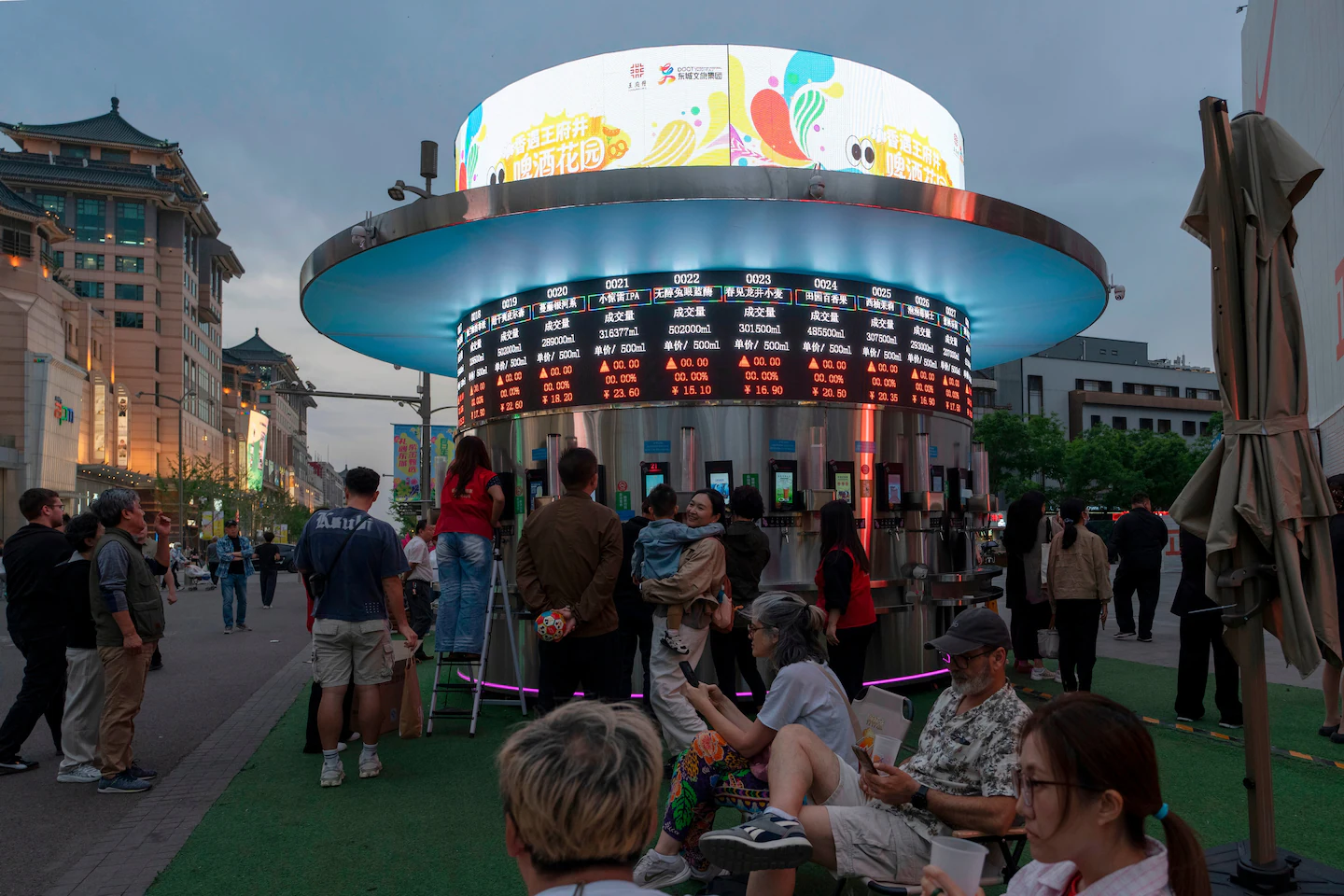
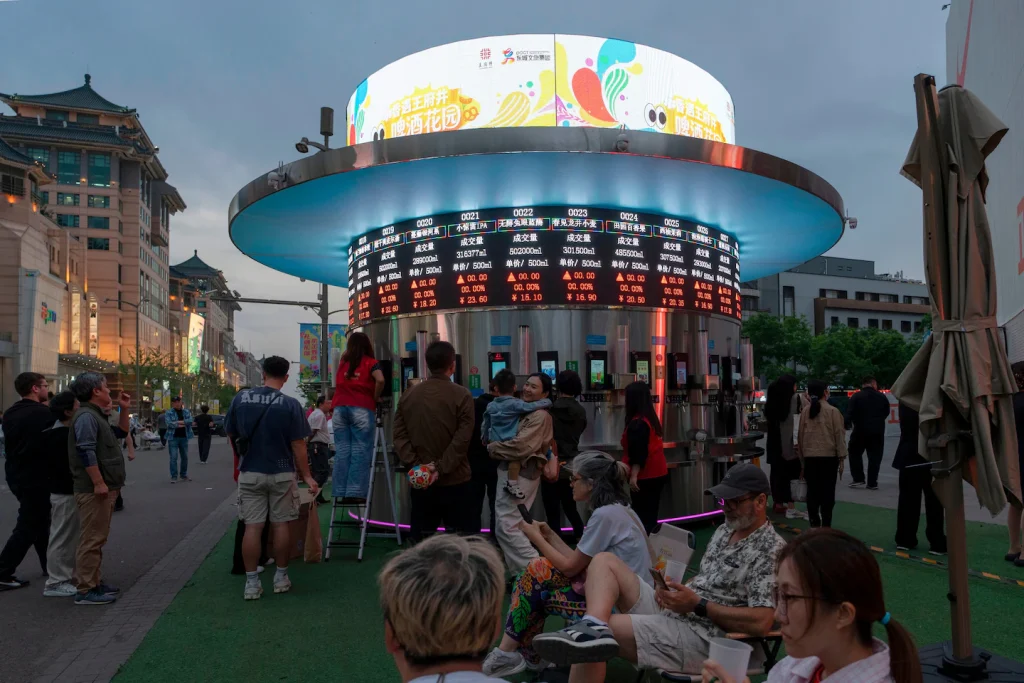
Beijing welcomed U.S. President Donald Trump with a dramatically different image from his 2017 visit, after the Chinese capital transformed itself into a massive platform showcasing the country’s technological ambitions.
Digital billboards promoting Chinese AI models such as DeepSeek and Qwen spread across the city, while electric and autonomous vehicles quietly filled the streets in contrast to previous years. In luxury shopping malls, humanoid robots and robotic dogs demonstrated their capabilities to visitors and were even offered for direct sale.
The scenes coincided with meetings between Trump and Chinese President Xi Jinping focused on trade, investment, and artificial intelligence, as Beijing attempted to position itself as a capital leading future industries and competing with the United States in AI, robotics, and clean energy.
Analysts say China is trying to send a clear message that it is no longer merely the world’s factory, but a technological power capable of developing its own industrial ecosystem while reducing dependence on American technology.
Details
Beijing has undergone a major urban and technological transformation in recent years:
- Domestic electric vehicles from companies such as BYD and Nio have become widespread across the city.
- Autonomous taxi services expanded as Chinese firms began testing self-driving vehicles overnight inside the capital.
- Shopping centers and retail spaces have been converted into platforms for robotics and AI-related services.
- Solar panels now cover residential rooftops, while wind turbines spread around the capital’s outskirts.
At the same time, Chinese authorities have tried to project the image of an economy recovering from years of strict lockdowns and a prolonged property crisis, despite persistent internal challenges such as youth unemployment and declining incomes among workers in the digital economy.
Official estimates indicate that around 17 percent of people aged between 16 and 24 remain unemployed, while local reports sparked debate after documenting harsh working conditions for delivery drivers before the material was removed from Chinese platforms.
Beijing has also escalated its economic response to Washington over the past year through restrictions on rare earth exports and a tougher stance toward U.S. sanctions and technology deals involving American companies.
What’s Next?
China is now focused on cementing its image as a technological power parallel to the United States, while attention turns to whether this high-tech momentum can translate into broader economic and geopolitical influence across Asia and global markets.