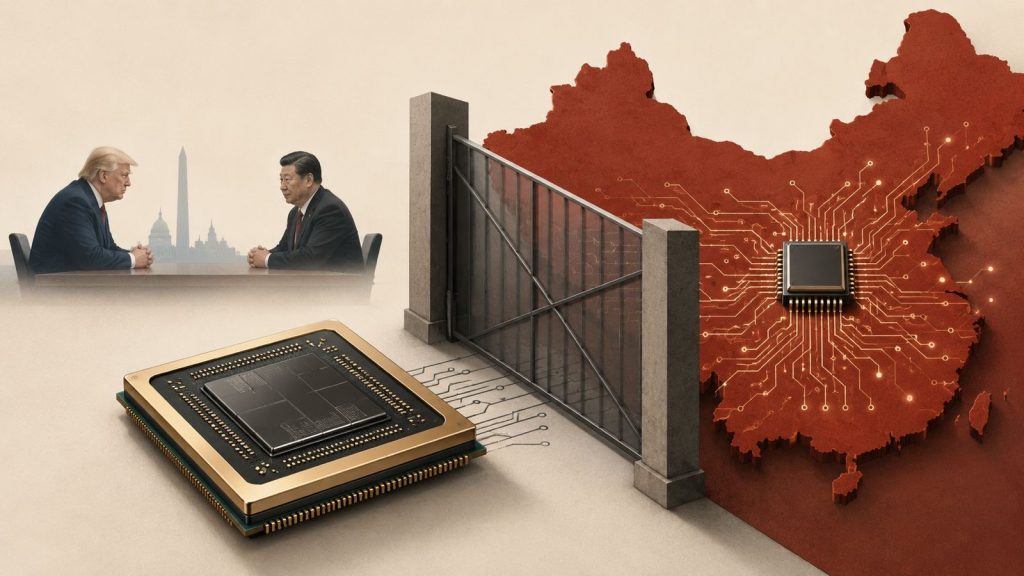
Nvidia’s future in China remained unclear after the summit between U.S. President Donald Trump and Chinese President Xi Jinping ended in Beijing, despite Nvidia CEO Jensen Huang joining the delegation of American business leaders traveling with Trump.
Details
• Huang joined the U.S. delegation at the last minute, leading many to believe there could be progress on Nvidia’s stalled sales in China.
• But the summit ended without any new clarity on the fate of Nvidia’s AI chips in the Chinese market.
• U.S. Trade Representative Jamieson Greer said China’s decision on whether to buy Nvidia chips would remain a sovereign decision for Beijing.
• Trump approved in December the sale of Nvidia’s H200 chip, one of the company’s most powerful AI chips, to China.
• Despite U.S. approval, the Chinese government has not greenlit any purchases, and no H200 chips have been sold to China so far.
• Instead, Beijing is pushing Chinese companies to rely on domestic technology from firms such as Huawei.
• Before Trump met Xi, Chinese start-up DeepSeek announced that its latest AI model had been optimized to run on Huawei chips, signaling progress in China’s push for technological self-sufficiency.
• Huang had previously warned of this shift, saying Chinese AI companies could soon rely on Chinese hardware instead of U.S. technology, weakening Washington’s influence over AI development in China.
• Greer said the two sides did not discuss chip export controls during the meeting, despite Huang’s presence in Beijing.
• U.S. officials believe China is firmly committed to producing advanced chips at home and sees American dominance in the sector as a threat to its own technological growth.
What’s Next?
Nvidia now faces a tough equation: Washington has allowed it to sell, but Beijing is not buying. If China keeps steering its companies toward Huawei and other domestic chip suppliers, Nvidia could lose not only major sales, but also part of its influence inside the world’s second-largest AI market.