Key Points
- Trump welcomed Xi at the White House with a military ceremony, flyover and red-carpet arrival Thursday.
- It is Xi's first Washington visit in more than a decade, weeks before November's midterm elections.
- Officials expect ceremony over substance, with Iran, AI and Taiwan splitting the two governments.
The latest:
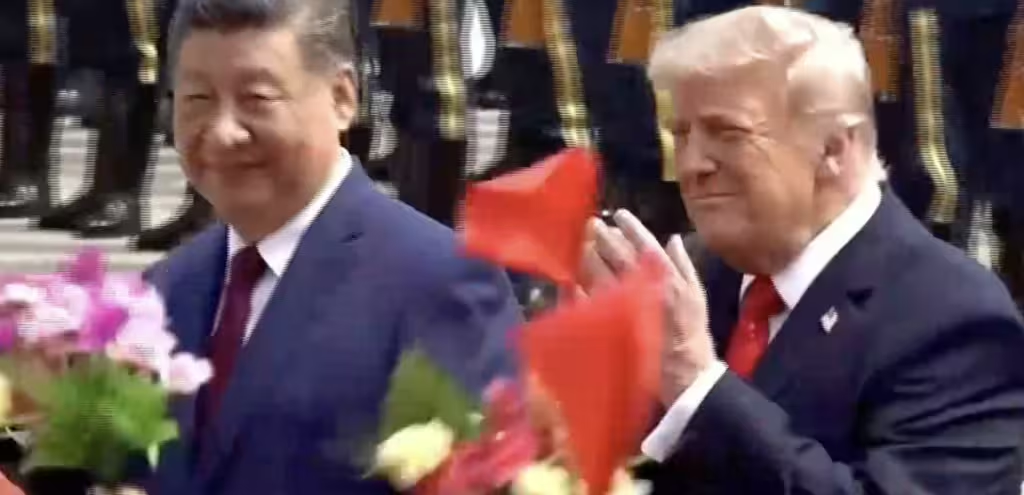
A red-carpet arrival, a presidential salute by the Marine Silent Drill Platoon and a flyover of fighter jets and a stealth bomber opened Donald Trump’s White House summit with Xi Jinping on Thursday. Trump said decisions taken on national security and technology could shape peace and prosperity for decades. Xi, speaking through a translator, said the two countries gain from cooperation and lose from confrontation.
Details:
- The trade truce: Treasury Secretary Scott Bessent told Fox News on Wednesday night that Washington and Beijing agreed to extend their trade-war truce by two months, moving the deadline from Nov. 10 to Jan. 10, while raising the possibility of a bigger deal later. It may be the most concrete outcome Xi carries home.
- The farm numbers: Bessent said China agreed to buy 25 million tons of U.S. soybeans and had been very fulsome in following through, but remained a little behind on roughly $17 billion in other agricultural commitments. People close to the Chinese side said Beijing weighed larger farm purchases ahead of the midterms.
- Xi’s remarks: Xi told Trump he was ready to steer what he called the giant ship of China-U.S. relations on a steady course, and urged cooperation on business and AI regulation alongside regular military dialogue. He also said two Chinese pandas would soon be sent to the Atlanta zoo.
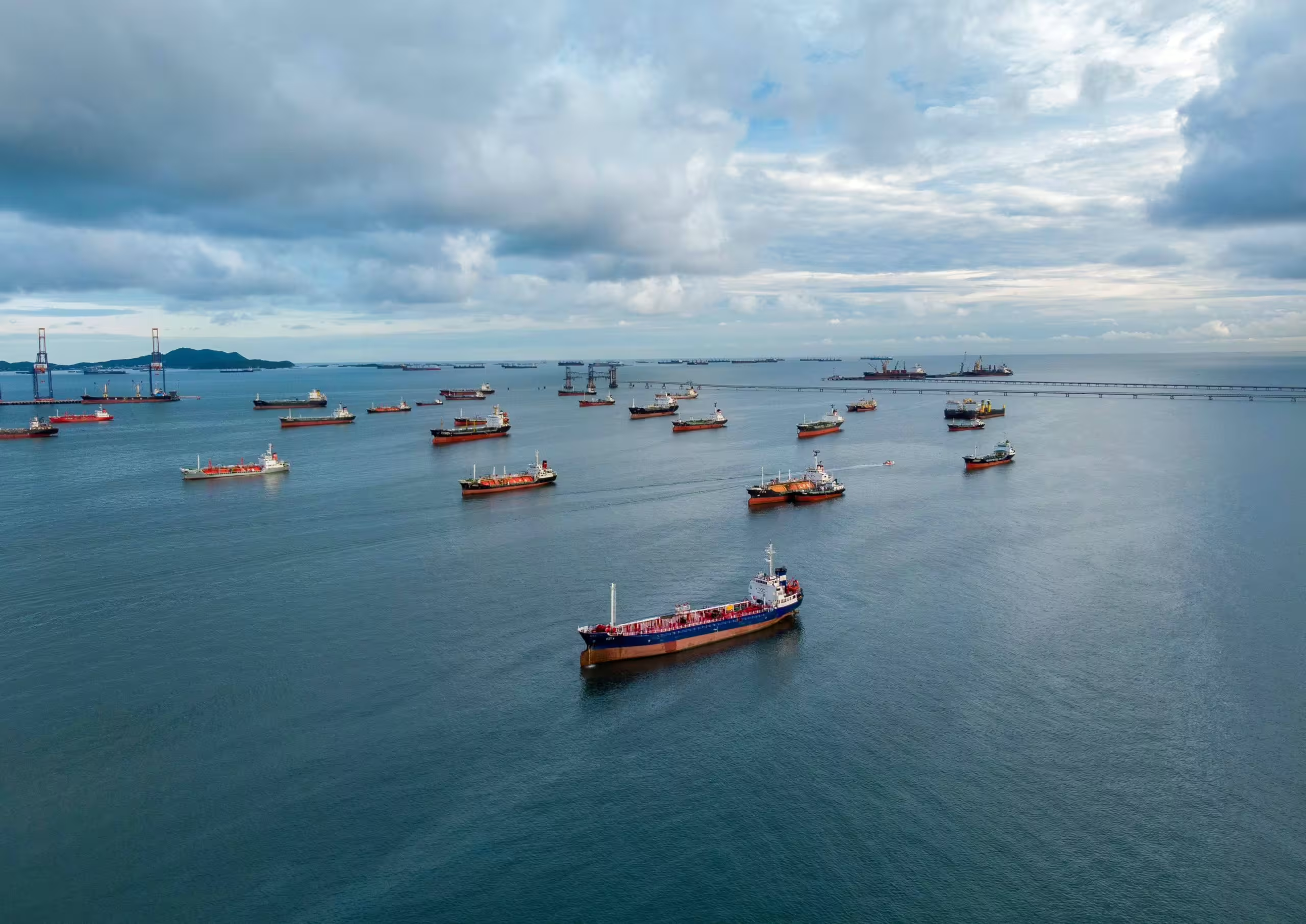
- The Iran file: China is buying oil from Tehran and shipping components used in drones and missiles, according to the report, including thousands of shipments to Iran. Chinese satellite imagery aided Iranian strikes that killed U.S. troops, a record that threatens to shadow the visit as Trump pushes to end the war.
- Republican objections: Senate Armed Services Committee Chairman Roger Wicker said this week that had the White House asked his advice, he would have suggested the president not invite Xi for such a lavish welcome. Some Republicans question staging a summit with an adversary weeks before an election Democrats could win.
- Muted expectations: Xi brought no business delegation. People involved in preparations said roughly a third of more than 100 seats at Thursday night’s state banquet went to the Chinese side, leaving no room in Beijing’s view for company representatives. Officials said the summit is expected to sidestep tensions and identify modest areas of cooperation.
- AI positioning: Trump said super intelligence, his term for AI, would be discussed, adding that he wants to leave it exactly where it is and that this is also China’s position — a signal he does not intend to slow the technology’s development. The two governments are competing for AI dominance.
- Unresolved disputes: Beijing is still pressing Washington to halt weapons sales to Taiwan and is determined to bring the island under its control. Pentagon estimates put China on track for more than 1,000 nuclear weapons by 2030, though officials said the issue is unlikely to be central Thursday. Lawmakers are also pressing Trump to raise the status of Americans Washington considers wrongfully detained in China.
- Press access: Major television networks did not carry the arrival live. Broadcasters had agreed this week to suspend the rotation of journalists covering the president after Trump barred CNN and two other outlets from the White House. A federal judge ordered the ban lifted early Thursday, with no clear timeline for pool coverage resuming.
- The state dinner: Thursday night’s dinner in the East Room will feature sparkling wine honoring the toast shared by Richard Nixon and Chinese Premier Zhou Enlai during Nixon’s 1972 visit to Beijing. Trump praised Xi in social-media posts that morning, saying the Chinese leader looks strong, vibrant and fit.
Background:
China has been treated across successive U.S. administrations as Washington’s principal geopolitical rival and a potential military adversary. Trump has struck a more conciliatory tone in recent months as officials prepared this week’s meeting, while China’s military buildup alarms U.S. planners and allies across the Indo-Pacific.
Between the lines:
The gap between the staging and the agenda is the story. Former officials expect heavy ceremony and few major developments, and the signals line up: no business delegation, a two-month truce extension rather than a settlement, and nuclear expansion and Taiwan left off Thursday’s table. The deliverable most visible to voters — soybean purchases — lands weeks before the midterms.
What’s next
Watch whether the extended truce holds to Jan. 10, whether Beijing closes the roughly $17 billion agricultural shortfall, and whether television pool coverage resumes after the federal judge’s order lifting the White House ban.