Key Points
- Brent traded near $103 as reduced Hormuz traffic kept secure Gulf export capacity at a premium.
- The UAE’s Fujairah pipeline is near its 1.8 million-barrel daily limit, while Saudi repairs continue.
- Elevated crude and logistics costs threaten wider inflation, transport expenses and energy-intensive businesses.
The latest
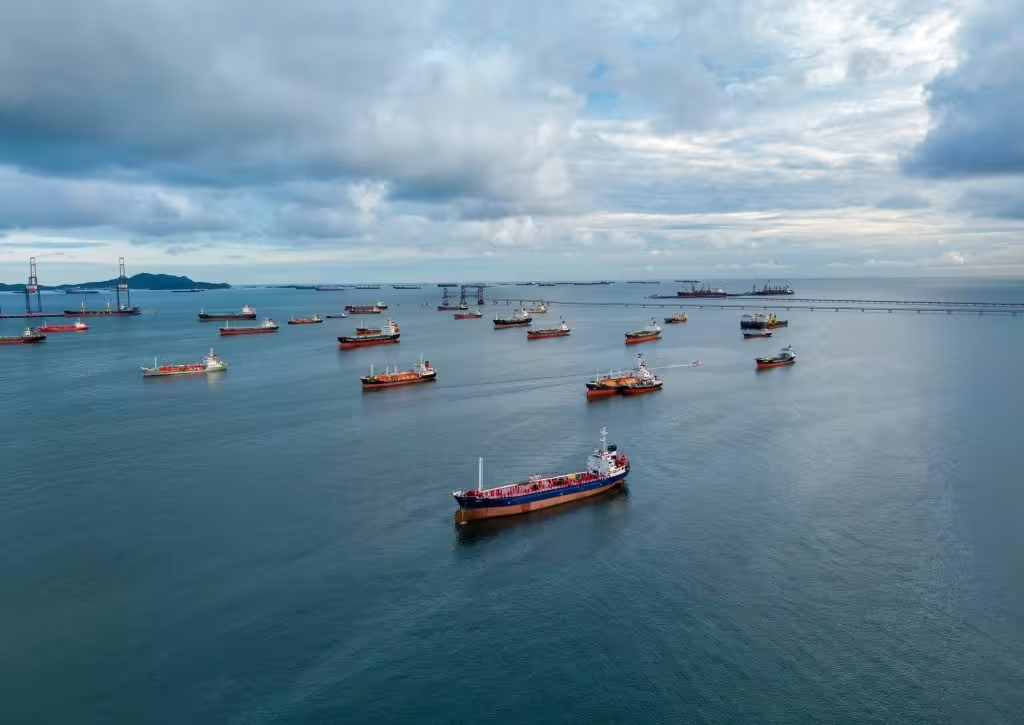
Oil markets are pricing physical access to Gulf crude as heavily as production itself, with Brent around $103 a barrel on Thursday and traffic through the Strait of Hormuz far below prewar levels. The disruption has pushed the UAE’s functioning bypass to the centre of regional exports, while reduced Saudi pipeline operations constrain a route capable of moving substantially larger volumes. The resulting supply risk is feeding transport, fuel and production costs as major economies maintain restrictive interest-rate policies.
Details
- Fujairah outlet: The Abu Dhabi Crude Oil Pipeline runs from Habshan to Fujairah on the Gulf of Oman, avoiding Hormuz and carrying up to 1.8 million barrels a day. It is operating close to that ceiling, giving Abu Dhabi strategic value but leaving little spare bypass capacity.
- ADNOC trading: ADNOC bought 32 million barrels of discounted Iraqi crude in August and another 40 million in September. The purchases supported Iraqi exports amid logistics and shipping constraints, while ADNOC used its tanker fleet and Fujairah facilities to move some cargoes outside the most vulnerable routes.
- Saudi repairs: Saudi Arabia’s 1,200-kilometre East-West pipeline links eastern fields with Yanbu on the Red Sea. A September 11 drone attack damaged pumping stations and halted operations. The route has restarted at a reduced rate; full capacity, about 7 million barrels daily, is expected to take weeks, with roughly 4 million normally available for export.
- UAE flexibility: The UAE left OPEC effective May 1, saying it wanted greater freedom to expand output and capacity. It targets 5 million barrels a day of capacity by 2027, while the International Energy Agency expects total output could exceed that level next year. Abu Dhabi also plans to double Fujairah pipeline export capacity by 2027.
- Traffic collapse: Before the war, about 20% of global oil and LNG flows crossed Hormuz. Only 17 commodity vessels traversed it over one recent weekend, versus a prewar average of roughly 125 daily. Scarce transit capacity increases tanker complexity, storage needs and logistics costs.
- Market signal: Josh Gilbert, eToro’s lead analyst for Asia-Pacific and the Middle East, said positive descriptions by President Trump of conversations with Iran had not given investors a clear route to reopening. He said UAE infrastructure was “earning its keep” and its post-OPEC flexibility could support additional supply after Hormuz reopens.
Between the lines
UAE infrastructure is already near its limit, while Saudi Arabia has more potential capacity but cannot yet deploy it fully. That mismatch gives Abu Dhabi disproportionate short-term importance and leaves markets dependent on the pace of Saudi repairs and the volume of remaining Hormuz traffic.
What’s next
Watch the restoration of Saudi Arabia’s East-West pipeline to full capacity, the vessel count through Hormuz and any decision reopening the strait. The UAE’s next fixed milestones are its 5 million-barrel production-capacity target and doubled Fujairah export capacity in 2027.