The latest:
Governments and airports across three regions have pulled back from Iranian carriers within days of new US sanctions taking effect, cancelling or suspending flights rather than risk secondary penalties. The UAE halted all Iranian airline flights from midnight, ISNA reported, after Azerbaijan, Baghdad airport and Turkish Airlines had already closed routes. Treasury Secretary Scott Bessent estimated 80% to 90% of Iran’s international flights had stopped.
Details:
- The UAE move: ISNA reported that every flight operated by Iranian companies to the United Arab Emirates was cancelled as of midnight Thursday, in compliance with the US measures. Agence France-Presse learned from one passenger that an Iran Air Tour service to Dubai was cancelled shortly before its scheduled morning departure from Tehran.
- Azerbaijan’s decision: Baku’s state civil aviation agency suspended flights operated by Iranian airlines into the country from 22 September, tying the decision directly to US sanctions on Iran’s aviation sector. It directed passengers to contact their carrier or ticket outlets for refunds, and did not announce an end date.
- Turkmenistan’s refusal: Iran’s Civil Aviation Organization said Thursday a Tehran-Dushanbe flight was forced back to Imam Khomeini International Airport after Turkmenistan denied Iranian carriers permission to cross its airspace. Spokesman Majid Akhavan said the aircraft could not reach its destination because it was barred from transiting Turkmen airspace.
- Iraq’s partial closure: Baghdad airport stopped servicing Iranian airlines before dawn Wednesday, according to Iran’s civil aviation spokesman, while flights to Najaf continued, leaving it the working air link for Iranian travellers. Informed sources said authorities were weighing diverting some services to Najaf; travel firms began examining overland alternatives.
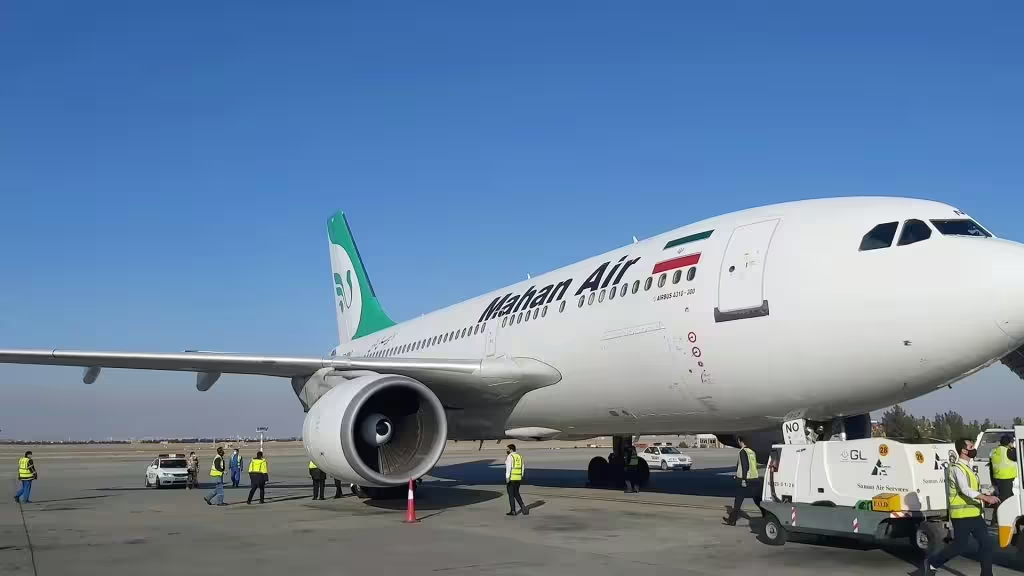
- Turkey’s split approach: Turkish Airlines announced Monday it had suspended all its flights to Iran until at least March 2027. Separately, the director of Tehran’s Imam Khomeini airport city said only Mahan Air faces restrictions on Turkish routes, while other Iranian carriers keep flying to Istanbul, Ankara, Gazipasa and Izmir.
- Washington’s framing: Bessent said Monday that US sanctions would effectively bar Iranian airlines from international operations starting 23 September, warning foreign firms against providing fuel, ground handling or ticket sales. He described the campaign as an economic pariah operation, and questioned on Fox News how Iran’s UN delegation would get home.
- What the measures say: The US documents target Iran’s aviation sector and end licences that had permitted specific transactions, including overflight of Iranian airspace, refuelling and emergency repairs, from 12:01 a.m. Eastern time. They raise the risk of servicing Iranian carriers but do not themselves order foreign airports to close to them.
- Flights still operating: Bloomberg reported that Iranian carriers kept flying internationally Wednesday after the US deadline, with Flightradar24 data showing at least six departures to destinations including Bangkok, Phuket, Shanghai and Kabul. Services to China continued as Beijing voiced opposition to unilateral US sanctions.
- Tehran’s warning: Mohsen Rezaei, secretary of Iran’s Supreme National Security Council, told regional states not to join what he called America’s adventure, warning that if Iranian aircraft are blocked, their own airports will not be able to take off either. Iranian officials signalled possible reciprocal restrictions.
- Mahan Air’s status: Mahan suspended its Tehran-Muscat route before the 23 September deadline, then its Tehran-Istanbul and Tehran-Ankara services, according to its notice to travel agencies. The US Treasury blacklisted the carrier in 2011, alleging support for the Revolutionary Guard and the Quds Force, a claim reflecting Washington’s position.
Background:
Iran’s aviation sector was still recovering from the recent war, which closed Iranian airspace for extended periods and caused wide travel disruption. Turkey has long been among the most accessible foreign destinations for Iranians, offering relatively affordable travel and broad route networks.
Between the lines:
The pattern emerging is national compliance rather than a single global shutdown: Azerbaijan acted by formal state decision, Baghdad closed while Najaf stayed open, and Turkey’s restrictions hit one carrier while others fly. Neither Muscat nor Ankara has published an explanation for their Mahan restrictions, so attributing those closures to US pressure remains unproven. Bessent’s 80-90% estimate is Washington’s own assessment, and flights to Bangkok, Shanghai and Kabul continued after the deadline.
What’s next
Watch whether Georgia’s aviation authority converts its stated sanctions commitment into an execution date, whether more Gulf and regional states follow the UAE, and whether Iran’s civil aviation talks with foreign regulators reopen any suspended route.