Key Points
- Tom Cruise says AI is inevitable in filmmaking but insists human creativity remains irreplaceable.
- Hollywood is expanding AI use as unions tighten rules on replicas, synthetic performers and biometric data.
- The dispute will shape creative jobs, copyright ownership and cinema’s economics.
The latest
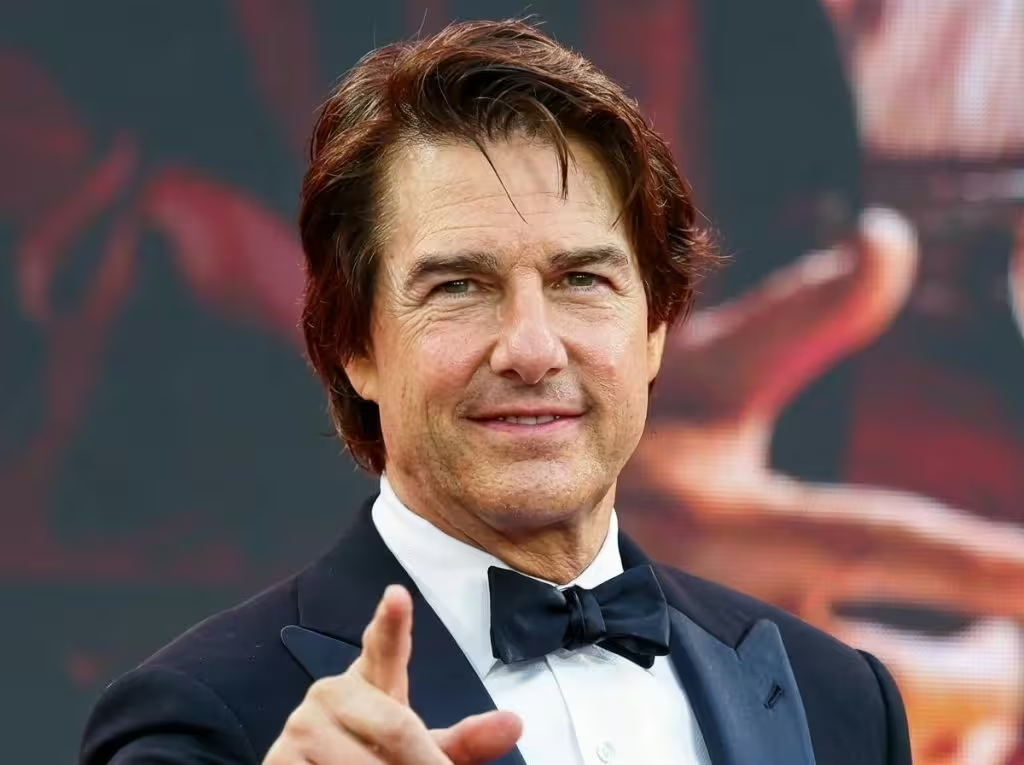
Artificial intelligence is moving into Hollywood’s core production model, spanning visual effects, dubbing, editing, pre-production, digital environments and character creation. At a BAFTA career retrospective in London, Tom Cruise said broader adoption was “inevitable” while declaring, “Nothing replaces the human.” He argued that audiences still value real performances and the collective experience of cinemas, placing human creativity at the centre of an industry-wide contest over control, costs and employment.
Details
- Labour protections: SAG-AFTRA’s 2026 TV/Theatrical Agreement, ratified in June, expands consent, compensation and biometric-data protections for digital replicas. Producers must bargain before using synthetic performers and show they provide “significant additional value” over a human performer or that person’s replica.
- Digital identity rights: A digital replica reproduces a specific person, while a synthetic performer can appear human without identifying any individual. SAG-AFTRA’s rules also cover posthumous use: in March 2026, the union said Val Kilmer’s replication for As Deep as the Grave required estate consent under the contract and state law.
- Copyright threshold: The U.S. Copyright Office has examined digital replicas, AI-generated works and model training since 2023, drawing more than 10,000 initial public comments. In January 2025, it found AI-assisted material copyrightable when a human supplies sufficient expressive elements; a prompt alone does not establish authorship.
- Automation economics: Flow Studio claims its AI filmmaking technology could cut production costs by up to 95%. Studios are testing tools to generate environments, fill backgrounds, accelerate effects and simplify post-production, potentially allowing more output from smaller teams as production budgets remain under pressure.
- Jobs at risk: Automation could reshape work for visual effects artists, illustrators, translators, voice actors, editors, background performers and concept artists. Entry-level losses carry a longer-term consequence: junior and mid-level staff traditionally build the experience that feeds Hollywood’s future senior creative workforce.
- Lower barriers: For independent filmmakers, lower-cost tools could make sets, scene visualisation and temporary effects accessible without Hollywood-scale financing. AI may therefore widen participation even as it disrupts established production roles, separating its use as a creative tool from its use as a substitute for people.
Background
Hollywood previously absorbed sound, colour, computer-generated imagery, digital cameras and software-based editing. Those technologies mainly changed how people made films; generative AI raises a different issue because it can create performances, voices and images while shifting control over who creates them.
What’s next
The next practical test will be how producers apply the 2026 agreement’s bargaining standard. Each proposed synthetic performer must be measured against the human option or a performer’s replica, including whether it delivers the required “significant additional value.” That threshold will determine whether synthetic casting can proceed.