The latest:
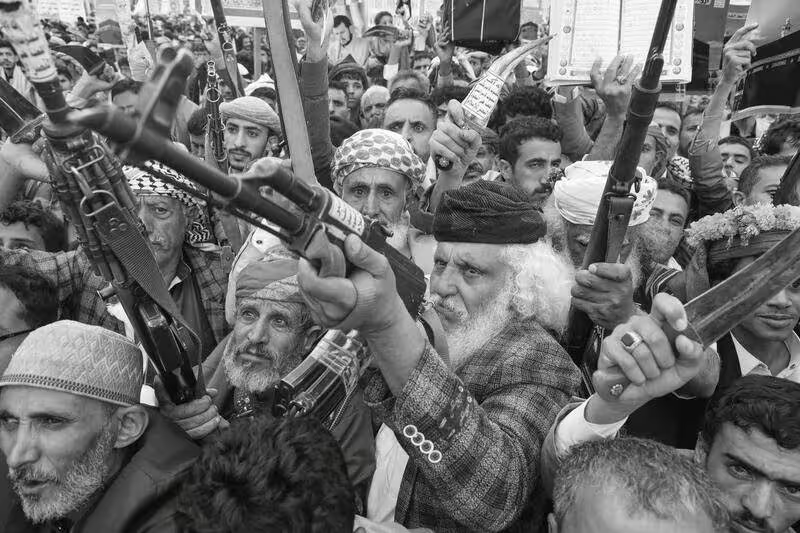
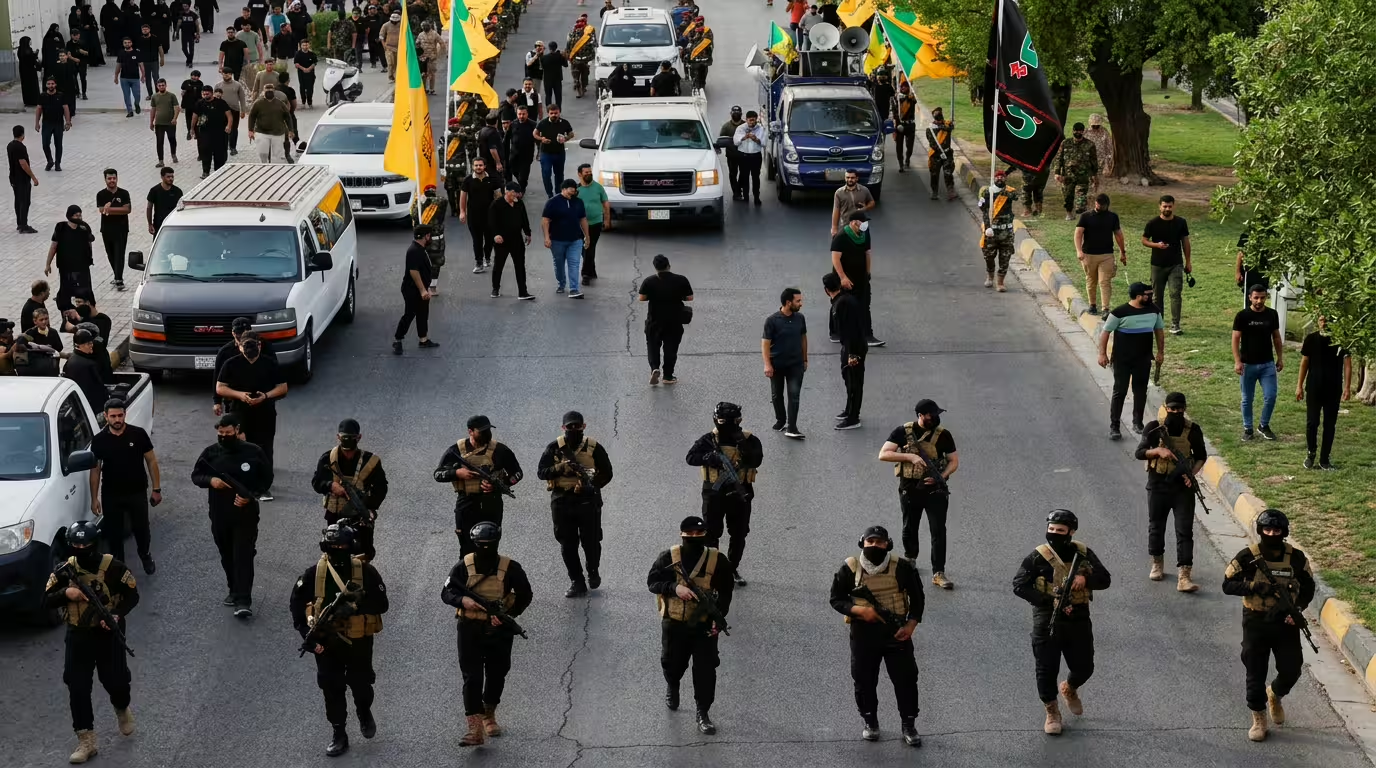
Houthi fighters pushed Monday toward the Kahboub mountains in Taiz and Lahj provinces, aiming to cut the Red Sea coast off from the remaining Saudi-backed government areas, five Yemeni military sources told Reuters. The advance follows a New York Times report that President Donald Trump called off U.S. strikes on the group at the last minute, with bombs already loaded onto aircraft.
Details:
- The front line: Fighting is concentrated on the outskirts of the remote mountainous Wazi’iyah area in Taiz, and at Ras al-Arah on the Indian Ocean coast between the Bab al-Mandab strait and the government’s base in Aden, Yemeni military sources told Reuters.
- What was taken: The turning point came this month when Houthi forces seized Mocha, the strategic Red Sea port, and Perim island inside the Bab al-Mandab strait, according to the New York Times. Holding both strengthened the group’s ability to strike passing shipping.
- The assessment: Government forces remain largely defensive after losing the Bab al-Mandab area while the Houthis try to preserve momentum despite intensive air strikes, said Mohammed al-Qadhi, a veteran Yemeni journalist now working as a political analyst. He judged the mountains could prove decisive either way.
- The Saudi air war: The Houthis say Saudi Arabia has carried out hundreds of strikes in recent days on fighters’ positions in the highlands. Saudi officials have commented little on their plans, and have not acknowledged the Houthi claim of downing a Saudi fighter jet.
- The toll: Around 700 people have been killed and thousands wounded, according to the United Nations. Some 130,000 Yemenis have been displaced internally, and more than 3,000 crossed the Red Sea by boat to Africa.
- Riyadh hit: Riyadh appeared to come under attack Saturday for the first time since the escalation began, with blasts heard and smoke seen near the airport. The Houthis said they fired missiles at the Saudi capital; Saudi Arabia issued no comment.
- Trump’s decision: The administration was preparing Sunday air strikes after fresh appeals from Crown Prince Mohammed bin Salman, the New York Times reported, before Trump reversed course. Central Command referred questions to the White House, which did not immediately respond.
- The Yemeni request: Rashad al-Alimi, head of the internationally recognized Saudi-backed government, asked Trump by phone Sunday for U.S. military help, four sources told Reuters. Two of them, one Yemeni and one Western, said Trump gave no direct pledge of support.
- European support: British Prime Minister Andy Burnham said Monday he approved a Saudi request for air-to-air refueling for defensive purposes for a limited period, calling it a contribution to regional stability. A French diplomatic source said Paris is ready to help secure energy infrastructure at Yanbu and the east-west pipeline corridor.
- The oil workaround: Saudi Arabia raised shipments through the Strait of Hormuz to 2.9 million barrels per day in recent days from 700,000 in August, satellite data show. Traders say the kingdom sold 60 million barrels for loading off Oman’s coast.
Background:
The Houthis seized Sanaa in 2014 and toppled the internationally recognized government, triggering a Saudi-led bombing campaign. A fragile truce agreed in 2022 collapsed after the U.S.-Israeli war with Iran that began in February.
Between the lines:
Analysts trace the speed of the advance to structure rather than firepower alone: the government side is an uneasy coalition under an eight-man presidential leadership council whose members distrust one another, while the Houthis fight under highly centralized command. Abdulghani al-Iryani of the Sanaa Center said the Saudis treat their Yemeni partners as paid clients without granting them authority. The Mocha and Bab al-Mandab battle was the first test of Riyadh’s effort to unify those factions.
What’s next
Watch whether the Kahboub heights hold, whether Trump revives the cancelled strike package, and Iranian President Masoud Pezeshkian’s arrival in New York Tuesday for U.N. General Assembly meetings.