The latest:
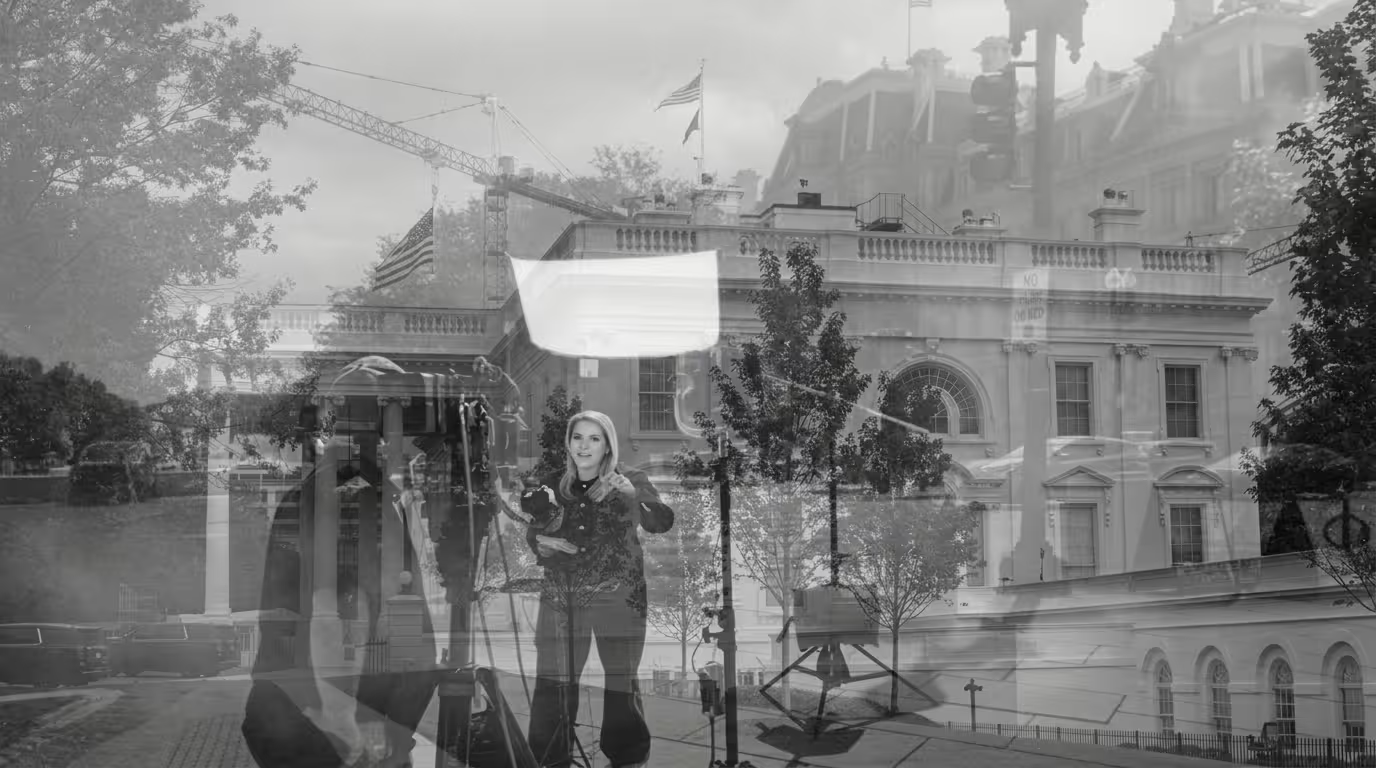
Bombs were already being loaded onto US warplanes and target lists approved when the order was pulled shortly after 2 p.m. Sunday, less than three hours before the first wave, The New York Times reported. NBC News reported that senior US commanders had split over intervening in the Saudi-Houthi war. The White House declined to comment publicly on Trump’s deliberations.
Details:
- The timeline: Trump told advisers Wednesday he opposed air strikes, according to administration officials cited by The New York Times. After speaking with Mohammed bin Salman on Thursday he instructed the Pentagon to prepare options, then reversed again by Sunday midday.
- The Saudi appeal: Sources said the crown prince pressed Trump repeatedly by phone, telling him the kingdom could not succeed alone. Riyadh’s requests grew more urgent after the Houthis announced downing a Saudi F-15 and advanced toward Marib, home to Yemen’s largest oil and gas fields.
- The case against: Some senior officers argued in Pentagon discussions and with Trump’s team that opening another front was a “bad idea,” citing fears of draining munitions stockpiles. The same officials contend the Houthis are not currently attacking American ships.
- The case for: Other military sources backed striking, arguing Washington must help Riyadh after the F-15 loss threatened Saudi air superiority over Yemen. Senior supporters said inaction would be read as betraying an important regional ally.
- The Iran factor: A senior US commander in the region warned any move against the Houthis could endanger American forces and the Iran mission, which includes a naval blockade and Strait of Hormuz operations. Sources said he also judged both tasks feasible with reduced risk.
- Inside the circle: A senior administration official told The New York Times that most of Trump’s inner circle were deeply skeptical or outright opposed to joining the Saudi war, worried about the strain another prolonged campaign would place on forces already engaged against Iran.
- Riyadh’s leverage: The newspaper reported that in May the Saudis effectively blocked a US plan to escort commercial tankers through Hormuz by denying use of Saudi airspace and American bases in the kingdom. Some US officers consider Saudi support essential to the Iran war.
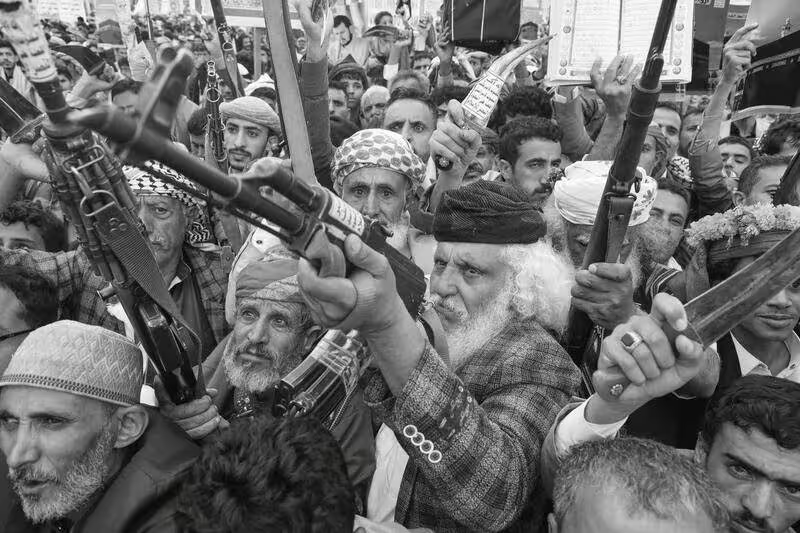
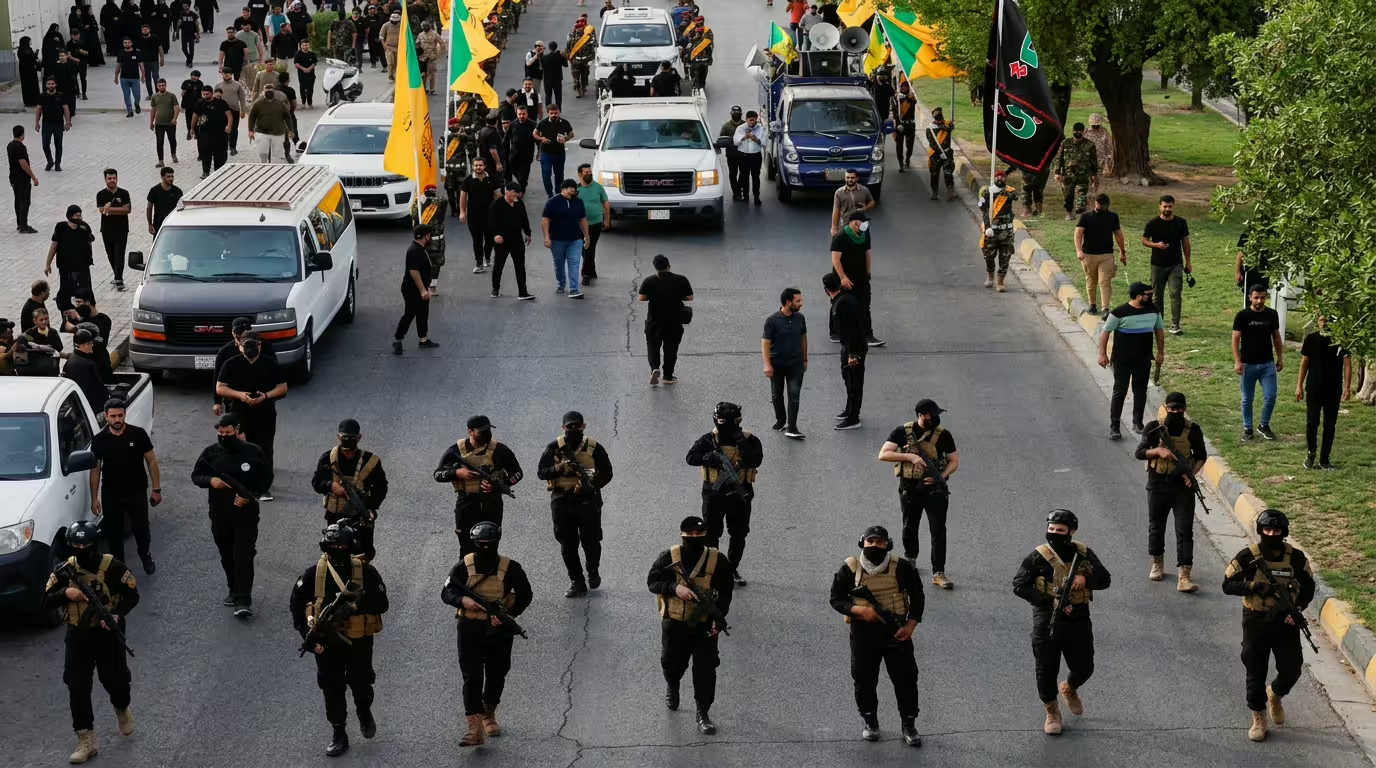
- The battlefield: Reuters reported Monday that the Houthis now control Yemen’s Red Sea coast and are pushing toward strategic highlands in Taiz and Lahj, threatening Saudi-backed forces near Bab al-Mandab. The group also claimed missile and drone attacks on Riyadh over the weekend.
- The understanding: Trump said Sunday Washington remains in constant contact with the Houthis and that they have agreed not to fight American forces. A US official told The New York Times that arrangement would likely collapse if air strikes resumed.
- The precedent: The 2025 campaign ran more than 50 days, hit over 1,000 targets and consumed close to $1 billion in munitions in its first month alone, according to The New York Times. The Houthis kept attacking and downed several American drones. Prime Minister Andy Burnham separately approved a Saudi request for limited defensive air-to-air refueling.
Background:
Washington ended its previous Yemen campaign abruptly in May 2025, with Trump saying the Houthis had promised to stop firing on American ships. Britain, a decades-long Saudi military partner and major arms supplier, deployed its Sky Sabre air defense system in the kingdom earlier this year.
Between the lines:
The cancellation tracks the two constraints commanders themselves named: munitions depletion after a campaign that burned $1 billion in a month, and the risk to an unfinished Iran mission. Against those sits the F-15 loss and Riyadh’s demonstrated ability, as in May over Hormuz, to withhold airspace Washington needs. That is the bind — Trump needs Saudi cooperation against Iran more than the Houthis need his restraint.
What’s next
Trump addresses the UN General Assembly, where he has said he is open to meeting Iranian President Masoud Pezeshkian. Watch Houthi advances in Taiz and Lahj, and whether the no-strike understanding with the group holds.