Key Points
- G7 ministers demanded Iran stop arming and supporting the Houthis as attacks intensify around Yemen and Saudi Arabia.
- They condemned threats to civilian shipping near Bab al-Mandab, a critical link between the Red Sea and Indian Ocean.
- The escalation is deepening displacement and exposing a major global trade and energy route to widening conflict.
The latest
G7 foreign ministers called on Iran to end its arming and support of Yemen’s Houthis, warning that escalating attacks on Saudi Arabia and conflict along the Red Sea threaten regional and global energy security. Meeting on the sidelines of the UN General Assembly in New York, ministers from the United States, United Kingdom, Canada, France, Germany, Italy and Japan also demanded an immediate halt to Houthi military operations, threats and attacks against civilian shipping, alongside a good-faith return to the political process.
Details
- Strongest condemnation: The ministers condemned Houthi attacks on Saudi Arabia “in the strongest terms”. Their joint statement addressed the expanding conflict along Yemen’s Red Sea coastline, where the group has seized additional territory and fighting has raised concerns about maritime security.
- Strategic waterway: The escalation has increased concern over the Bab al-Mandab Strait, one of the world’s principal maritime chokepoints. The passage connects the Red Sea with the Gulf of Aden and the Indian Ocean, making its security important to international trade, civilian shipping and energy flows.
- Cross-border attacks: The Iran-backed Houthis have launched hundreds of drones and missiles towards southwestern Saudi Arabia, including attacks targeting cities and infrastructure around Riyadh. Saudi Arabia, which supports Yemen’s internationally recognised government, has answered with hundreds of airstrikes against Houthi positions.
- Casualties and displacement: At least six people were reportedly killed in Saudi strikes on the strategic Yemeni city of Mokha, Houthi-affiliated media said. The dead included two children and a woman, while eight people were injured. The UN estimates renewed fighting along the Red Sea coast has displaced more than 120,000 Yemenis.
- US strike plans: President Donald Trump came close to ordering a new US military campaign after Saudi Crown Prince Mohammed bin Salman personally urged him to intervene. Trump considered repeated Saudi requests for about two weeks and instructed the Pentagon to prepare airstrikes after initially opposing military action. The planned strikes were nearing execution when he called them off.
- British assistance: Saudi Arabia has also sought greater military assistance from Western allies. Britain agreed to provide “defensive air-to-air refuelling” support using a British Voyager aircraft based at RAF Akrotiri in Cyprus, adding a defensive support commitment as pressure from Houthi attacks mounts.
Background
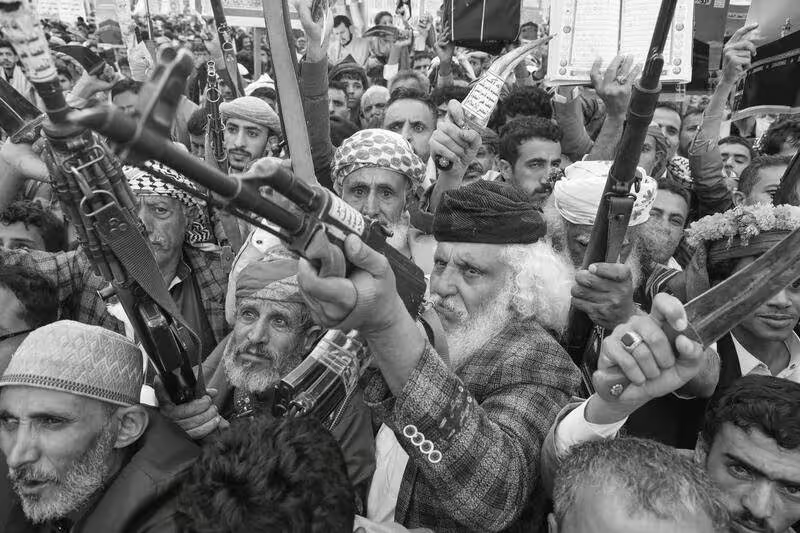
The Houthis describe themselves as part of Iran’s “axis of resistance” against Israel, the United States and the wider West, alongside Hamas and Lebanon’s Hezbollah. Tehran has repeatedly denied supplying the group with weapons, saying its support is political.
What’s next
The immediate indicator will be whether the Houthis halt military operations and attacks on civilian shipping and return to the political process, as demanded by G7 ministers.