Key Points
- McQueen returned to London after nearly 25 years, anchoring a season shaped by darker, more expressive design.
- Mulberry also rejoined the calendar as designers challenged quiet luxury with disorder, theatricality and British references.
- The collections position London’s heritage and experimentation as engines of both cultural relevance and commercial growth.
The latest
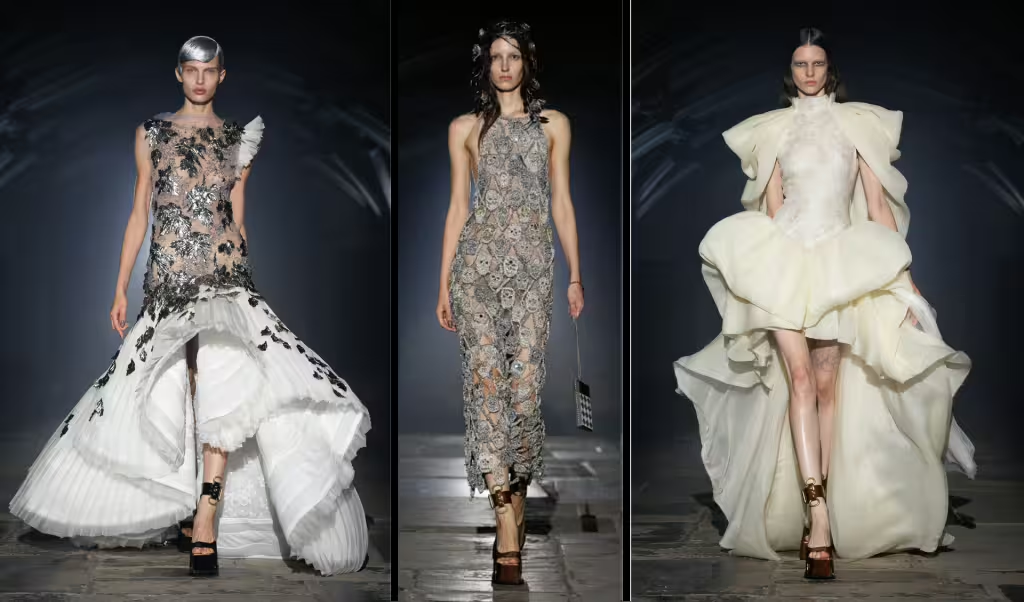
Alexander McQueen’s return to London after nearly 25 years defined a London Fashion Week that rejected polished restraint in favour of darker, more theatrical expression. The Spring/Summer 2027 collections paired British heritage with subversive styling, romantic silhouettes and deliberate imperfection, while Mulberry rejoined the calendar after nine years with Christopher Kane presenting his first collection for the house. Younger designers added clashing textures, practical outerwear, classical draping, vivid orange and ballet references.
Details
- McQueen’s homecoming: Creative director Seán McGirr staged the show at Lincoln’s Inn Chapel, combining lace corsets, chainmail, skull motifs and architectural tailoring. Delicate tulle met leather harnesses, floral prints contrasted with reflective organza, and muted religious tones shifted into faded rave-inspired neon. Huntsman created three bespoke menswear looks in British wool, while Shaun Leane contributed recycled-silver body ornaments and reissued archival headpieces.
- Rejecting quiet luxury: Chopova Lowena, Sinead Gorey and Conner Ives embraced the “messy girl” aesthetic through clashing textures, pastels, florals and combinations designed to feel accidental. Vogue Business and Vogue Runway deputy director Elektra Kotsoni described it as the season’s leading trend and a reaction to “clean girl” dressing and quiet luxury.
- Nature and draping: Erdem, Yuhan Wang and Bora Aksu developed “gardening-core” with aprons, waterproof fabrics, parkas and trench coats suggesting clothes worn from an allotment. Elsewhere, Pauline Dujancourt’s billowing fabrics and organic draping captured a “modern goddess” direction, as lightweight materials, ribbons and volume revived classical Greek references and movement after seasons of structured minimalism.
- Colour and dance: Orange emerged as the standout colour, spanning melon, coral, tangerine and ginger at Mulberry, Justin Cassin, Enny Atelier and Vin + Omi. Edeline Lee meanwhile turned a school sports hall into a ballet-inspired stage, sending models en pointe in tutus and flowing dresses; Kotsoni expects ballet flats and delicate shoe shapes to remain prominent next season.
- British identity: Argyle cardigans, sweater vests, pleated skirts, plaid coats, knee socks, loafers and rugby shirts framed a back-to-school street-style trend. Combat boots, leather, wallet chains, baseball caps and asymmetrical hems disrupted its preppy order. British Fashion Council CEO Laura Weir said the goal was to re-platform the event as both a home for British design and an engine for creativity and commercial growth.
Between the lines
The season’s defining tension was not heritage versus novelty, but their coexistence. Traditional tailoring, school uniforms and pastoral references became raw material for provocation, individuality and deliberately unruly styling.
What’s next
The next indicator will be Spring/Summer 2027 uptake of orange, ballet flats, gardening-inspired outerwear and messy layering across retail collections, celebrity red carpets and street style.