Key Points
- Ceer unveiled Exobot premium electric sedan and SUV, with Saudi sales expected in early 2027.
- The PIF-Foxconn venture plans five mass-market models and a broader mix of powertrains by 2030.
- Saudi Arabia aims to build a supplier-backed automotive ecosystem and expand production beyond local assembly.
The latest
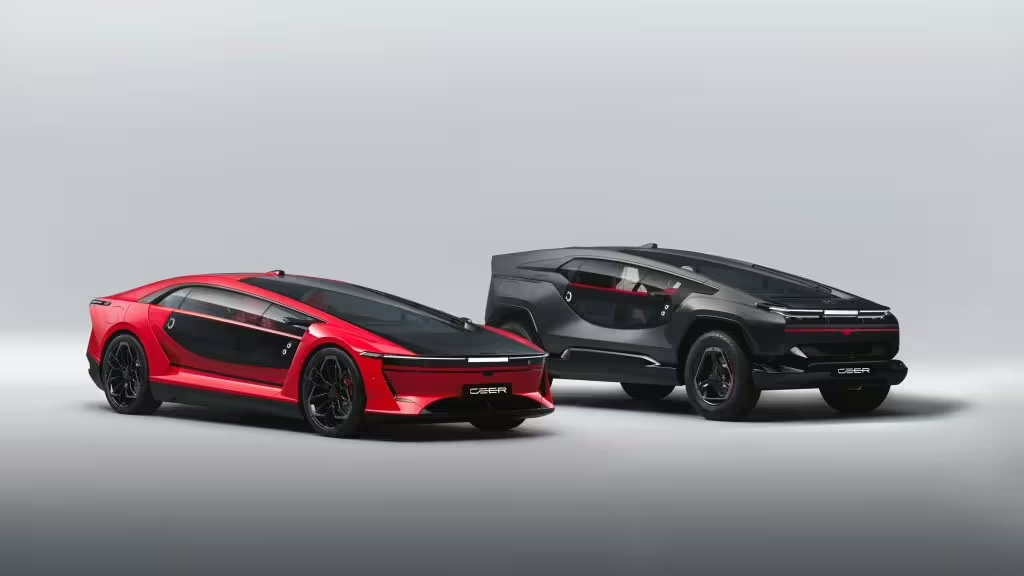
Ceer has unveiled its first two vehicles, a premium electric sedan and SUV branded Exobot, as the Saudi startup moves toward commercial sales and the kingdom builds a domestic automotive industry. The vehicles are scheduled to reach Saudi buyers in early 2027. Chief executive Jim DeLuca said the launch was intended to demonstrate Saudi capabilities, while the company outlined five additional mass-market models from 2028 through 2030 and a phased expansion beyond its home market.
Details
- Ownership structure: Ceer is a joint venture between Saudi Arabia’s Public Investment Fund and Taiwan’s Foxconn. Foxconn supplied the Exobot’s electrical architecture, while German premium automaker BMW contributed engineering expertise. The arrangement brings together sovereign investment, electronics capabilities and automotive engineering as the company prepares its initial production program.
- Distinctive design: Both Exobot models feature upward-opening “butterfly” doors and a futuristic appearance likened to the film Tron. Their cabins remove the conventional pillars between the front and rear seats. Ceer said high-strength materials provide the structural support normally associated with those pillars, preserving the open design.
- Supplier network: Major suppliers have established Saudi operations as government incentives support the emerging industry. They include US-based Lear, South Korea’s Shin Young, Germany’s Benteler and China’s Fangxin. The strategy seeks to create a domestic supplier network rather than limiting the kingdom’s role to local vehicle assembly.
- Powertrain shift: Ceer was conceived as an all-electric manufacturer but now plans plug-in hybrids and internal-combustion vehicles as demand changes. Its five planned mass-market models will be engineered to meet global regulatory requirements, supporting eventual international sales and broadening the company’s addressable customer base.
- Regional rollout: The company plans a measured Saudi rollout before entering neighboring markets in 2028, followed by the wider Middle East and North Africa. DeLuca said a single mistake could wipe out a startup, framing the pace against the costly failures of several EV challengers in recent years.
- Market pressure: Ceer enters a market where Chinese manufacturers are rapidly gaining share and leading major parts of EV development, intensifying pressure on established automakers. Recent startup collapses include Fisker, Arrival and Lordstown. VinFast, previously led by DeLuca, is restructuring after spending billions of dollars on expansion.
Background
Previous Saudi efforts did not reach production: a proposed Jaguar Land Rover plant was abandoned more than a decade ago, and Toyota rejected a manufacturing deal in 2019, citing high labor costs and a shortage of local suppliers. The current approach pairs international expertise with supplier investment inside the kingdom.
What’s next
Early 2027 sales of the Exobot sedan and SUV are the next milestone. Ceer then plans to enter neighboring markets in 2028 while beginning the five-model mass-market rollout scheduled through 2030.