The latest:
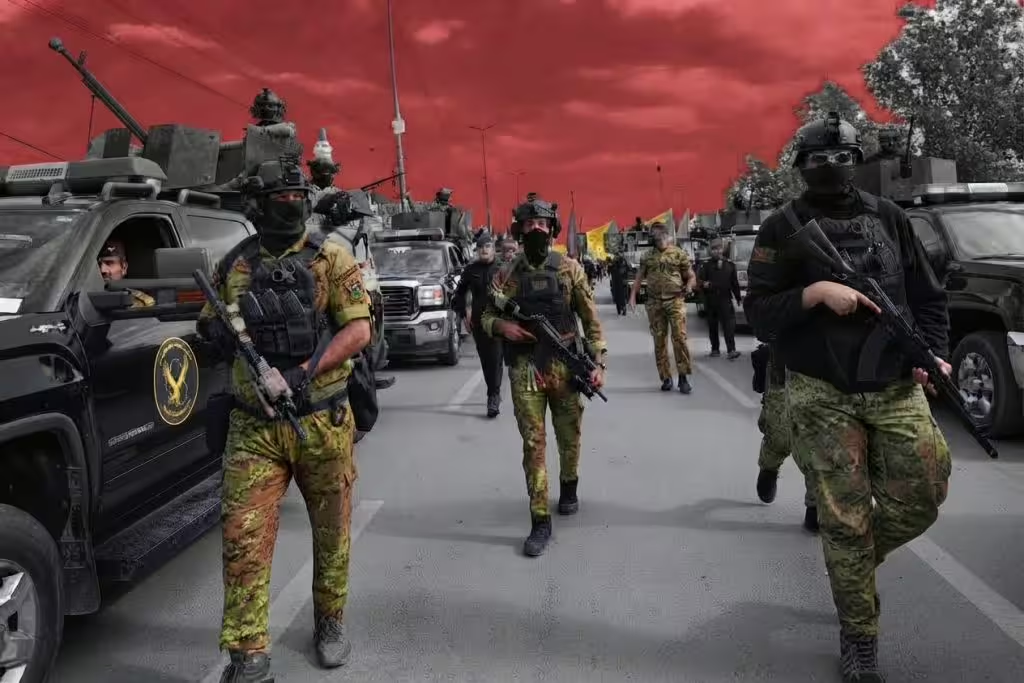
Iraq’s most powerful Iran-backed armed factions would surrender their weapons by June 30, 2027, under a phased plan Prime Minister Ali al-Zaidi laid out in Baghdad. Speaking to The New York Times, the political newcomer said the goal was to end the groups’ existence as independent entities, with fighters absorbed individually into the Popular Mobilization Forces. It was his first interview with foreign media.
Details:
- The mechanism: Al-Zaidi said the plan opens with a 90-day period in which the militias halt all attacks in exchange for guarantees they will not be struck by US forces. Weapons handovers begin after that window and run until the June 2027 endpoint, with a government committee negotiating terms directly with the factions.
- The rival timeline: The militias are still pressing for an extension to the end of 2027, according to al-Zaidi. He said the agreed terms on sequencing will be announced on September 30, the date the last remaining American troops are due to leave Iraq.
- An earlier misstep: Al-Zaidi declared over the summer that the militias would be disarmed by the September 30 withdrawal date. The factions rejected that schedule immediately, and officials later revised the language to say disarmament could begin then — a shift widely read in Iraq as a serious political error.
- The stakes for him: Al-Zaidi framed disarmament as non-negotiable, saying others who raised the issue retreated under pressure and that the file, alongside corruption, is a matter of honor for him. A wealthy businessman, he was largely unknown to most Iraqis before his nomination this year.
- The economic crisis: Iraq, the world’s third-largest oil exporter, has lost 60% of its monthly export revenue because the US-Iran war paralyzed shipping through the Strait of Hormuz, al-Zaidi said, putting total losses since the war began at roughly $60 billion.
- Tehran’s leverage: Al-Zaidi said Iran has not allowed Iraqi oil tankers through Hormuz despite Baghdad seeing itself as a regional partner, and that the decision comes from Iran and is decisive. He said their aim is to push up global oil prices and apply pressure.
- Pipeline diplomacy: He has proposed routes bypassing the Gulf, including one he said could reach Europe. Iraq approved a one-year deal this year to raise exports to Turkey through an existing pipeline and now wants its capacity expanded; he pitched Europe-bound lines in France and Germany last week.
- The skeptics: Regional diplomats and some Iraqi security officials warned the timeline is extremely risky and close to unachievable during the war. A senior Iraqi security official, speaking anonymously about sensitive talks, said some US officials appeared receptive but the plan will collapse without a US-Iran peace deal that remains out of reach.
- Expert assessments: Victoria Taylor of the Atlantic Council said Baghdad insists it is not a party to the war but does not control that, and judged Iran will not greenlight disarming a highly effective instrument. Ramzi Mardini of Geopol Labs said a deadline without political and security change is only an aspiration.
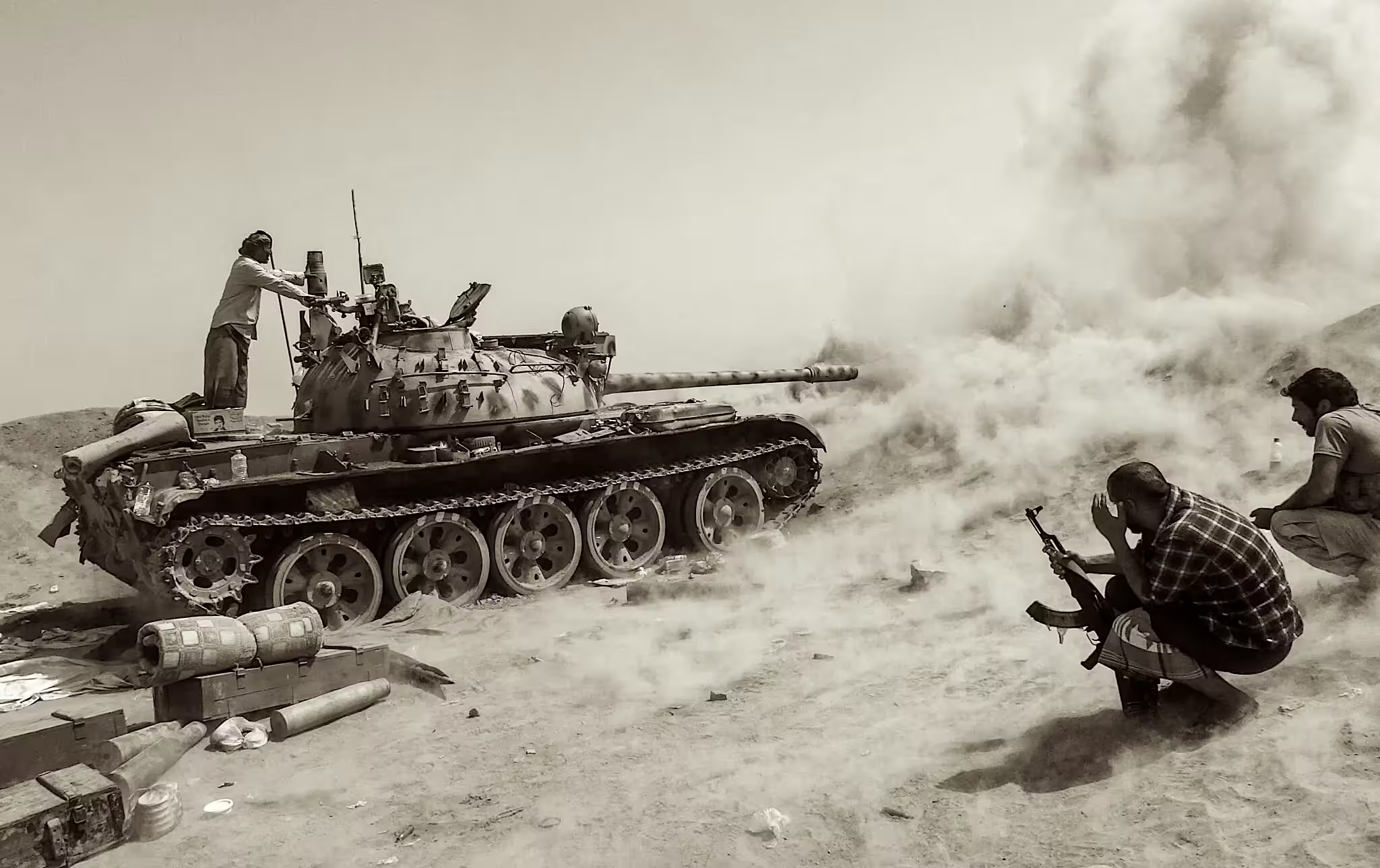
- The factions’ terms: Four powerful militias remain the focus. They assert a right to bear arms while occupation forces pose a threat, citing the February US-Israeli war on Iran and alleging Israel established covert bases in Iraq’s desert, and demand the withdrawal of Turkish troops from northern Iraq. Ankara conditions any pullout on clearing Kurdish separatist camps and seizing their weapons; al-Zaidi said his government is drafting a timeline to integrate local Kurdish forces into the Popular Mobilization Forces.
Background:
Shiite armed groups emerged after the 2003 US invasion toppled Saddam Hussein, many trained and armed by Iran. Countless new factions formed in 2014 against the Islamic State, which seized over a third of Iraq. Even those folded into the Popular Mobilization Forces kept close ties to Tehran.
Between the lines:
The plan’s two pillars sit outside Baghdad’s control. The 90-day truce depends on Washington withholding strikes, and the endpoint depends on Tehran releasing allies it is currently using to squeeze global oil flows. That is why Iraqi security officials tie the schedule to a US-Iran peace deal, and why the factions keep adding conditions — Turkish troops, alleged Israeli bases — that Baghdad cannot deliver quickly.
What’s next
September 30 is the double marker: the last US troops depart and al-Zaidi says the negotiated disarmament terms will be published. Watch whether the 90-day no-attack period holds, and al-Zaidi’s first UN General Assembly appearance this week.