Key Points
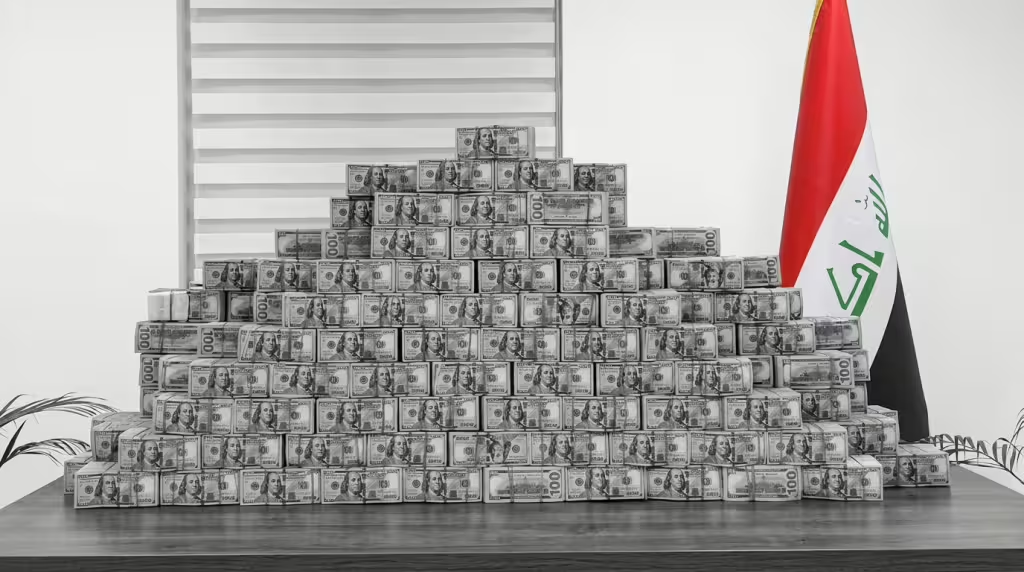
- Iraq’s latest anti-corruption drive has recovered more than 1.359 trillion dinars in money, assets and property.
- Investigations have expanded from officials and intermediaries into state contracts, election financing and political protection.
- The decisive test is whether prosecutions reach powerful patrons and recover proceeds moved through foreign jurisdictions.
The latest
Prime Minister Ali Al Zaidi’s anti-corruption campaign has recovered over $1 billion while investigating links among officials, state contracts, businesses and election campaigns. More than 26,000 reports have reached the Federal Integrity Commission, and financial rewards were activated for tips leading to corruption cases. The inquiry tests whether investigators can move beyond officials and intermediaries to political networks accused of protecting them.
Details
- Gold and cash: Momentum increased after former deputy oil minister for refining affairs Adnan Al Jumaili was arrested in late May. Investigators found cash inside homes and buried several metres underground, while properties, vehicles and weapons were seized. In July, the judiciary announced the recovery of 375 kilograms of gold linked to investigations involving Al Jumaili and another case. Of that amount, 358 kilograms were recovered in coordination with the Kurdistan Region under Judge Faiq Zidan’s supervision.
- Green Zone raids: Al Jumaili’s testimony led to a broader investigation and the detention of 47 politicians and officials during a late-June operation that included raids inside Baghdad’s fortified Green Zone. The judiciary said evidence showed MPs exploited state resources for election campaigns and benefited directly or indirectly from government contracts in exchange for commissions and personal gains.
- Calculated approach: A government adviser described Al Zaidi’s strategy as deliberate, cautious and guided by a carefully drawn map. Initial targets belong to what he called the corruption system’s “third line”: public employees, intermediaries and operators allegedly working for, or protected by, influential political figures. The approach tests how sponsors in the upper political class respond.
- Political balance: Targets have been drawn from Kurdish, Sunni and Shiite political environments, limiting attempts to portray the campaign as an attack on one faction or community. The adviser nevertheless identified a tendency to pursue more vulnerable networks, particularly in Sunni provinces. Whether cases advance from employees to business figures and political patrons will determine how deeply the campaign penetrates established power structures.
- Recovery challenge: Former president Barham Salih estimated in 2021 that about $150 billion had been smuggled from Iraq through corrupt deals since 2003. Iraq ranked 136th in Transparency International’s 2025 Corruption Perceptions Index. Recovering proceeds requires authorities to trace, freeze, confiscate and repatriate assets moved through intermediaries, companies, property holdings and financial centres across several jurisdictions.
Between the lines
Al Zaidi created the Supreme Sovereign Council for Integrity, Oversight and Recovery of Public Funds, tightened scrutiny of major contracts and strengthened investigators. Calling the Green Zone arrests the campaign’s “first phase,” he promised to pursue public-money thieves “night and day.” The adviser put the system’s principal political centres at no more than ten major bloc leaders with extensive post-2003 influence.
What’s next
The next concrete indicator will be court action that advances cases from civil servants to contractors and political patrons, alongside orders to trace, freeze, confiscate and return assets held abroad.