Key Points
- The agreement gives the US a stake in 17 Venezuelan fields holding an estimated 65 billion barrels.
- Venezuela holds over 300 billion barrels, but political instability and deteriorating infrastructure have constrained production.
- Heavy crude could support Gulf Coast refineries and energy security, though fuel-price relief is unlikely to arrive quickly.
The latest
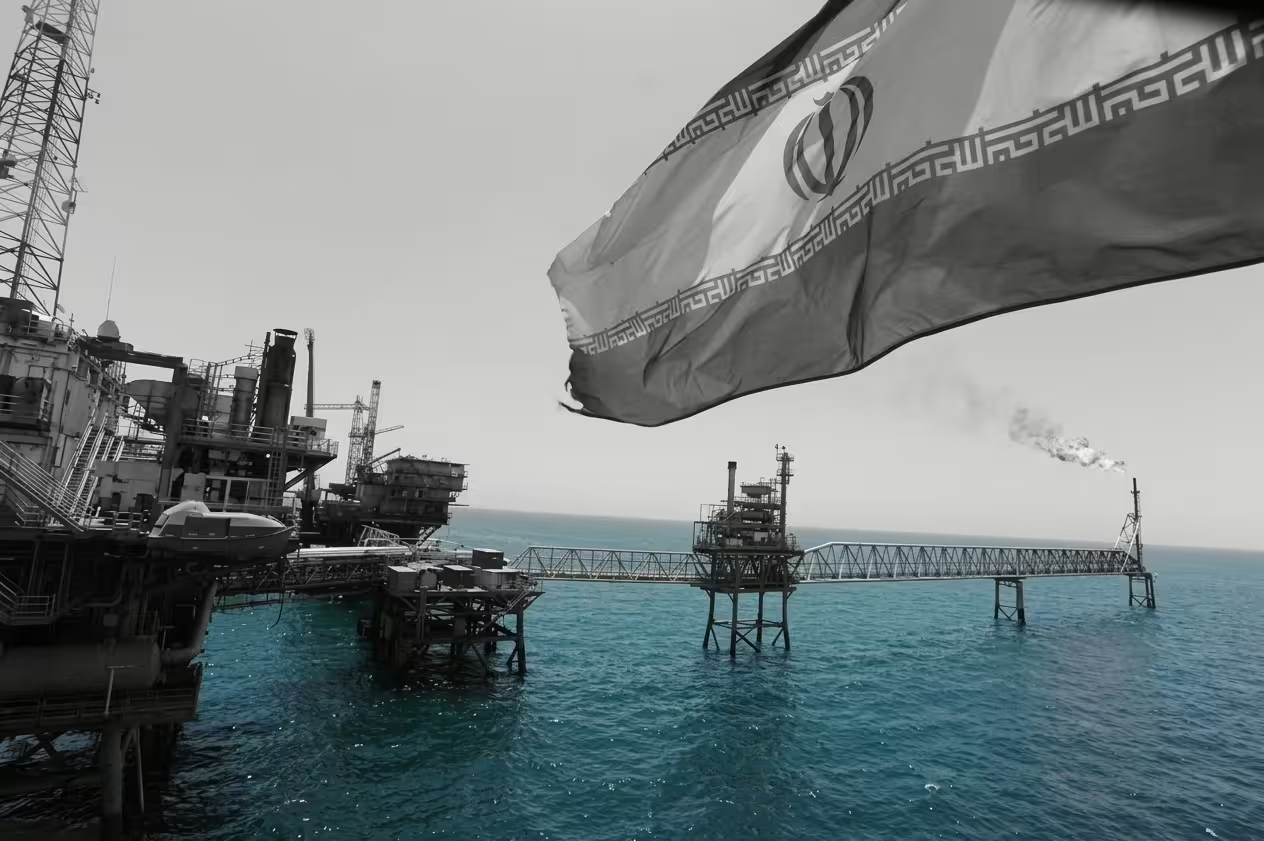
President Donald Trump’s new oil agreement with Venezuela gives the United States a stake in 17 oil fields containing an estimated 65 billion barrels of crude, Venezuela’s government said. Announced Friday, the deal opens potential long-term access to Venezuelan heavy crude as the United States faces disrupted oil shipments through the Strait of Hormuz and sharply higher gasoline prices. Its immediate value will depend on how quickly Venezuela can convert underground reserves into market-ready barrels.
Details
- Reserve scale: Venezuela controls more than 300 billion barrels of crude reserves, roughly 20% of the global total and more than Saudi Arabia. Despite holding an estimated 17% of worldwide reserves, it produces only about 1% of global oil output, leaving a wide gap between its resource base and current supply.
- Production obstacles: Years of political instability and deteriorating infrastructure have prevented the country from turning its oil wealth into steady production. The central operational challenge is raising output and preparing enough crude for reliable shipment to buyers and refiners, a process that will determine the agreement’s practical impact.
- Refinery compatibility: Venezuela’s heavy crude matches the configuration of many Gulf Coast refineries. US production is dominated by lighter shale oil, while those plants have historically relied on heavier imports from Canada, Mexico and Venezuela to meet their processing requirements and make full use of existing refining equipment.
- Supply diversification: A steadier Venezuelan supply could diversify US oil imports, support Gulf Coast refinery operations and provide a buffer against future disruptions. The additional crude could also help replenish the Strategic Petroleum Reserve, which remains well below its authorized capacity of 714 million barrels.
- Price pressure: The average US price for regular gasoline reached about $4.07 a gallon Sunday, AAA data showed, compared with roughly $3.19 a year earlier. The 88-cent annual increase adds urgency as the war with Iran disrupts oil shipments moving through the Strait of Hormuz.
- Long-term wager: Trump is betting that durable access to Venezuelan heavy crude will strengthen US energy security and eventually lower costs for Americans. Drivers are unlikely to see quick relief because Venezuela must first increase field production, prepare the crude for sale and establish a steady flow of shipments.
Between the lines
The agreement’s 65 billion-barrel headline figure represents potential access rather than immediate supply. Its value rests on whether Venezuela can overcome the production and infrastructure problems that have kept output far below the scale of its reserves.
What’s next
The next indicator will be the production rate from the 17 fields and the volume converted into market-ready shipments, followed by how much reaches Gulf Coast refineries or is directed toward rebuilding the Strategic Petroleum Reserve.