Key Points
- US forces struck two Iranian rocket launchers on Larak Island, their first acknowledged attack inside Iran since late July.
- Iran fired ballistic missiles at two Jordanian bases hosting US forces; Jordan said it intercepted eight missiles.
- The exchange renews escalation risks around the Strait of Hormuz, a vital shipping route already disrupted by conflict.
The latest
US forces struck two Iranian rocket launchers on Larak Island in the Strait of Hormuz on Sunday, before Iran launched ballistic missiles at two bases hosting American personnel in Jordan. US Central Command said the launchers were preparing to fire rockets carrying sea mines into the waterway, while Jordan’s armed forces reported intercepting eight missiles on Monday.
Details
- Larak operation: Central Command described the operation as “limited” and “precise,” targeting Islamic Revolutionary Guard Corps minelaying forces posing an imminent threat to civilian mariners and commercial shipping. Spokesman Capt. Tim Hawkins said US forces completed clearing mines from international shipping routes last week and would prevent Iran from laying more.
- Iranian response: The IRGC said it launched ballistic missiles at the King Hussein and Al Azraq bases in response to the Larak strike. Both facilities host US forces. American officials said US forces defended against the missiles. Jordan hosts nearly 4,000 US troops and is a staging ground for regional operations.
- Casualties reported: The Revolutionary Guards said the strike killed and wounded several Iranian service members and civilians. US officials identified the launchers as IRGC assets. Brig. Gen. Hossein Mohebi called the attack a “strategic and fatal error” by the Trump administration and warned of “severe repercussions.”
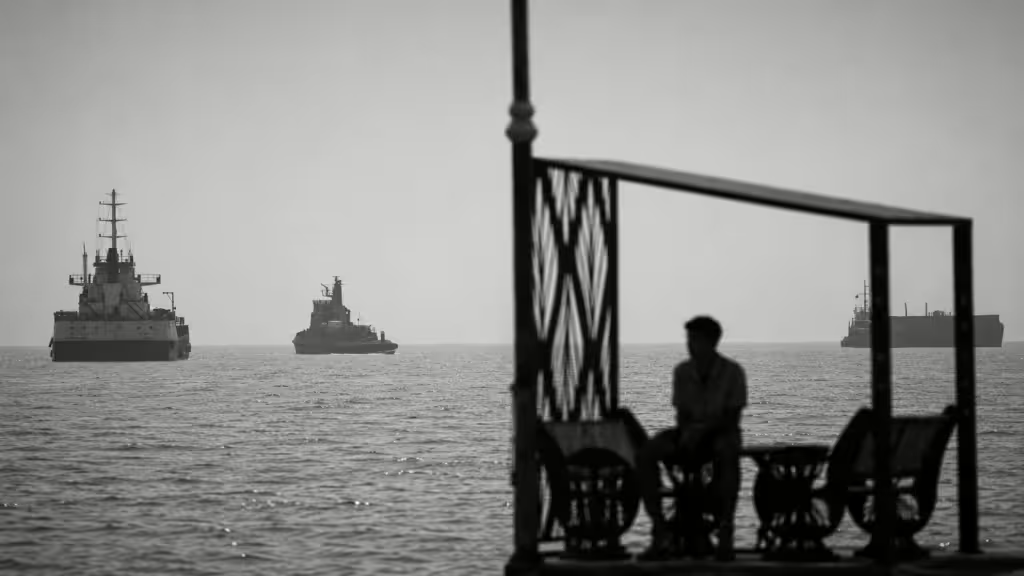
- Shipping disruption: Larak is used by the Revolutionary Guards to monitor vessel traffic from a strategic position overlooking one of the world’s most important shipping routes. Attacks on commercial vessels have reduced strait traffic to a trickle. A tanker entering near Oman was struck by a projectile Saturday, UK Maritime Trade Operations said.
- Tanker mine claim: The IRGC Navy said an unidentified supertanker caught fire and stopped after striking two sea mines on what it called an “illegal” southern route. It declared its transit regulations mandatory and warned vessels against violating them.
- Regional readiness: The UAE Defence Ministry denied reports that Al Minhad Air Base had come under missile attack, calling them false and saying forces remained on high alert. The denial followed the interception of an Iranian drone over UAE territorial waters.
- Pressure strategy: The Trump administration combined increased sanctions with a blockade of Iranian ports to press Tehran to reopen the strait and make nuclear concessions. Trump had paused strikes at Gulf allies’ request to give diplomacy another chance, but later warned that vessels laying more mines would be destroyed.
Background
Treasury Secretary Scott Bessent announced “Operation Economic Outcast” to isolate Iran economically and reduce the likelihood of renewed large-scale combat. The administration has sought to avoid fighting that would further deplete US stocks of missile interceptors and other weapons.
What’s next
Washington’s decision on any response to attacks targeting the Jordanian bases and vessel movements through the Strait of Hormuz will be the next concrete indicators after the Larak strike and tanker incidents.