Key Points
- Washington threatens penalties against parties dealing with Iran’s gold, cryptocurrency, aviation, shipping and technology sectors.
- The campaign aims to constrict Tehran’s remaining trade channels after a months-long blockade of oil shipments.
- Its reach could affect major partners, civilian savings, international flights and access to imported industrial goods.
The latest
The United States has announced an “Economic D-Day” against Iran, warning that countries and entities doing business with five key industries could face sanctions as Washington intensifies economic pressure during the war. The Treasury Department said Iran uses those sectors to sustain its economy and support destabilization and terrorism. Parliament Speaker Mohammad Bagher Ghalibaf dismissed the move as bluster, saying Iran’s trading partners were not taking the threats seriously. The declaration did not immediately blacklist every company or individual involved, leaving time for negotiations.
Details
- Safe-haven gold: Iranians have turned to gold as the rial and inflation erode savings, while the central bank has accumulated the metal for years. Iran imported more than $1 billion of gold over four months in 2025, mostly from Turkey, the United Arab Emirates and China. Economist Mahdi Ghodsi said hoarding could slow activity by shifting cash into long-term stores of value.
- Crypto networks: Chainalysis valued Iran’s cryptocurrency sector at nearly $7.8 billion in 2025. It estimated accounts affiliated with the Islamic Revolutionary Guards Corps received more than $3 billion that year, up from over $2 billion in 2024. Treasury accused Ivan Obukhov, a Ukrainian national based in the Emirates, of processing over $100 million in cryptocurrency since 2023 to facilitate IRGC oil sales.
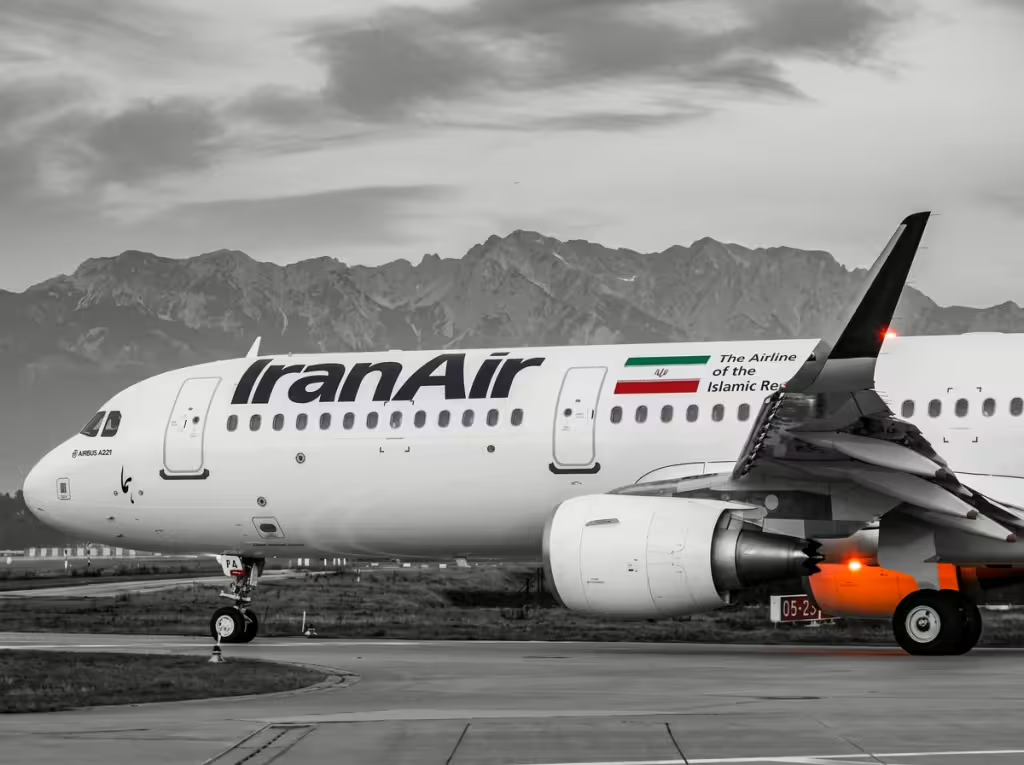
- Aviation exposure: Countries could face US reprisals for allowing Iranian commercial aircraft, including planes affiliated with the Revolutionary Guards, to land. Treasury says Iranian airlines move fighters, weapons, sensitive technology, gold and cash to Tehran-backed groups, including Hezbollah and Hamas. Tighter restrictions could also disrupt family travel for Iranians living across borders.
- Shipping channels: A months-long US blockade has targeted Iranian oil shipments, but Iran also relies on imported machinery, electronics and steel, particularly after US strikes damaged critical infrastructure. Washington says national shipping lines transport weapons components and missile precursors, while tanker services and a “shadow fleet” move oil around sanctions.
- Dual-use technology: Treasury says Iran has imported advanced technology for weapons programs. A 2025 Kharon analysis found that an Iranian government initiative had built overseas companies to facilitate trade in dual-use civilian and military technology despite US restrictions.
Background
Washington has enforced sanctions on Iran for decades. The latest warning came less than a week after the United Arab Emirates, a leading Iranian trading partner, announced plans to halt all trade and financial transactions with Iran. Ghodsi said broad sanctions would hit ordinary Iranians hardest, describing civilians as casualties of economic conflict.
What’s next
Treasury’s next designations will show which companies and individuals in the five sectors are blacklisted and whether Washington will penalize major partners such as China. The isolation of key cryptocurrency-exchange nodes will be another measurable indicator of enforcement.