Key Points
- Iraq could become Washington’s test case for pushing Iran’s trading partners outside the dollar-based financial system.
- U.S. control over Iraqi oil-revenue dollars gives it exceptional leverage over Baghdad’s banks, reserves and government.
- The approach could shape pressure on larger Iranian partners, including China, Turkey, India and the UAE.
The latest
Iraq could demonstrate how the United States may enforce its threat to cut countries trading with Iran off from the dollar-based financial system. Washington has sanctioned Iraqi banks accused of dealing with Tehran, while avoiding steps that would devastate an economy tied strategically to both countries. President Donald Trump has warned of severe consequences for any country providing Iran an economic lifeline, while Treasury Secretary Scott Bessent has announced an “economic onslaught” targeting Iran and its trading partners through sanctions.
Details
- Financial leverage: Since its 2003 invasion, the United States has held effective control over Iraq’s oil-revenue dollars, mainly through the Federal Reserve Bank of New York. Iraq holds more than $100 billion in reserves in the U.S., leaving Baghdad heavily reliant on Washington to keep its oil income and financing flowing.
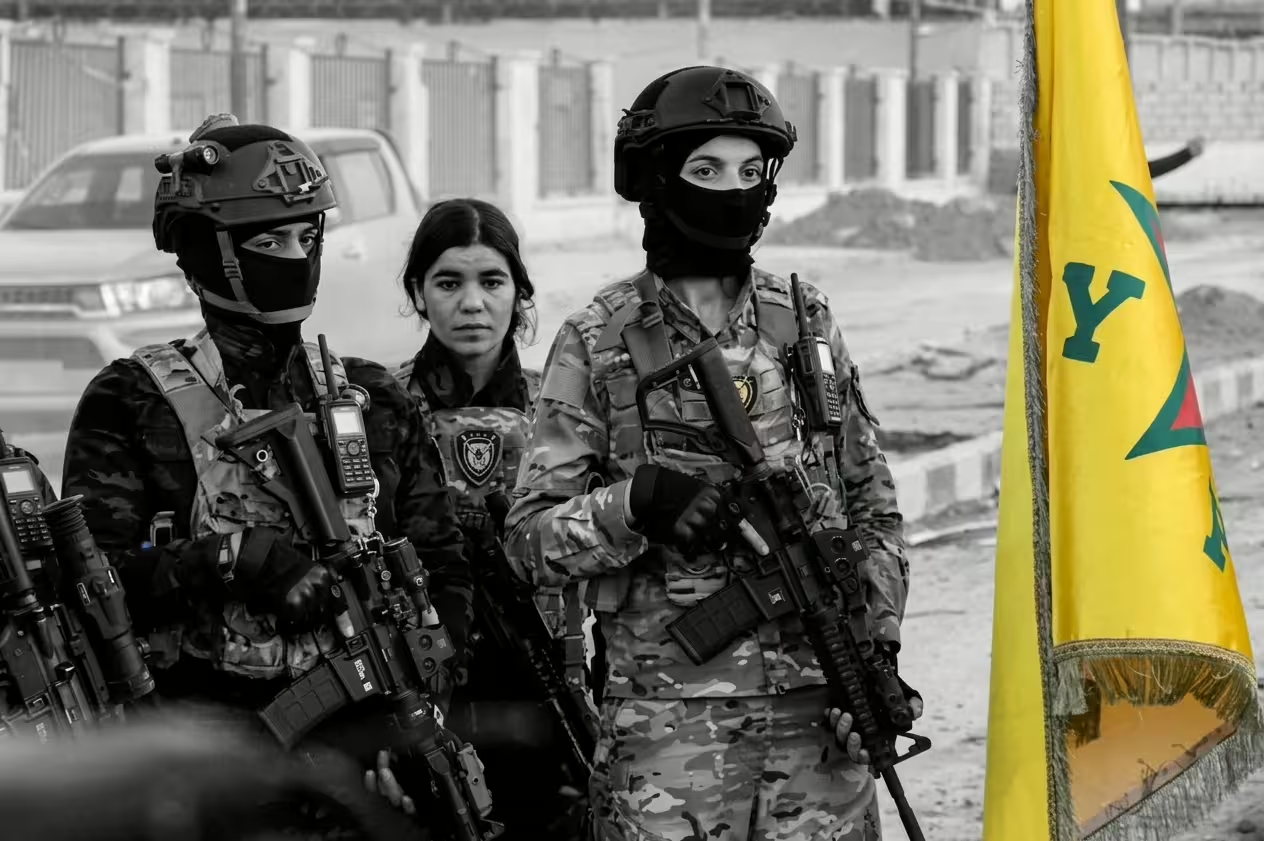
- Cash pressure: Washington halted a $500 million cash shipment to Iraq in April and suspended parts of security cooperation to pressure Baghdad over Iran-backed militias. In January, senior Iraqi politicians faced threatened sanctions, potentially covering oil revenues, if those groups entered the next government. Some of Iraq’s largest banks have remained outside previous measures.
- Bilateral trade: Iraq-Iran trade exceeded $10 billion in 2025, driven mainly by Iranian food and consumer-goods exports. Trade declined in 2026 after the Iran war began, disrupting border crossings, increasing transport costs and raising security risks. Iraq also pays Iran between $4 billion and $5 billion annually for natural gas used to generate electricity.
- Limited alternatives: U.S. pressure has increased the cost and risk of financial dealings with Iran and pushed Iraqi institutions to improve compliance, Chatham House associate fellow Neil Quilliam said. It has not broken the countries’ economic ties. Quilliam said Iraq’s limited alternatives and dependence on U.S.-led financial architecture make it more vulnerable than China or Turkey.
- Sanctions route: Iran has used Iraq as an economic “lung,” securing hard currency through exports and bypassing U.S. sanctions through its neighbour’s banking system. A fuel-oil smuggling network generated at least $1 billion annually for Iran and its proxies in Iraq, illustrating the activities that other Iranian neighbours could face pressure to curb.
- Incentives option: Further restrictions on Iran’s international financial links could intensify pressure on Iraq’s banks and informal financial sector, said Tom Keatinge, director of the Centre for Finance and Security at the Royal United Services Institute. He said U.S. technical assistance to Iraq’s central bank and government could prove more effective than relying exclusively on punitive measures.
What’s next
The next indicators will be whether the Treasury identifies specific Iranian trading partners, imposes further restrictions on Iraqi banks, or affects Baghdad’s annual gas payments to Tehran. The status of the suspended $500 million cash shipment will also show how Washington calibrates pressure while seeking to avoid wider financial disruption.