Key Points
- Situational Awareness fell 67% through July 30, crushed by leveraged and concentrated bets on artificial intelligence.
- Founder Leopold Aschenbrenner built credibility through bold superintelligence forecasts and deep Silicon Valley connections.
- The collapse became Wall Street’s latest warning about leverage, inexperience and confidence outrunning risk controls.
The latest
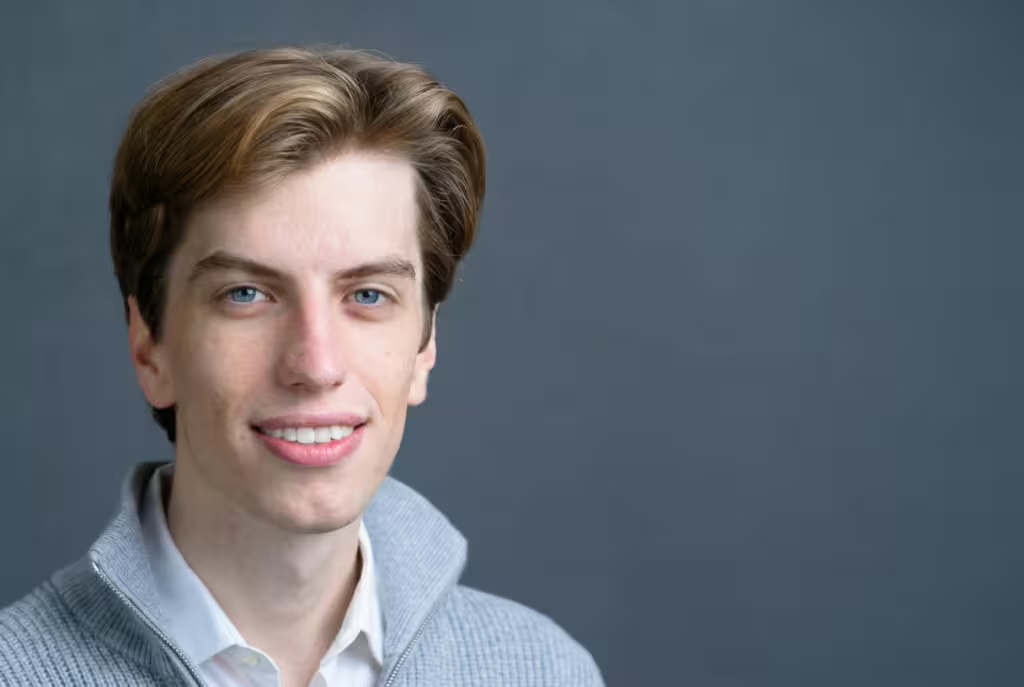
Situational Awareness, the hedge fund founded by 24-year-old Leopold Aschenbrenner, unraveled after losing 67% through July 30. The reversal followed a technology selloff that battered its heavily leveraged, AI-focused portfolio and forced it to unload most public holdings at a discount. Aschenbrenner had attracted billions by pairing sweeping predictions about superintelligence with close access to leading researchers, executives and investors, earning a podcaster’s nickname: the “Nostradamus of AI.”
Details
- Rapid ascent: Aschenbrenner entered Columbia University at 15 and graduated as valedictorian in 2021, aged 19. He later worked for the FTX Future Fund in the Bahamas, then joined OpenAI’s alignment team in 2023 under chief scientist Ilya Sutskever. At Future Fund, he worked near Sam Bankman-Fried and future wife Avital Balwit on philanthropy that prioritized AI safety.
- OpenAI rupture: OpenAI fired Aschenbrenner after he shared information executives considered sensitive with Holden Karnofsky, an effective-altruism figure connected to Anthropic. Aschenbrenner said the information was not confidential and disputed the company’s reasons. OpenAI denied firing him for raising security concerns. He rejected an equity offer worth almost $1 million rather than sign the accompanying nondisclosure agreement.
- Viral forecast: His 165-page manifesto, “Situational Awareness: The Decade Ahead,” predicted AI would produce one of humanity’s most intense and volatile periods. Its popularity strengthened his reputation as an insider who understood the technology’s direction better than traditional New York money managers.
- Influential backing: Aschenbrenner launched the fund with former hedge-fund investor Carl Shulman. Backers included Jane Street and Stripe co-founders Patrick and John Collison. The portfolio covered semiconductors, energy, software and data centers, with an Anthropic stake as its crown jewel.
- Concentrated risk: The fund borrowed about $3 for every $1 of capital, exceeding leverage at comparable funds exposed to similar volatility. Cheap, powerful AI systems released in China unsettled markets in July, triggering a selloff that struck its concentrated long positions.
- Forced liquidation: Facing margin calls, Aschenbrenner considered selling a $3.5 billion Anthropic stake before choosing to liquidate most public holdings. Citadel bought the portfolio at a discount and benefited when AI shares rebounded. Jane Street lost about $15 billion, its worst-ever monthly result.
- Regulatory scrutiny: Securities regulators are investigating Situational Awareness’s trading activity, though they have made no formal allegations of wrongdoing. The company said it operates in a highly regulated business and would cooperate fully with any regulatory request.
Background
Aschenbrenner’s expansive outlook extended beyond markets. He told friends he wanted to save money to buy galaxies, believing AI advances would unlock cosmic resources and allow humanity to colonize distant planets.
What’s next
The next concrete marker is whether securities regulators conclude their review without action or proceed with formal allegations over the fund’s trading activity.