Key Points
- Chinese suppliers dispatched about 1,300 dual-use shipments to Iran’s Defense Ministry in 2026’s first half.
- Air links expanded as US pressure disrupted maritime trade, creating an alternative corridor for components and chemicals.
- The network complicates Washington’s sanctions strategy as China remains Iran’s dominant oil customer and largest trading partner.
The latest
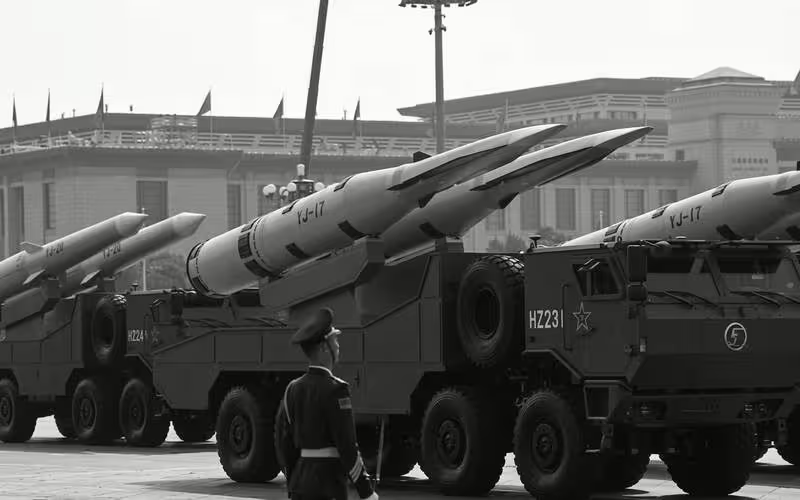
Chinese suppliers sent around 1,300 shipments of dual-use components to Iran’s Defense Ministry during the first six months of 2026, including GPS equipment, electric motors and aircraft-engine parts usable in drones and missile systems. Iranian customs records classified many imports as defense-related and granted them tariff exemptions, while trade with China became a crucial route for Tehran as US pressure constrained maritime commerce and access to Western suppliers.
Details
- Delivery timing: One shipment reached Tehran on June 17, the day Washington and Tehran agreed to a 60-day truce, while Beijing publicly promoted diplomacy. More than a dozen shipments arrived two days later with over $6 million in components potentially usable in drones, highlighting the overlap between China’s diplomatic posture and continuing commercial links.
- Expanding air bridge: After the war began on February 28, Mahan Air increased services from Beijing, Shanghai and Guangzhou to Tehran. FlightRadar24 data showed weekly flights rising from about four in early March to roughly 27 by late April. The airline operated 39 China-Iran flights in September’s first week, around twice its prewar level; some were unavailable for passenger booking.
- Sanctioned airline: Mahan Air has long been under US sanctions. Washington accuses it of supporting Islamic Revolutionary Guard Corps logistics and weapons procurement, while the US Treasury calls it a key conduit for weapons, military equipment and personnel. In July, Treasury sanctioned more entities linked to the airline across several countries, including China.
- Chemical channel: Chinese companies also supplied chemical materials usable in weapons production. Haokun Energy discussed export licenses for sodium perchlorate, used in missile propellant, and a Beijing-based shell company for the transaction. The broader supply base includes propellant chemicals, electronics, navigation systems, motors and specialized mechanical components that can become production bottlenecks under sanctions.
- Economic lifeline: China became Iran’s dominant oil customer after Washington launched “maximum pressure” in 2018. US lawmakers estimate China receives more than 80% of Iranian crude exports. Iranian businesses have also explored yuan transactions and China’s Cross-Border Interbank Payment System, reducing reliance on dollar channels while Chinese institutions and intermediaries facilitate sanctions-constrained trade.
Background
China rejects allegations that it is fueling the war, says it strictly controls dual-use exports and opposes unilateral US sanctions. Trump has said Xi assured him China would not send weapons to Iran. Much of the trade involves private companies, intermediaries and technologies with civilian as well as military applications.
What’s next
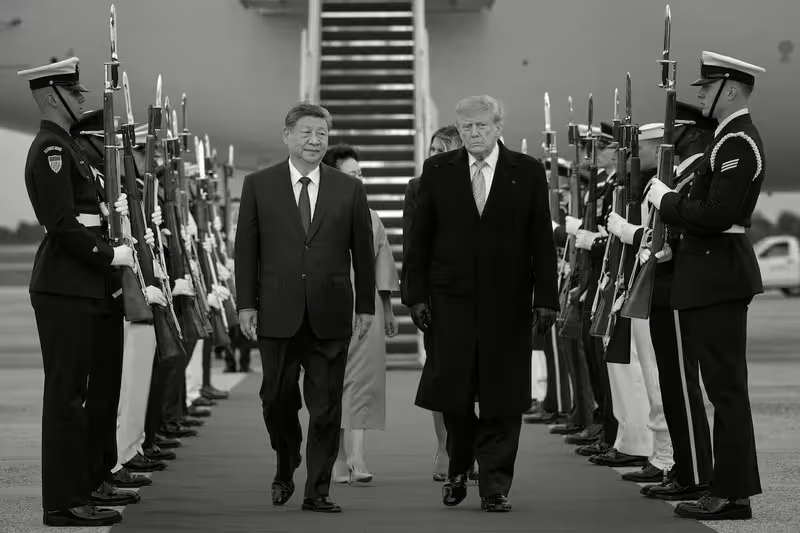
Xi Jinping’s Washington meeting with Donald Trump puts Iran alongside trade, Taiwan and artificial-intelligence safety on the agenda. Their handling of Chinese dual-use exports, airline-linked entities and alternative payment channels will indicate whether Washington can narrow the supply routes supporting Iran’s military-industrial base.