Key Points
- Trump's New York meeting with Gulf officials will now include Iraq and Jordan, with Egypt likely joining.
- Talks fall during the UN General Assembly's high-level week, opening Tuesday.
- Iran, its regional proxies and the Houthi campaign in Yemen dominate the agenda.
The latest:
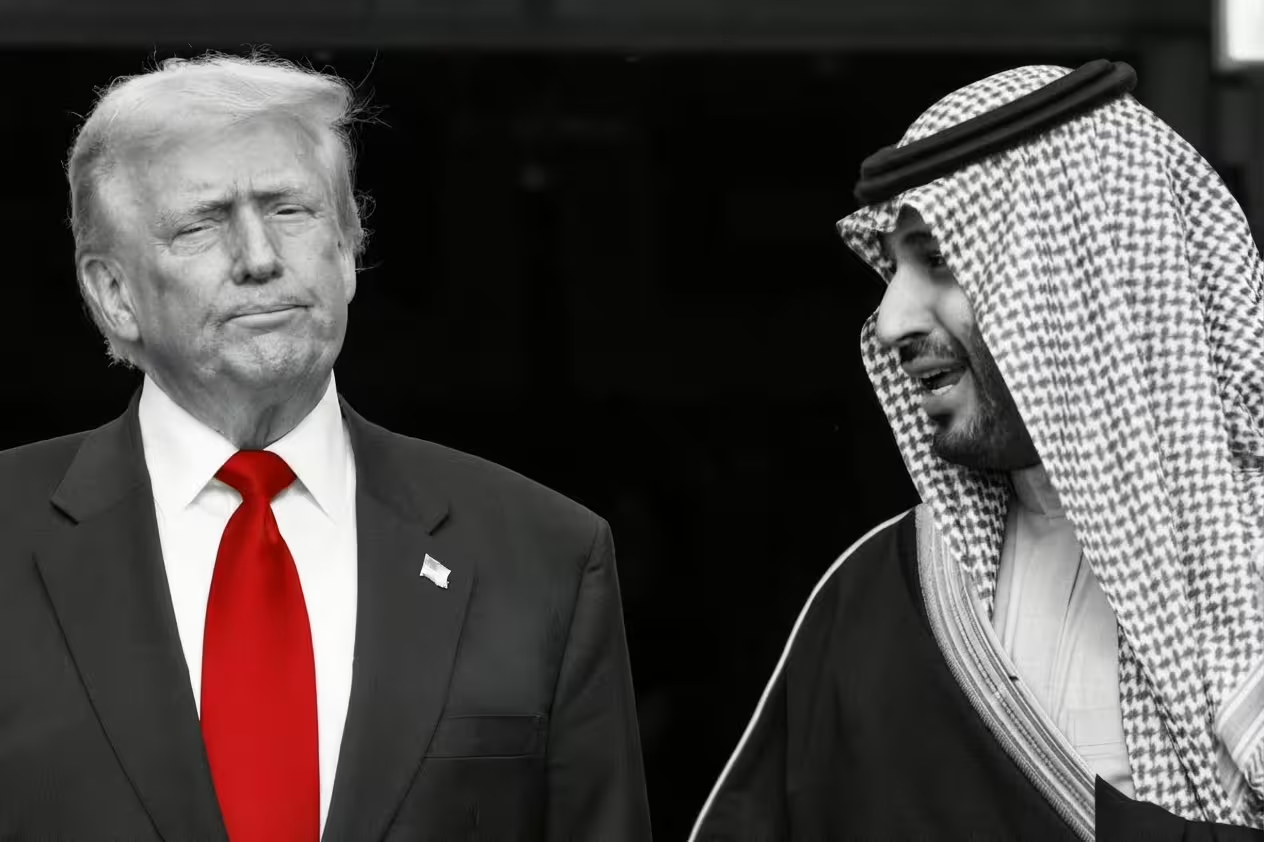
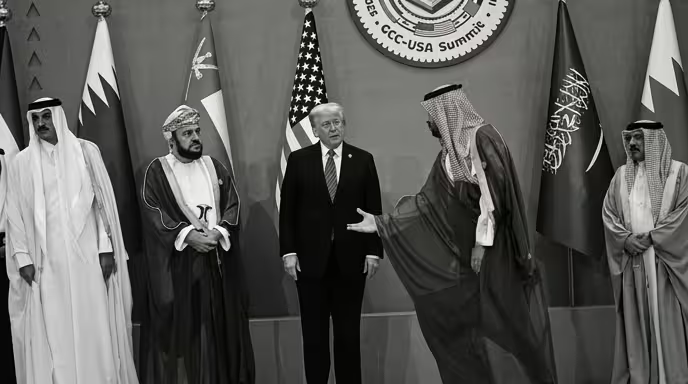
Iraq and Jordan will take part in US President Donald Trump’s meeting with Gulf officials in New York this week, with Egypt likely to be added, The National reported. The talks, held during the UN General Assembly’s high-level week, are expected to centre on Iran, its proxies across the region and the future of Tehran’s confrontation with Washington.
Details:
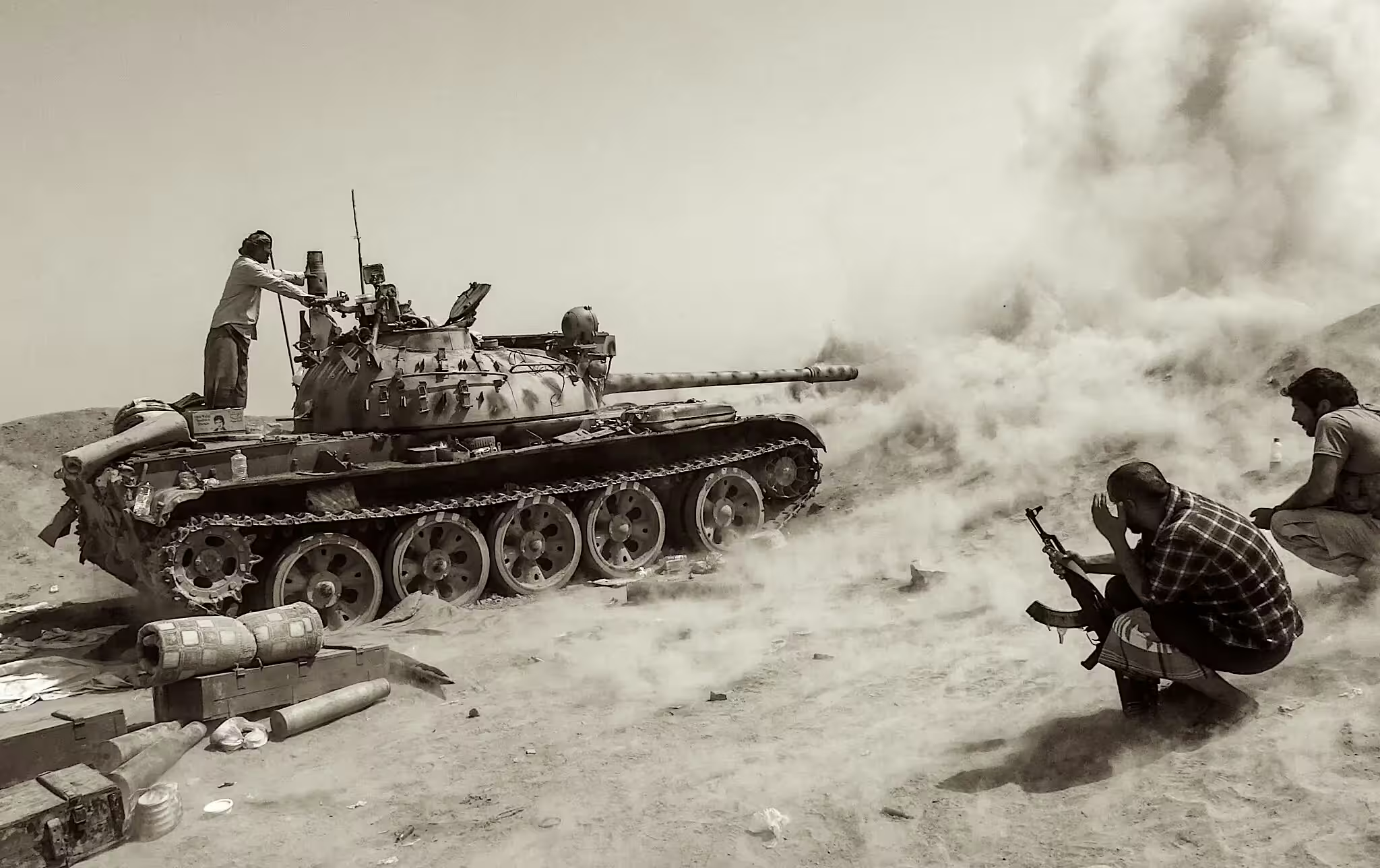
- The agenda: Beyond Iran itself, the meeting is expected to dwell on the Houthis, after escalating attacks inside Yemen and against Saudi Arabia. The rebels have seized Yemen’s western coast and expanded control around the Bab Al Mandeb strait, one of the world’s most sensitive shipping corridors.
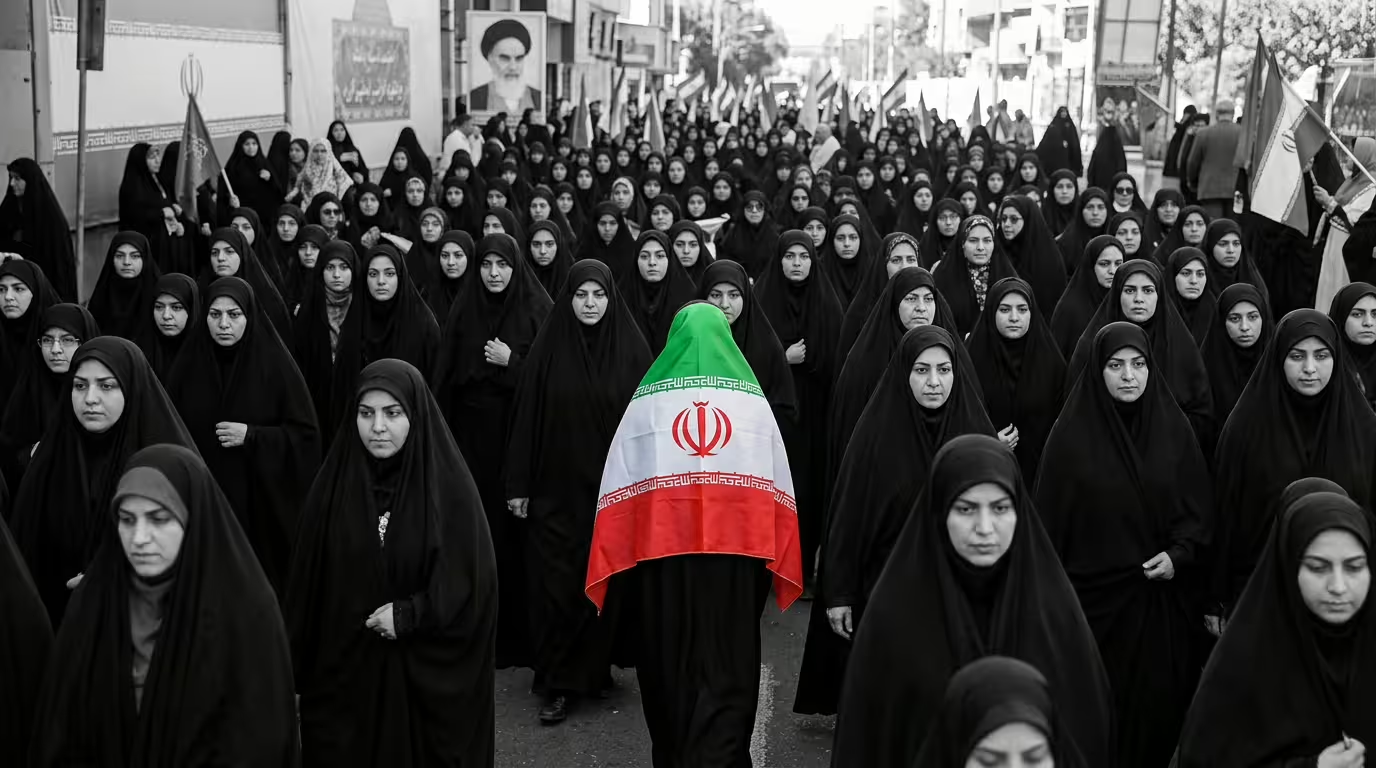
- The UAE position: Anwar Gargash, diplomatic adviser to President Sheikh Mohamed, called for a new mindset toward Iran, arguing that strategic talks about the region’s future should happen at an Iranian-Arab level and not only between Tehran and Washington. He said Iran sees itself as a regional hegemon and prefers dealing with the United States.
- A long horizon: Gargash also said the UAE and other states would have to get used to dealing with an unstable Iran for some time, a framing that treats the current turbulence as a durable condition rather than a passing crisis in the run-up to the New York talks.
- Washington’s read: US ambassador to the UN Mike Waltz said Iran has shifted from supplying Hezbollah with sophisticated weapons to increasingly arming the Houthis, pointing to rebel deployment of advanced drones and cruise missiles. He described the file as “a continuation of a 47-year conflict”.
- The Yemen link: Sources in Tehran, Aden and Cairo told The National that Iran helped the Houthis plan and execute their campaign, seeking to turn the Yemen conflict into a new pressure point in its confrontation with the United States.
- The Iraq file: The September 30 withdrawal of the US-led international coalition against ISIS is described as a major milestone for Iraq. The fate of a government order to disarm Iran-backed militias remains unresolved, and no timetable for its implementation has been announced.
- Rubio’s week: US Secretary of State Marco Rubio attended a reception for State Department staff and international media and held several meetings aimed at advancing American diplomacy during the week, part of a schedule that ran through Sunday ahead of the debate.
- The calendar: The high-level debate formally opens Tuesday with an address by Brazilian President Luiz Inacio Lula da Silva. Arab diplomatic engagement this week is expected to reach its highest level in years, with a packed schedule of meetings and side events.
Background:
The Houthis control Sanaa and have expanded along Yemen’s western coast toward Bab Al Mandeb. Waltz placed the current escalation within a 47-year record of Iranian activity, tying Hezbollah’s arsenal and the Houthis’ newer drone and missile capability to the same supply chain.
Between the lines:
Adding Iraq and Jordan widens a Gulf-framed meeting into a broader Arab one, and the two files driving that expansion are visible in the agenda itself: the coalition withdrawal and the stalled militia disarmament order in Iraq, and the Houthi advance toward Bab Al Mandeb. Gargash’s call for an Iranian-Arab track reads as a bid for Arab states to sit at a table Tehran prefers to keep bilateral with Washington.
What’s next
Watch Tuesday’s opening of the high-level debate, the September 30 coalition withdrawal date in Iraq, whether Egypt is confirmed in the Trump meeting, and any movement on Baghdad’s order to disarm Iran-backed militias.