Key Points
- Satellite imagery indicates Adnoc kept loading LNG tankers at Das Island despite Hormuz disruptions.
- Gulf LNG flows have been near a standstill since an Iranian attack in early July.
- Adnoc's dark-voyage tactics show how Gulf exporters are keeping cargoes moving under fire.
The latest:
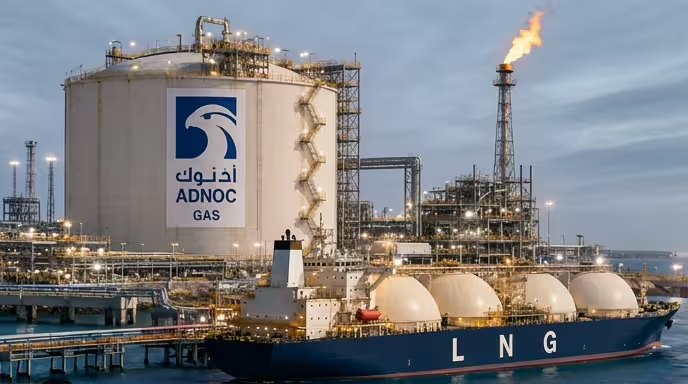
A tanker was docked at Adnoc’s Das Island LNG export facility on Sept. 2, with at least one other vessel nearby, according to Copernicus Sentinel-2 satellite imagery. No ships were broadcasting their positions near the plant, ship-tracking data showed, indicating transponders were switched off. The images suggest the UAE state producer is still moving gas out of the Persian Gulf despite renewed fighting in the strait.
Details:
- The imagery: Copernicus Sentinel-2 images captured a vessel docked at Das Island on Sept. 2, alongside at least one other tanker in the vicinity. Similar images over recent months have shown several ships at the facility, indicating Adnoc has had at least some success shipping LNG out of the Persian Gulf.
- The dark voyages: Ship-tracking data shows LNG tankers linked to Adnoc have stopped transmitting around Hormuz and inside the Gulf. Vessels halt near the UAE’s eastern shore, switch off transponders, sail dark through the strait to Das Island to load, then resume broadcasting once safely outside the Gulf.
- The scale: Even counting the Adnoc cargoes, LNG exports out of the Persian Gulf remain far below pre-war levels of three shipments a day. Visible flows have been at an effective standstill since an Iranian attack on a Qatar-owned vessel in early July.
- The escalation: The United States and Iran renewed fighting this week after a period of relative calm, raising concerns about further disruption to energy flows through Hormuz. Two oil supertankers were struck in the strait earlier in the week.
- Trump’s warning: US President Donald Trump said attacks on Iran would likely be short-lived, but warned that “we’re prepared to do another one any time we want.”
- Qatar’s retreat: Qatar, the world’s second-largest LNG exporter last year, has also periodically loaded tankers at its Ras Laffan facility inside the Gulf. But it has largely stopped sending fuel through the narrow waterway on safety grounds, delivering shipments to Kuwait instead.
- The workaround: An Adnoc-owned ship carried out a ship-to-ship transfer outside Hormuz last month, a tactic used to move more gas out of the Persian Gulf without exposing loaded vessels to the full transit risk.
- The crude record: The UAE state-owned company has proven adept at moving energy supplies through Hormuz to global customers, particularly crude, despite the persistent threat of attack on shipping in the waterway.
- No comment: Adnoc didn’t immediately respond to a request for comment on the loadings, the tracking gaps or the volumes it has managed to move out of the Gulf since the disruption began.
- The market read: Asian gas prices jumped to their highest since 2022 following the Middle East flare-up, a reflection of how tightly buyers are watching supply out of the Gulf.
Between the lines:
The transponder blackouts make Gulf LNG flows partly unmeasurable: with tankers going dark between the UAE coast and Das Island, satellite imagery is the only visible evidence that cargoes are still moving. That gap between visible flows near zero and actual loadings underway suggests published export figures understate what is leaving the Gulf.
What’s next
Watch whether tankers linked to Adnoc resume broadcasting outside the Gulf in coming days, whether Qatar restarts Hormuz transits from Ras Laffan, and whether further strikes hit shipping in the strait.