The latest:
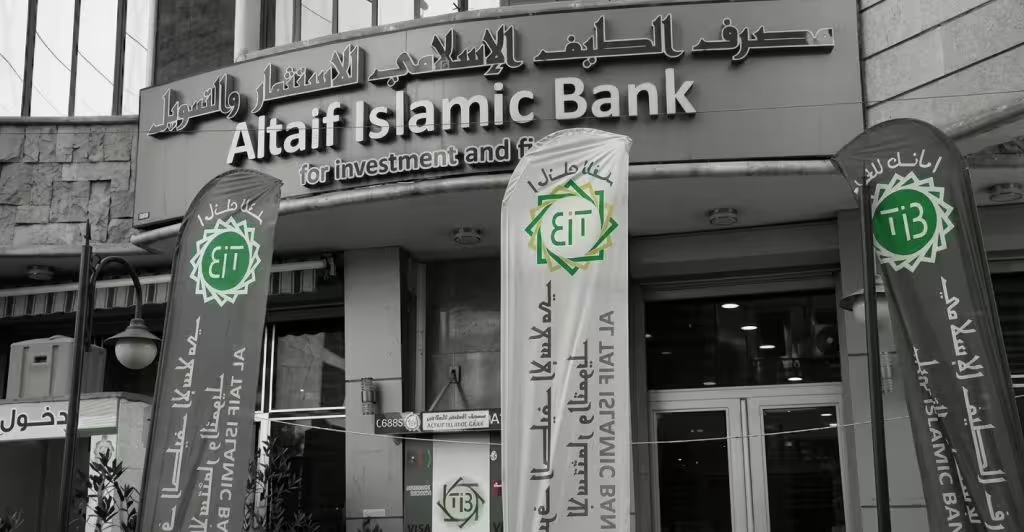
Iraq’s central bank appointed a guardian over Al-Taif Islamic Bank for Investment and Finance, citing serious violations that damaged the bank’s financial position and depositors’ money. The decision, issued Wednesday under Article 59 of Banking Law 94 of 2004, installed Imad Mohammed Hamad for 18 months. Crowds formed outside branches demanding their deposits back.
Details:
- The order: According to an official central bank letter signed by acting governor Nizar Nasser Hussein, the board imposed guardianship after violations were established that affected both the bank’s financial position and depositors’ funds. Imad Mohammed Hamad was named guardian for 18 months. The nature of the violations was not disclosed.
- The depositors: Large numbers of customers gathered outside Al-Taif branches demanding withdrawals, unable to recover their money. In an appeal published by Al-Mirbad addressed to the prime minister, the central bank and regulators, savers said they deposited on the strength of official instructions to keep money in banks, and asked when funds would be released.
- The sanctions file: Al-Taif entered a US sanctions list in 2023. Washington’s designations of Iraqi banks in that period targeted institutions accused of channeling dollars toward Iran. No official statement has linked the guardianship decision to that designation, and the bank’s ultimate ownership has not been publicly clarified.
- Trust in the system: Economist Nabil al-Marsoumi said the guardianship deepens the trust crisis between the public and the banking system, and is a major reason 99.780 trillion dinars remain outside it — over 91% of the 109 trillion dinars in issued currency at the end of June.
- The mechanics: Banking expert Mustafa Hantoush said the central bank does not move straight to guardianship. It first monitors operations, liquidity and management performance, then issues recommendations. A guardianship council takes decisions on running the bank and whether its measures can be implemented.
- Deposits for now: Hantoush said Al-Taif will keep operating and paying depositors according to available liquidity. The deposit guarantee company is not activated at this stage, and is only reached after bankruptcy is declared under legal procedures. He added the central bank leaned toward a merger given the bank’s weak position.
- Other banks: Hantoush said the seven large banks discussed as candidates for exit from the Iraqi banking system have no connection to the Al-Taif case, and that what happened is unrelated to the rest of the system. Remedial procedures for banks can take time and do not imply immediate decisions.
- Market fallout: The Iraqi Securities Commission suspended trading in Al-Taif shares after guardianship was imposed. The bank began as a currency exchange and money transfer company before expanding into an Islamic investment and finance bank, and holds a recognized position in domestic and international transfers.
- Reported bankruptcy: Al-Taif entered bankruptcy earlier this year and guardianship followed over depositors’ balances, according to accounts circulating in Iraqi financial circles. The central bank’s letter stopped short of describing the bank as insolvent, framing the step instead as a supervisory measure to protect its financial position.
Background:
Article 59 of Iraq’s Banking Law 94 of 2004, as amended, allows the central bank to appoint a guardian over a bank when serious violations threaten its financial position. Hantoush described the current measures as part of a reform track aimed at reconnecting Iraqi banks to the global financial system.
Between the lines:
Two explanations sit side by side without being reconciled. Officials frame the seizure as a supervisory step over undisclosed violations; the bank’s 2023 US designation points toward the dollar-flow file. Because the violations were never described and ownership remains unclear, depositors cannot tell whether they are inside a routine cleanup or a sanctions case. Marsoumi’s 91% figure suggests most Iraqis already answered that question by staying out of banks.
What’s next
Watch the guardian’s first measures on deposit payouts, whether trading in Al-Taif shares resumes, any central bank statement naming the violations, and whether a merger partner is identified during the 18-month mandate.