Key Points
- Two attacks on Iran in 15 months exposed sharply different calculations among the armed groups it supports.
- Hezbollah and Hamas are weakened, while the Houthis and Iraqi militias increasingly pursue their own interests.
- Economic damage, sanctions and Syria’s collapse leave Tehran facing hard choices over which allies to sustain.
The latest
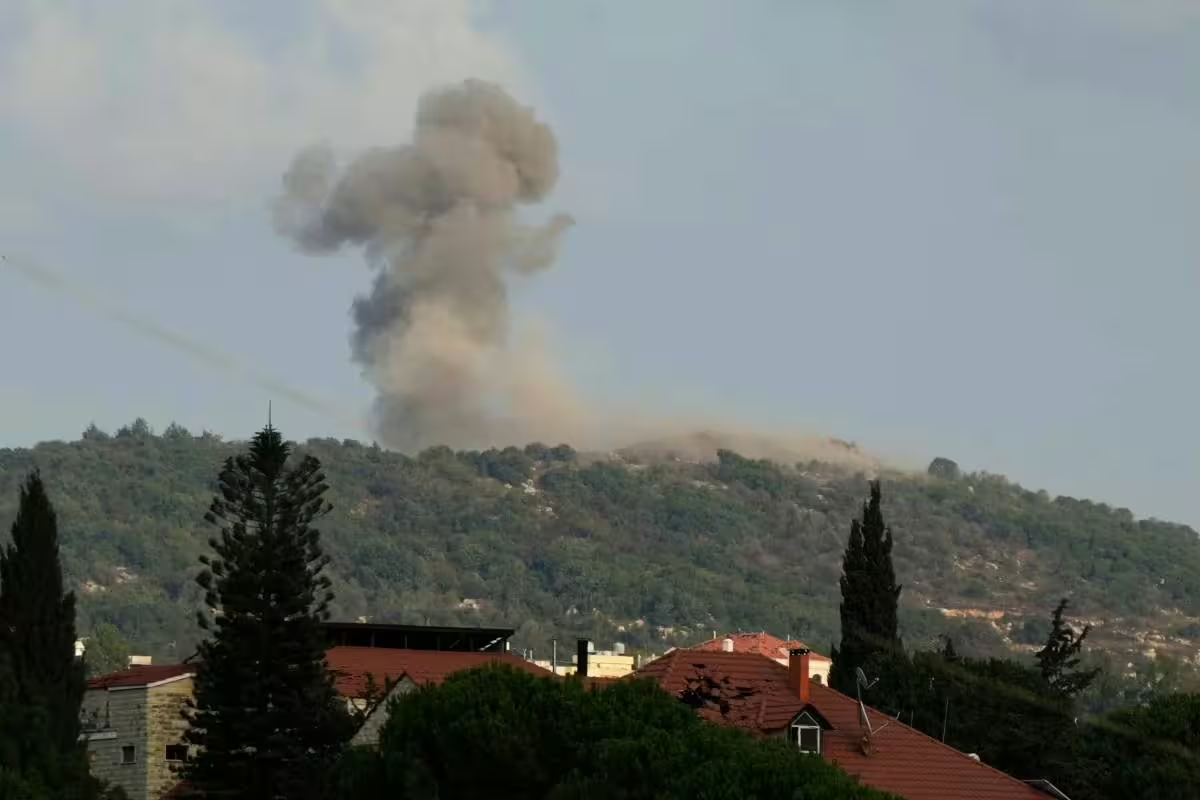
Iran’s regional alliance of armed groups is moving towards a looser, more fragmented future after two attacks on Iran within 15 months exposed diverging decisions over whether to fight. The wars triggered by the Hamas-led October 7th, 2023, attack left Hezbollah and Hamas badly weakened, brought down Bashar al-Assad’s Syrian regime and prompted Baghdad to order militias to disarm by October. Tehran still has strong strategic reasons to preserve its partners, but can no longer manage them as a cohesive bloc.
Details
- Strategic origins: Iran began backing Arab militias in the 1980s, when the Islamic Revolutionary Guard Corps trained Hezbollah fighters in Lebanon. Tehran viewed such forces as substitutes for a weak conventional army: forward defences able to project power and keep conflict outside Iran.
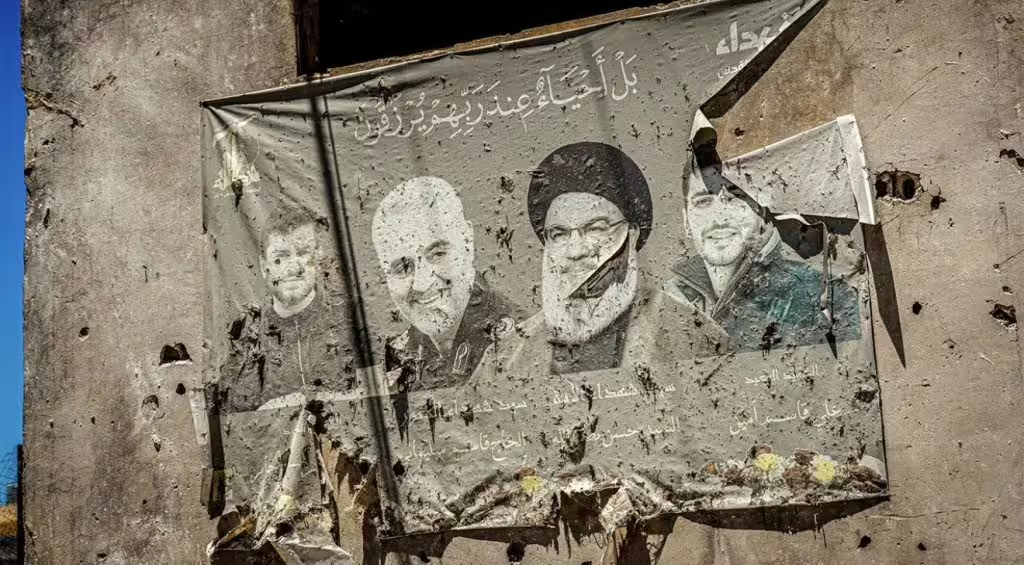
- Hezbollah weakened: Before 2023, Hezbollah held more than 100,000 rockets and missiles aimed at Israel and fielded battle-hardened commandos. Israel assassinated Hassan Nasrallah in 2024 and killed many experienced commanders. His successor, Naim Qassem, has less autonomy as IRGC personnel exercise direct control. Lebanon’s government is demanding that the group surrender its diminished arsenal, while its domestic popularity has collapsed.
- Houthi autonomy: The Houthis grew from a northern Yemeni insurgency in the 1990s into a force equipped with anti-ship missiles and air defences capable of downing American Reaper drones. They increasingly manufacture weapons, calibrate involvement to their own interests, and have cultivated ties with al-Shabab, Russia and China. Shared hostility to America, Israel and Saudi Arabia does not amount to obedience to Tehran.
- Iraqi priorities: Many Shia factions emerged after the 2003 American-led invasion, but the Iraqi state now pays more than 200,000 militiamen and has become their main patron. Some attacked American bases earlier this year, yet larger groups fear losing their position through confrontation with Baghdad or its allies. IRGC advisers are said to have formed smaller cells for attacks on Gulf states.
- Hamas recalculates: Hamas has always sat awkwardly within the largely Shia alliance and previously broke with Iran over support for Assad. New leader Khalil al-Hayya is considered loyal to Tehran, while other officials favour Turkey and Gulf powers. In March, Hamas urged Iran to stop attacks on Gulf states; future Iranian support may be more rhetorical than material.
- Strained resources: War damage runs to hundreds of billions of dollars, while America is blockading Iranian ports and tightening sanctions. Assad’s fall also severed the land route to Lebanon. Tehran must now prioritise between allies it controls closely, independent partners and groups increasingly anchored to local states or alternative patrons.
What’s next
Baghdad’s October disarmament deadline is the next concrete test, showing whether Iraqi factions accept state authority or risk their payrolls and political position to retain armed autonomy.