Key Points
- U.S. forces disabled advertising identifiers after location records were reportedly used to identify and target personnel.
- Brokers can turn routine smartphone signals into detailed maps of device locations and movements.
- Such data can expose bases and deployments without any breach of classified military systems.
The latest
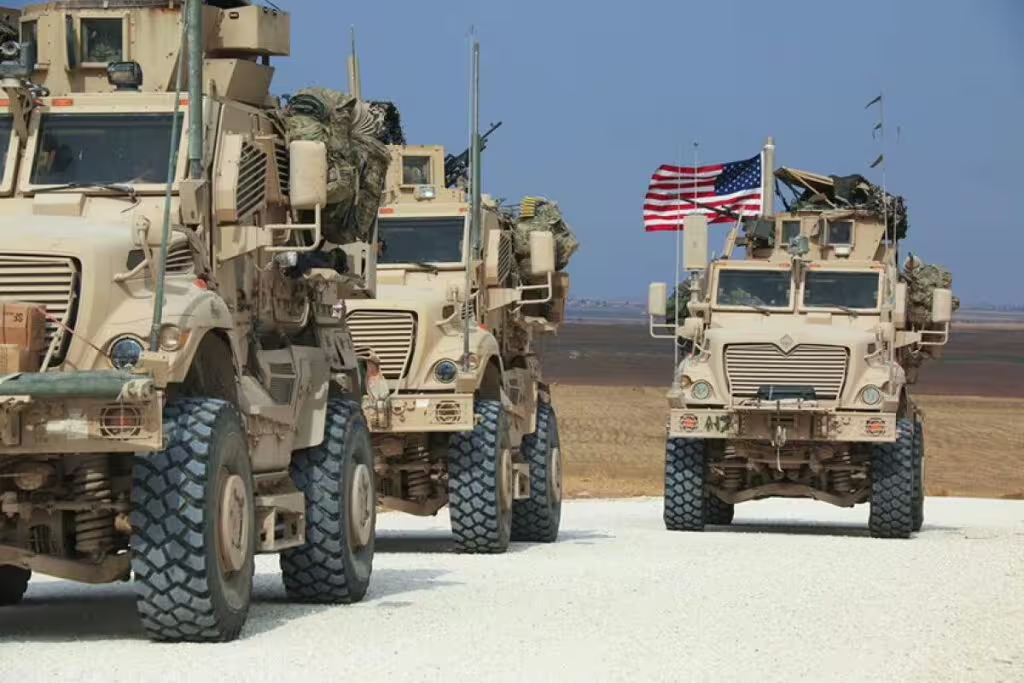
The U.S. military is shutting down advertising trackers across phones and computers to reduce the digital trail surrounding American forces in the Middle East. The action follows reports that commercially available location information had been used to identify and target U.S. personnel in the region. The move was disclosed in letters released Friday by Senator Ron Wyden. Data generated by connected devices can reveal recurring visits to installations, coordinated movements and changes in deployment patterns, giving hostile actors potentially useful intelligence without requiring them to penetrate Pentagon systems or steal classified material. In conflict zones, information collected for advertising can become battlefield intelligence.
Details
- Uneven rollout: The Air Force disabled advertising identifiers on computers and mobile phones about two months ago. U.S. Special Operations Command recently did the same on Windows devices, while the Navy confirmed that military equipment had been covered but provided no implementation date. The differing timelines show protections developed gradually rather than under one coordinated policy.
- Army protections: The Army has blocked advertising IDs on Windows computers since before 2021. Identifiers on Android and Apple mobile devices have been disabled by default since at least February 2026, reflecting different adoption timelines across services and platforms.
- Commercial pipeline: Mobile advertising identifiers, or MAIDs, are unique smartphone codes used to follow activity across applications and help locate devices. Data brokers can collect, aggregate and sell those signals as detailed records showing where devices appear and how they move.
- Operational patterns: A device repeatedly detected at an installation can expose a military site. Several phones moving together may signal a unit’s arrival or departure, while changes in established patterns can reveal shifts in activity or concentrations of personnel.
- Regional exposure: American forces and installations remain in Iraq, Syria, Jordan, Qatar, Bahrain, Kuwait and the United Arab Emirates. Their presence comes amid an expanding U.S.-Iran confrontation and repeated attacks on American positions by Iran-backed armed groups.
- Congressional pressure: Senator Ron Wyden said the measures taken so far were insufficient to eliminate the threat. Harrigan warned against hostile governments purchasing troop-location data, saying: “Enemies should not be able to pull out a credit card and buy information that helps them track American troops.”
Between the lines
Disabling MAIDs closes one avenue for commercial surveillance, but location information can also be generated through other applications and technologies. Zach Edwards, co-founder of privacy-focused advertising technology company Decryptads, called the military’s action “definitely a positive thing,” while the broader challenge extends across the digital ecosystem used by deployed personnel. Protecting troops therefore requires controlling more than a single identifier.
What’s next
The Pentagon will respond directly to lawmakers, marking the next formal step in Wyden’s months-long inquiry into commercial location data and protections applied to military devices.