Key Points
- Tesla’s purpose-built, two-seat Cybercab began public robotaxi rides in Austin without a steering wheel or pedals.
- Texas records showed 45 registrations as Tesla positions the vehicle as a sub-$30,000 autonomous taxi.
- Shares rose more than 5%, linking the rollout to Tesla’s growth strategy amid declining vehicle sales.
The latest
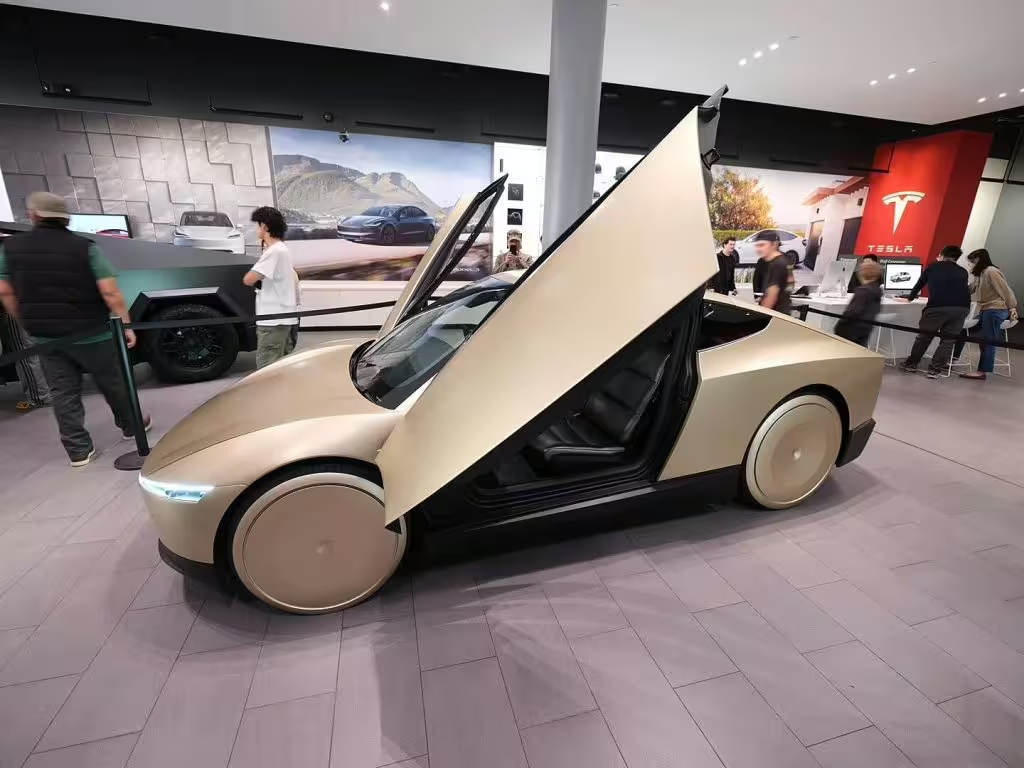
Tesla has added its gold-colored Cybercab to its public robotaxi service in Austin, moving its first vehicle designed solely for autonomous ride-hailing onto public roads. The two-seat cars began carrying passengers Thursday and offer no steering wheel, brake pedals or direct means of emergency control. Tesla shares climbed more than 5% as investors reacted positively to the deployment while the company contends with declining vehicle sales.
Details
- Fleet access: Ashok Elluswamy, Tesla’s vice president of AI, announced the Cybercab’s addition during an invitation-only event in downtown Austin. He said rides were open to the entire public. Tesla has not disclosed the initial fleet size, but Texas Department of Motor Vehicles records showed 45 Cybercabs registered in the state as of Thursday.
- Business model: Elon Musk has presented the Cybercab as a low-cost autonomous taxi that could eventually be manufactured at large scale. He has said it could cost less than $30,000. Tesla’s longer-term plan would allow consumers to buy Cybercabs for personal use while also making them available to the company’s robotaxi network.
- Passenger experience: Customers request rides through Tesla’s Robotaxi app. Videos posted by launch invitees showed passengers using the app to open the vehicle’s butterfly doors, which close automatically after boarding. The vehicle accommodates two people and gives neither passenger conventional driving controls. Tesla previously used Model Y vehicles in its public robotaxi fleet.
- Competitive pressure: Tesla is pursuing Waymo, which operates a larger fleet and has completed significantly more autonomous journeys. Amazon’s Zoox also fields a purpose-built robotaxi without a steering wheel or traditional pedals. The Cybercab therefore expands competition over whether autonomous transport can develop into a large-scale commercial service.
- Technology and rules: Tesla relies primarily on cameras and artificial intelligence for navigation, while Waymo and Zoox also use radar and lidar. Its system must navigate complex urban environments, detect pedestrians and other road users, and respond safely to unexpected situations. A mass-market Cybercab would need to meet applicable US federal safety standards or secure temporary exemptions before Tesla could sell vehicles without steering wheels or pedals directly to private customers. The company is currently concentrating on autonomous ride-hailing.
Background
Tesla unveiled the Cybercab at its “We, Robot” event in Burbank, California, in October 2024. Musk has promoted robotaxis as a route for transforming Tesla from an automaker into an artificial-intelligence and autonomous transportation company, making Austin an early commercial test of that strategy.
What’s next
Texas registration totals and any disclosure of the active Austin fleet will provide the next indicators of deployment scale. Direct consumer sales would require Tesla to demonstrate federal safety compliance or obtain temporary exemptions.