Key Points
- An IRGC source said 70–100 Hezbollah members and Iranian Quds Force advisers were trapped in tunnels.
- Israel says its 36th Division cleared two underground complexes and secured operational control above and below ground.
- The ridge’s elevation, tunnel network and links to Iqlim al-Tuffah give it considerable strategic importance.
The latest
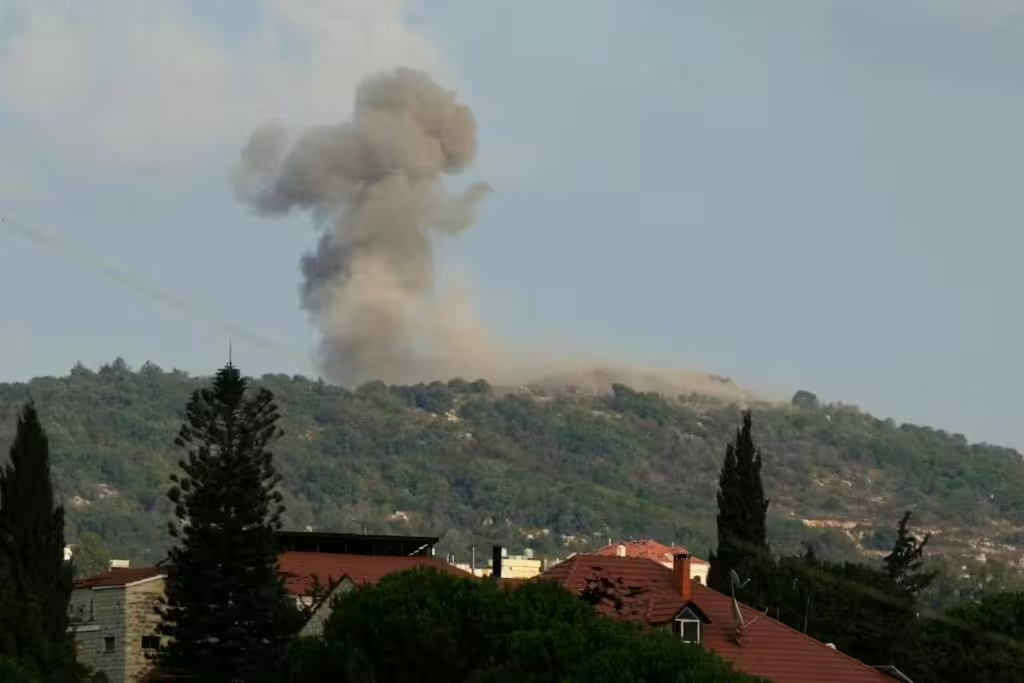
An IRGC source said around 70–100 Hezbollah members and Iranian Quds Force advisers were trapped beneath southern Lebanon’s Ali al-Taher ridge as Israeli forces encircled the complex. Israel separately announced that troops had cleared Hezbollah operatives from two major underground installations and established operational control over the strategic position, marking a new stage in a months-long campaign around the ridge.
Details
- Supply routes cut: Hezbollah attempted for days to deliver food and water by drone, the IRGC source said. Israeli forces targeted fighters who emerged to collect the supplies. Two of the underground complex’s three exits were under Israeli military control, while the third was described as close to collapsing.
- Hezbollah: This is not the end of the story: A Hezbollah source told ontime+: Israel occupied the Golan Heights days ago, and the announcement came in response to the Iranian threat. As far as we are concerned, all of Lebanon is Ali Taher.
- Weapons recovery fading: Iran and Hezbollah had prioritised recovering weapons stored inside the complex, including rockets and drones, but the source said that prospect was becoming increasingly unlikely. The Israeli military said some Hezbollah operatives were killed during the clearance operation while others fled.
- Underground stronghold: Israel says the two installations were built over approximately two decades with Iranian planning and financing. Troops found command and weapons rooms, generators, living quarters, showers and a kitchen, indicating that personnel could remain underground for extended periods while conducting military operations.
- Iranian presence disputed: Reuters cited regional officials saying more than a dozen Islamic Revolutionary Guard Corps members, including at least two senior officers, were positioned at the ridge. Israel’s reported military assessment was that no IRGC personnel were present, while Hezbollah declined to confirm or deny an Iranian presence.
- Pressure over assault: Iran warned Washington through Oman in mid-August that a full-scale Israeli assault on Ali al-Taher would trigger a major Iranian response, three officials briefed on the message told Reuters. The White House rejected the specific claim that Washington had pressured Israel not to attack the ridge.
- Costly operation: Israeli forces gradually mapped the terrain, targeted tunnel openings and disrupted routes carrying food, water and ammunition. In June, one Israeli soldier was killed and 13 were wounded during operations to seize a major underground facility. Hezbollah also launched explosive drones at forces around the ridge.
Background
Ali al-Taher stands about 600 metres high, roughly 15 kilometres from the Israeli border, overlooking approaches to Nabatieh and routes toward Iqlim al-Tuffah. Israel held the ridge during its 22-year presence in southern Lebanon before withdrawing in May 2000. Hezbollah later developed the position as a command, weapons-storage and logistics node north of the Litani River.
What’s next
Israeli forces will work to neutralise the underground infrastructure before adopting a renewed defensive posture. The next indicators are whether Israel retains the ridge or transfers control to the Lebanese Army, and whether Hezbollah maintains access from its northern side.