Key Points
- Meta must limit teen accounts to two daily hours across Instagram and Facebook, with parental overrides.
- Access will be blocked overnight, while school-hour notifications pause and harmful-content complaints receive faster responses.
- Age detection, independent audits and chronological feeds will reshape protections for users under 18.
The latest
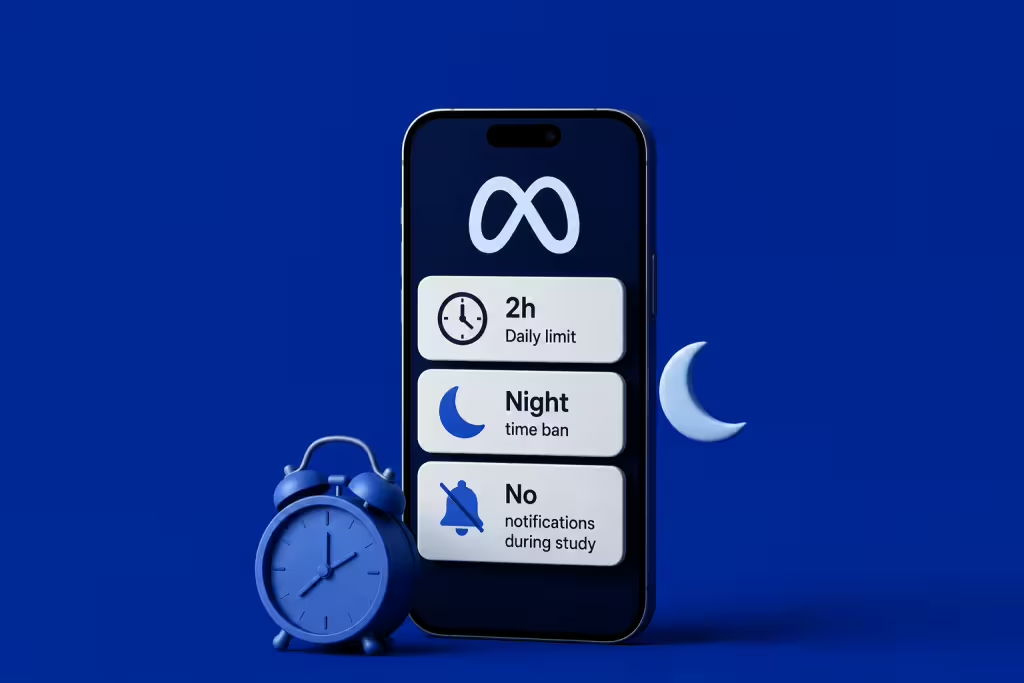
The $18 billion settlement will force Meta to change how teenagers use Instagram and Facebook, capping combined daily use at two hours and blocking teen accounts from midnight to 6 a.m. Announced Wednesday, the package also pauses notifications during school and overnight, requires rapid responses to most English- and Spanish-language harmful-content complaints, and strengthens efforts to identify younger users. Parents may approve overrides to the time and access rules.
Details
- Combined limits: Meta will tally teenagers’ activity across multiple accounts and lock them out after they reach the daily limit. Some activities, including messaging and long-form content, are exempt. The two-hour cap could fall to 60 minutes if major competitors YouTube and TikTok agree to adopt additional protections for young users.
- Notification pauses: Teen accounts will have notifications paused by default during school hours and overnight from 10 p.m. until 7 a.m. Instagram already suspends nighttime notifications for users under 16, while the settlement adds broader controls tied to the new restrictions covering both Meta platforms.
- Complaint responses: Meta committed to responding within six hours to complaints in English and Spanish about harmful content in at least 90 percent of cases. The company scaled back third-party fact-checking in the United States in January 2025, replacing it with a system centred on user-submitted flags. Existing age-appropriate content and account restrictions for teenagers will remain.
- Age detection: Additional measures will target users under 13, who are prohibited from Meta’s platforms, and identify those under 18 who qualify for teen accounts. Alice Marwick, research director at Data & Society, said teenagers are creative and highly motivated to reach material they are not supposed to access. An independent auditor will monitor Meta’s compliance, including its models for detecting young users.
- Feed choice: The agreement does not ban algorithmically personalised pages for minors, including “Explore” and “For You” feeds. It instead gives users under 18 the option of selecting a non-personalised feed arranged chronologically. Advocates hope that choice will reduce endless scrolling, though personalised recommendation systems will remain available to teenagers.
- Advocates’ response: Haley Hinkle, policy counsel at child online privacy and safety group Fairplay, welcomed the chronological-feed option. She said the settlement leaves strict limits on personalised recommendation algorithms unaddressed, describing those systems as a major driver of excessive time online. At least one state legislature has attempted to block personalised pages for minors.
What’s next
An independent auditor will track Meta’s implementation of the settlement, including its age-detection models. The next decision to watch is whether YouTube and TikTok adopt comparable protections, which would trigger a reduction in Meta’s daily teen-account limit from two hours to 60 minutes.