Key Points
- Shakespeare and Company marks 75 years while drawing 2,000-3,000 visitors daily to its Seine-side Paris store.
- Myths, a no-photo policy and stamped books turn retail into a distinctive cultural and tourist experience.
- Its success shows bookstores’ community appeal, but ownership, location and literary history make the formula difficult to copy.
The latest
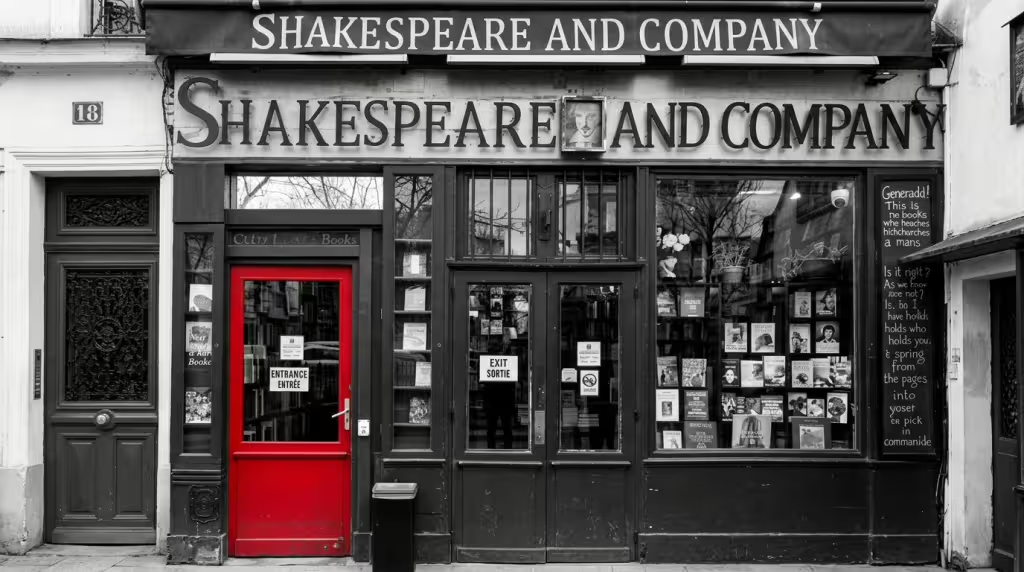
Shakespeare and Company is marking its 75th anniversary in August, with 2,000-3,000 people visiting each day and annual traffic approaching 1m. The English-language shop sits on the Seine’s Left Bank opposite Notre Dame and has become a global literary destination. Its appeal combines a central Paris location, an inherited cultural identity, screen appearances and a deliberately guarded interior that visitors cannot photograph or film.
Details
- Layered history: George Whitman opened the shop 75 years ago as Le Mistral. It later adopted the name of Sylvia Beach’s 1919 bookstore, which published James Joyce’s “Ulysses” and counted Ernest Hemingway and T.S. Eliot among its circle before closing during the second world war.
- Controlled mystique: Banning photographs and videos inside keeps the interior largely absent from Instagram and TikTok, encouraging visitors to experience it themselves. The approach contrasts with other literary attractions, including Porto’s ticketed Livraria Lello and El Ateneo Grand Splendid, housed in a former Buenos Aires theatre.
- Stamped souvenirs: Customers can have purchases stamped with the store’s logo, certifying where they bought them. Luxurious hardbacks and classic editions feature prominently, with Victor Hugo’s “The Hunchback of Notre Dame” and Antoine de Saint-Exupéry’s “The Little Prince” among the leading sellers.
- Screen presence: The store appeared in Woody Allen’s “Midnight in Paris”, Richard Linklater’s “Before Sunset” and the French film “Jane Austen Wrecked My Life”. Sylvia Whitman, George’s daughter and the current operator, rejected a request from “Emily in Paris” as the shop already attracts crowds of selfie-takers.
- Commercial evolution: More than 30,000 people, many of them writers, have stayed in the shop and its upstairs flats in exchange for working, reading and producing a one-page autobiography. Today, higher-margin merchandise such as tote bags and notebooks generates around 30% of total sales, while a neighbouring coffee shop broadens the business.
- Difficult blueprint: The shop owns its real estate, a rarity highlighted by Barnes & Noble boss James Daunt. Its advantages contrast with an unrelated New York bookstore called Shakespeare & Co, which closed last year after citing rising rents among its challenges. Still, about 400 independent physical bookstores opened in America last year, up 62%.
Between the lines
The brand combines Shakespeare’s name, Beach’s publishing legacy, George Whitman’s eccentric persona and an unmatched Paris location. That mythology helps sell not only books, but stories about where customers found them and the cultural world they briefly entered.
What’s next
The shop’s next programmed cultural markers are its annual “Ulysses” celebration and continuing writer talks, partly supported by its foundation. Their audiences will show how it balances international tourism with its aim of maintaining stronger local connections.