Key Points
- Opposition to AI data centers is becoming a bipartisan political force ahead of the midterm elections.
- Silicon Valley’s direct-to-audience strategy reached investors and policymakers but neglected communities confronting local infrastructure.
- The backlash could saddle anticipated OpenAI and Anthropic IPOs with lasting political and regulatory pressure.
The latest
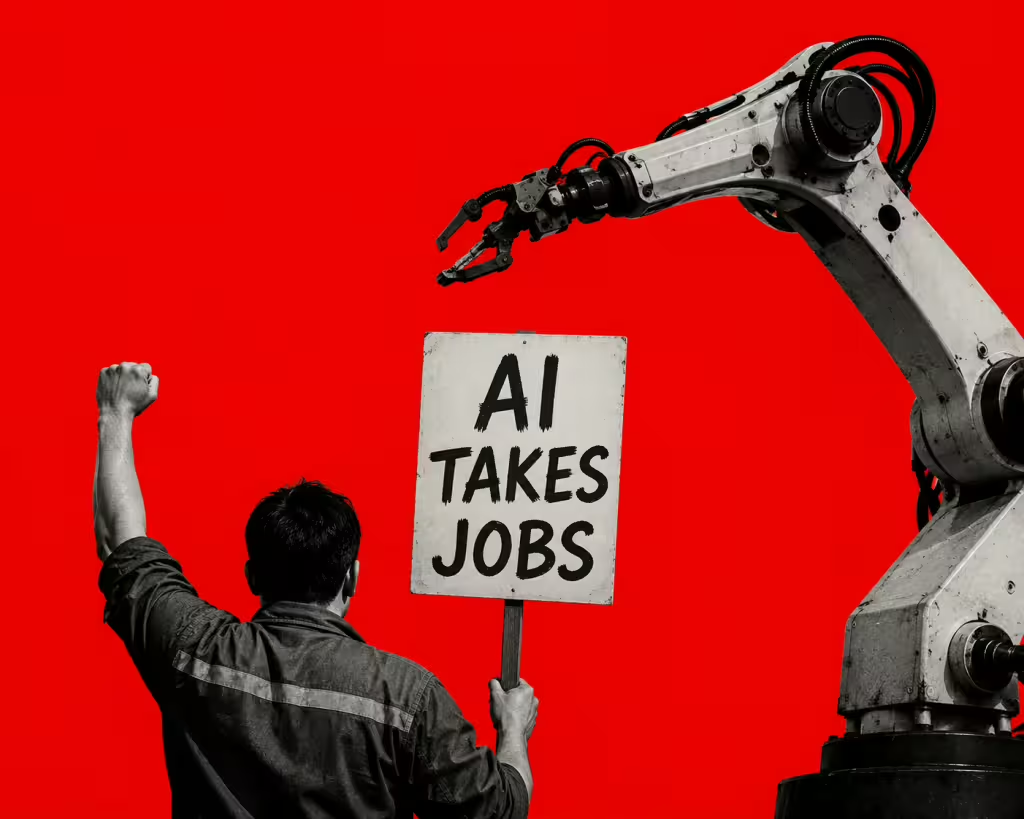
Public resistance to artificial intelligence is hardening into a bipartisan populist challenge as data centers, employment fears, copyright disputes and local resource use move into U.S. politics. Pennsylvania recently became the latest state to limit AI data-center construction, while the industry enters the midterm campaign without the kind of mobilized consumer constituency that once helped Uber resist political restrictions. The pressure could leave OpenAI and Anthropic managing unusual political and regulatory burdens even if prospective public offerings meet Wall Street’s elevated expectations.
Details
- Communication breakdown: OpenAI Chief Executive Sam Altman acknowledged that the field had failed to explain AI’s benefits and how its downsides could be mitigated. Veteran technology communications executive Rachael Horwitz called the episode a major case study in what not to do and said the industry had lost the habit of engaging people locally.
- Echo chamber: The current AI boom coincided with a more inward-looking technology culture that spurned government, regulators and media as impediments to innovation. Elon Musk’s 2022 purchase of Twitter, now X, accelerated a “go-direct” movement among founders and venture capitalists who preferred speaking to stakeholders without institutional intermediaries. Social media made that reach cheaper while reinforcing conversations within technology circles.
- Old growth model: Technology startups traditionally built momentum by adding users quickly, signaling market fit, raising more money and deterring rivals before a sale or listing. The culture celebrated Steve Jobs’s pirate flag, Facebook’s “move fast and break things” motto and Travis Kalanick’s win-at-all-costs approach at Uber. AI adopted similar swagger with promises of medical breakthroughs, industry disruption and robot servants.
- Backlash broadens: The downsides quickly became tangible to many users. Generative AI filled social platforms with confusing low-quality material and copyright threats, while promised efficiencies were blamed, fairly or not, for job cuts. Data centers and Flock cameras became political flashpoints, with disputes over electricity bills and water consumption increasingly shaping local opposition.
- Cultural resonance: The backlash has entered popular culture. Former NFL player and Garage Beer co-owner Jason Kelce appeared in a viral video urging viewers to send bottled urine to cool data centers. Country singer Zach Bryan performed an unreleased song near Dallas featuring the line, “The robot killed the working man,” capturing anxieties in towns across America.
Between the lines
Earlier disruptors such as Google, Uber and Tesla paired aggressive expansion with sophisticated public-relations campaigns. Uber could activate users when officials threatened its business; AI laboratories have yet to demonstrate comparable grassroots leverage.
What’s next
The midterm election cycle will provide the next test: further state limits on data-center construction and voter pressure over electricity and water use will indicate whether the revolt produces durable regulatory constraints.