The latest:
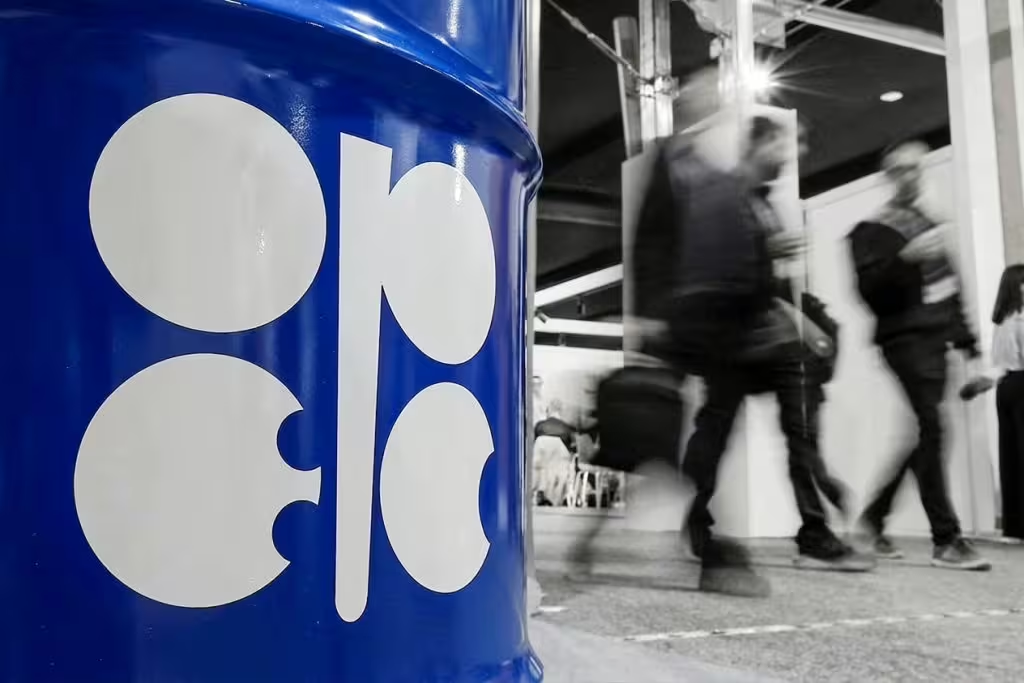
Venezuela has become the second country in months to consider leaving OPEC, Bloomberg reported, as Caracas deepens ties with Washington. Crude traders told the agency the immediate supply impact would be minimal, but the symbolic blow to a cartel Venezuela helped found in 1960 would be severe. Iraq, another founding member, has signalled its own discontent.
Details:
- The numbers: Bloomberg reported that if Caracas follows Abu Dhabi out, the two exits would cost OPEC more than 5 million barrels per day of capacity — roughly 17% of what core members held at the start of the year. Venezuela holds among the world’s largest reserves, currently untapped.
- The Washington deal: President Donald Trump announced on Truth Social what he called a historic agreement giving American interests control over a share of Venezuela’s proven reserves, which exceed 65 billion barrels. He said it would more than double US reserves and help lower fuel prices, at no cost to taxpayers.
- Deal terms: According to the New York Times, the agreement covers 17 strategic oil fields with investment above 100 billion dollars, and fields said to hold around 90 billion barrels of proven reserves. Caracas projects tax revenue exceeding 209 billion dollars from the projects.
- Named officials: Trump said Secretary of State Marco Rubio and War Secretary Pete Hegseth worked with acting Venezuelan President Delcy Rodríguez and private firms. Rubio called the deal a major win on X. Rodríguez said it would strengthen bilateral ties and open conditions for large new energy investment.
- Iraq’s leverage: Baghdad warned in June it could consider withdrawal if its request for a higher production ceiling is rejected under an ongoing audit of member capacity, then walked the threat back the same day. The assessment is due to conclude by the end of next month.
- Iraq’s exposure: Oil accounts for 90% of Iraq’s state budget. Pre-war exports through the Strait of Hormuz ran at 90 million barrels monthly; by April that had fallen to 10 million. The dinar has swung sharply against the dollar since late February.
- The expert read: Carole Nakhle of Crystol Energy said Iraq likely gains more by staying, since membership grants influence over collective decisions and shelter from an unrestrained market-share fight. Selling more barrels at a far lower price, she said, would not necessarily improve Baghdad’s finances.
- The UAE after exit: The International Energy Agency projected Emirati output could exceed 5 million barrels per day next year and reach 5.2 million by 2027, up 730,000 year-on-year. ADNOC has awarded 55 billion dollars in projects for 2026-2028 and plans 150 billion dollars of capital spending through 2030.
- Prior departures: Abu Dhabi announced its withdrawal at the end of April after years of frustration with production limits. Four other states left the organization over the past decade, including Angola’s contested 2024 exit. Venezuela is not currently bound by OPEC quotas, with output near 1.16 million barrels daily.
- Analysts’ framing: Henning Gloystein of Eurasia Group said OPEC is fighting what looks like a losing battle against fundamental shifts in oil geopolitics. Hamad Hussain of Capital Economics called Venezuela’s deliberations another sign of eroding market influence and a driver of further price volatility.
Background:
OPEC was founded in 1960 by five states, with Venezuela playing the largest role through the diplomacy of its then oil minister Juan Pablo Pérez Alfonzo. Its dominance has eroded as US shale, Brazil and Guyana expanded output.
Between the lines:
Bloomberg reported that further fragmentation raises the odds of members competing for customers and market share, echoing the short but destructive 2020 price war. One Bloomberg source assessed that a close US-Venezuela alignment could weaken OPEC while allowing Washington to lift Venezuelan output free of quota commitments — one option discussed being field leases of up to 100 years.
What’s next
OPEC’s audit of member production capacity is due to conclude by the end of next month, the outcome Baghdad has tied to its withdrawal threat. Caracas has not taken a final decision on leaving.