The latest
US strikes are no longer confined to radar sites, launch positions and ammunition stores. The Washington Post reported that recent attacks hit bridges and tunnels around Bandar Abbas, as well as communications links, a railway station and a desalination plant — an expansion that brings infrastructure supporting Iran’s economy into the war. President Donald Trump has signalled that the campaign could continue for weeks, saying the United States wants to “win” and warning that bridges and power plants could be targeted if no agreement is reached. Iran, meanwhile, launched drones toward Kuwait and said it had fired at oil tankers in the Strait of Hormuz, according to The Independent, underlining that economic pressure has not automatically opened a diplomatic route.
Details
- Expanded targets: The Institute for the Study of War counted at least six bridges and tunnels struck near Bandar Abbas after earlier attacks focused largely on coastal military infrastructure.
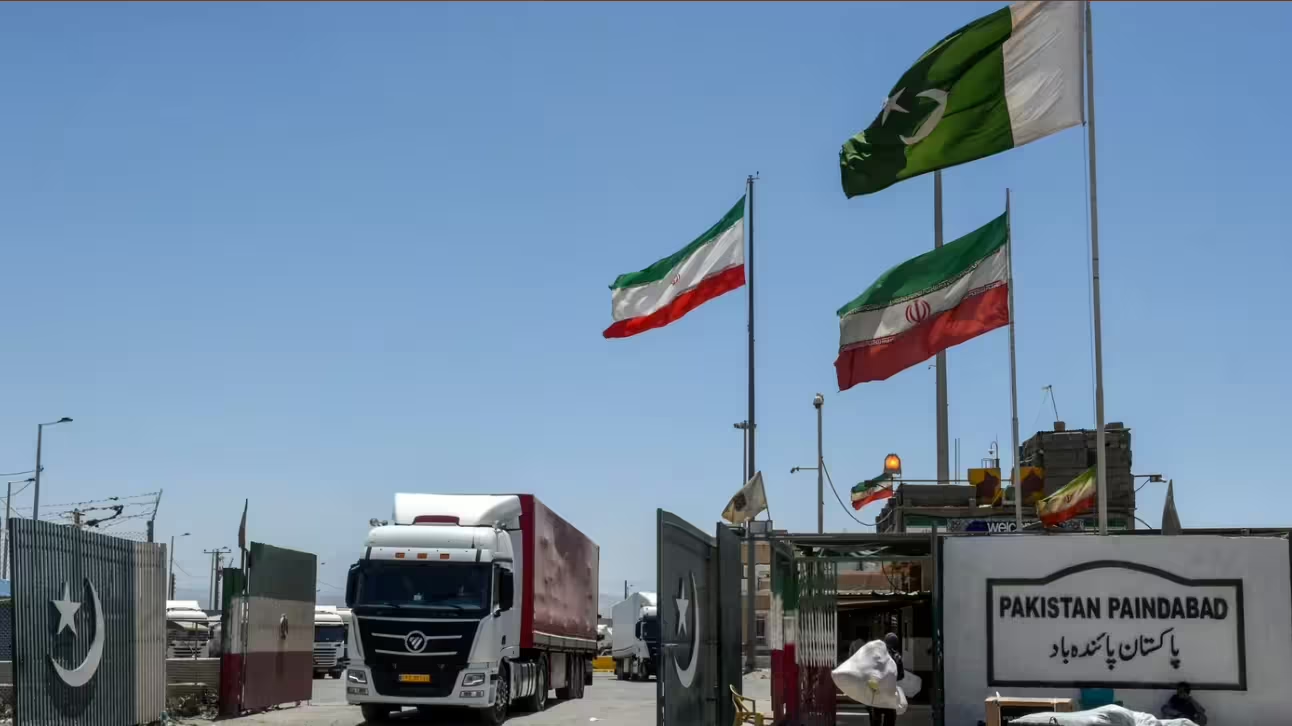
- Civilian systems: Iranian state-affiliated media reported damage to communications lines, a railway station and a desalination facility in the south, alongside military sites and a rail line near Turkmenistan.
- Military rationale: Washington has described some targeted infrastructure as dual-use, arguing that it serves military as well as civilian purposes.
- Legal concern: Threats to strike infrastructure essential to civilian life have raised concern among legal experts, as international humanitarian law protects objects indispensable to the survival of civilians.
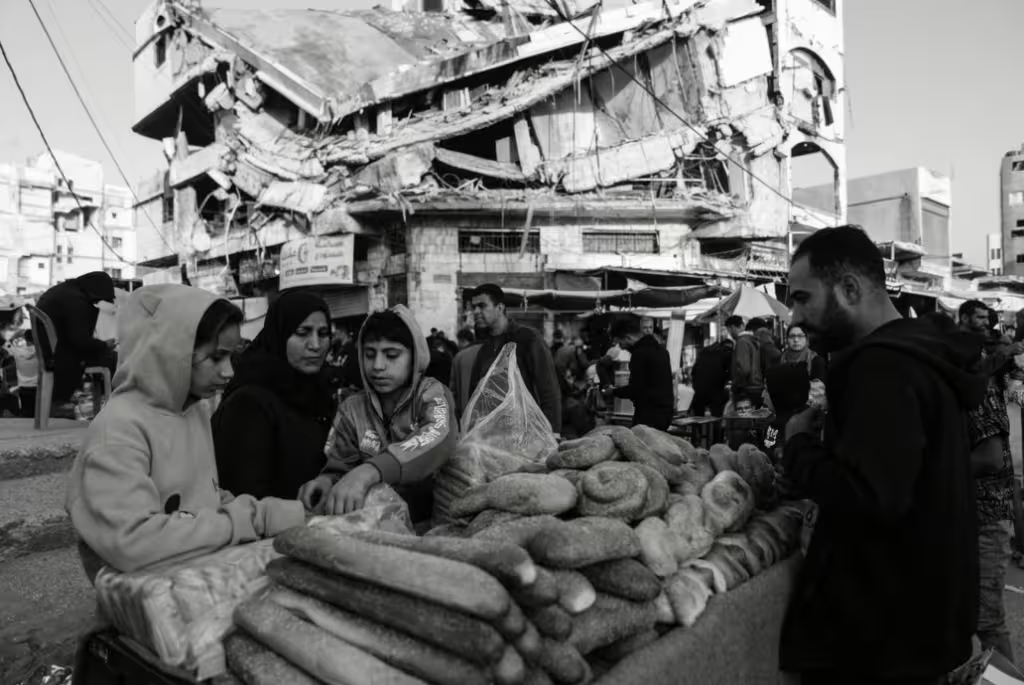
- Daily shortages: Analysts say power cuts, water and fuel shortages, and slower trade have become more visible over the past month.
- Blockade and sanctions: Washington launched what it calls Operation Economic Fury in April, combining a naval blockade, tighter sanctions and other economic pressure.
- Currency decline: The Iranian rial reached a new low this month, trading above 1.9 million to the dollar, while the International Monetary Fund puts inflation near 70%.
- Expected contraction: The IMF forecasts that Iran’s economy will shrink by more than 5% this year if the war and current pressures continue.
- Social risk: An Iranian economic analyst told the Post that a contraction of roughly 4% could force millions from work and push millions more into poverty within months.
Between the lines
Infrastructure strikes are not measured only by the number of sites destroyed, but by whether they change decision-making in Tehran. That calculation carries a paradox. The wider the cost to civilians, the sharper the economic crisis may become — without any assurance that voices favouring compromise gain influence inside a wartime system where military actors tend to carry greater weight. The economy can deteriorate quickly while the politics of the conflict harden.
What to watch
The next targets will show whether Washington is using economic infrastructure as a limited negotiating lever or moving toward a wider campaign against energy, transport and public services. Continued Iranian attacks on shipping and Gulf bases will also indicate whether escalation is producing a path to talks, or a reciprocal cycle that damages trade and civilians across the region.
Sources