The latest
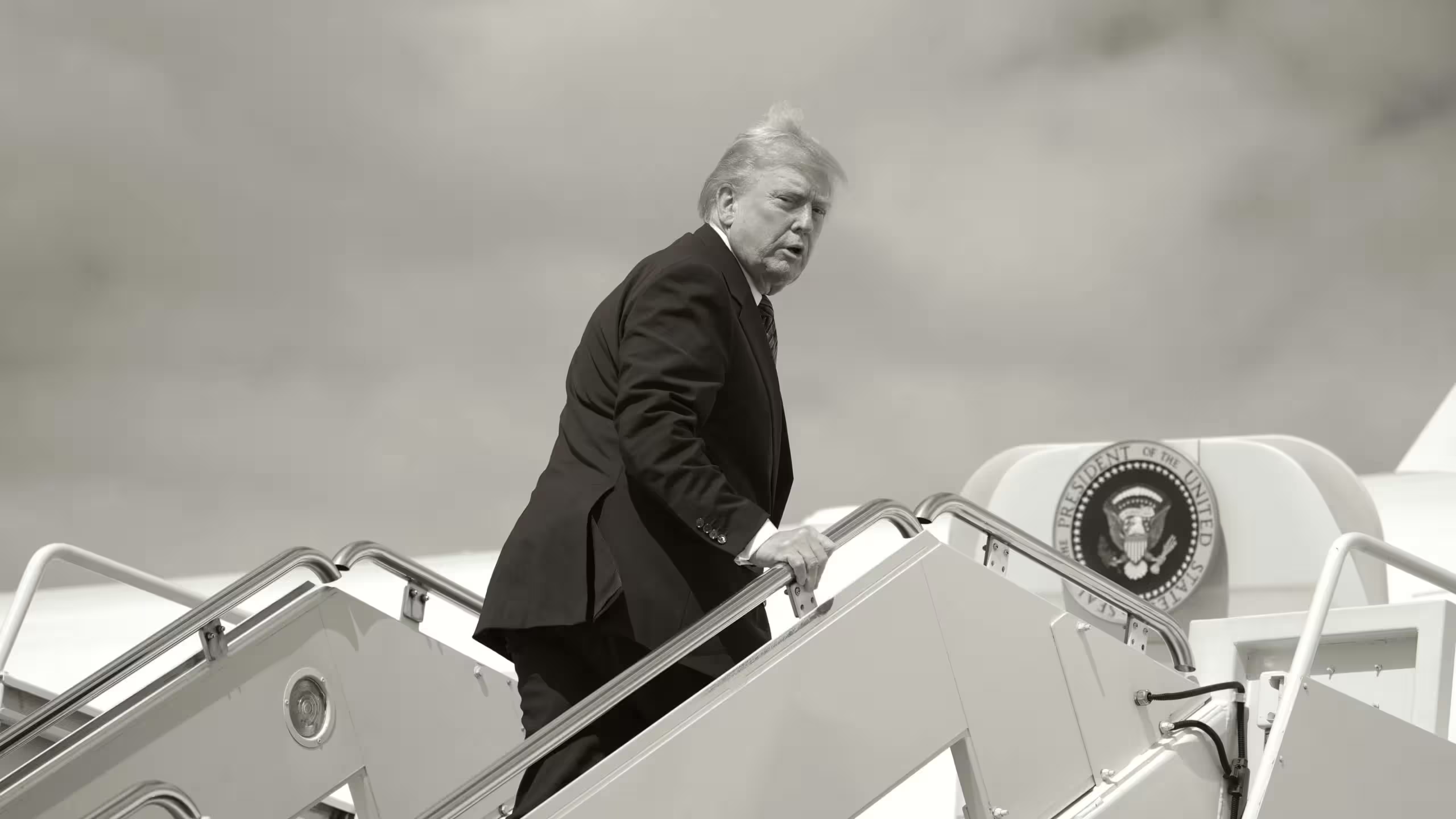
U.S. President Donald Trump announced a preliminary agreement to disarm Hamas as part of a broader roadmap to end the war in Gaza. However, implementation remains disputed. Washington says the plan is designed to end Hamas’s rule, while Hamas insists that any move on weapons depends on Israel fulfilling its obligations first. Israel, meanwhile, rejects any withdrawal before Hamas is fully disarmed.
Details
• U.S. position: The Trump administration says the plan envisions the gradual dismantling of all armed factions, the transfer of Gaza’s administration to a technocratic national committee, and oversight by an international stabilization force.
• Israeli position: Prime Minister Benjamin Netanyahu’s office says Israel will not withdraw behind the “Yellow Line” until Hamas is fully disarmed, arguing that any earlier withdrawal would create unacceptable security risks.
• Hamas response: Senior Hamas official Ghazi Hamad said the movement accepted what he described as a “difficult” agreement but did not agree to “disarmament.” Instead, Hamas would place its weapons under the custody of Gaza’s national administration committee only after Israel implements the first phase of the ceasefire agreement.
• Core dispute: The framework includes an initial 14-day period to finalize implementation timelines, but the central disagreement remains unresolved: should Israel withdraw first, or should Hamas surrender its weapons first?
• Implementation gaps: According to the reported framework, the process begins with heavy weapons, tunnels, and weapons depots, while small arms are excluded from the initial phase. That has fueled Israeli concerns over whether the plan can truly eliminate Hamas’s military capabilities.
Background
Previous efforts to secure a lasting ceasefire collapsed because of deep mutual distrust. Israel has consistently demanded Hamas’s disarmament before any large-scale withdrawal, while Hamas has linked any security arrangements to an end to Israeli military operations and a full withdrawal from Gaza. The new proposal builds on the 2025 Sharm el-Sheikh ceasefire framework by adding a phased disarmament process and a transitional technocratic administration for the territory.
Between the lines
The competing public positions illustrate fundamentally different priorities. Washington believes a phased, parallel process can bridge the gap between security and political demands. Israel insists that eliminating Hamas’s military threat must come first, while Hamas continues to treat its weapons as leverage tied to ending the war. Those conflicting positions suggest that implementing the agreement could prove far more difficult than reaching it.
What to watch
The first major test will come during the 14-day period allocated to finalize the implementation schedule. If the parties agree on the sequencing of Israeli withdrawal, Hamas’s disarmament, and international verification, the first phase could begin. Failure to bridge those differences could send negotiations back to square one.