The latest
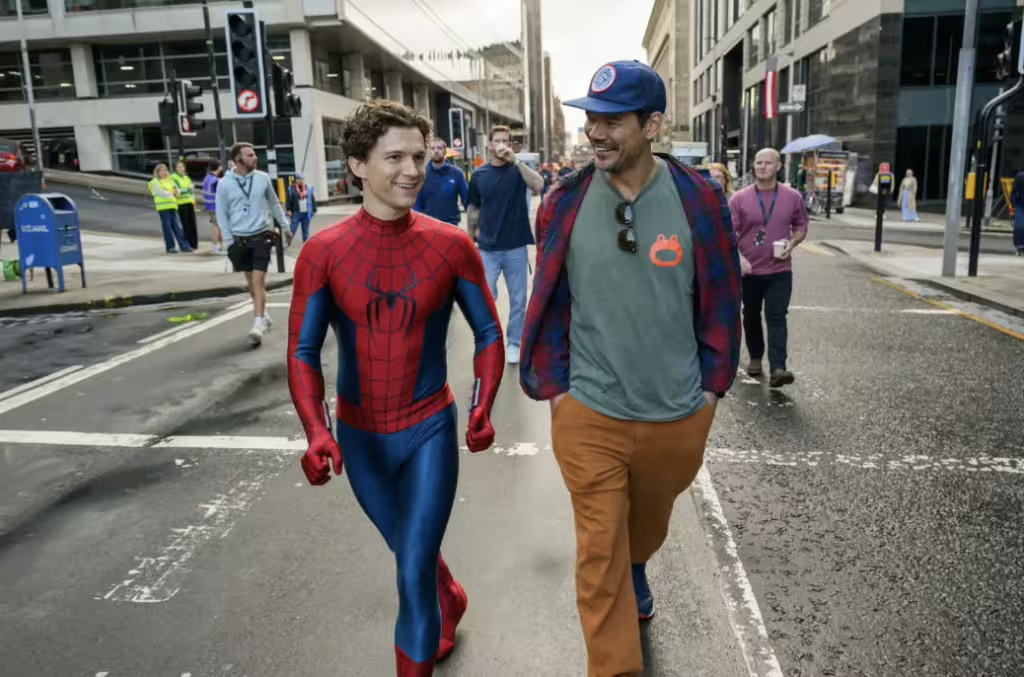
“Spider-Man: Brand New Day,” directed by Destin Daniel Cretton, picks up after “No Way Home,” with Peter Parker living alone and erased from the memories of MJ and Ned. Spider-Man is loved by New York again, but Peter faces a strange entity moving from person to person in pursuit of something held by Damage Control, while his own powers become increasingly difficult to manage. The New York Times review sees the film as an attempt to make adulthood its central subject: Peter must learn to accept what he is. But that maturity comes at a cost. The film has less of the humour and ease of its predecessors, and more of the weight of the wider Marvel Cinematic Universe.
Details
- A new life: Peter lives alone after the death of Aunt May, while MJ and Ned have moved on to MIT with no memory of their friendship with him.
- A double existence: Peter watches his former friends from a distance and continues fighting crime as Spider-Man without revealing his identity.
- The new threat: A vengeful entity appears to pass from person to person while seeking something hidden within Damage Control.
- Damage Control: The agency was created to manage the aftermath of the Battle of New York, but has become a more authoritarian institution seeking to harness destructive energy.
- Unstable powers: Peter suffers headaches and changes in his abilities, including shooting web fluid directly from his wrists rather than relying on his suit.
- Returning characters: The film includes Frank Castle, also known as the Punisher and played by Jon Bernthal, as well as Florence Pugh’s Yelena Belova.
- Lost chemistry: The review argues that the film misses the banter and warmth of earlier instalments because Peter’s relationship with Ned and MJ has fundamentally changed.
- Franchise homework: It also criticises the reliance on knowledge of other Marvel films and television series to understand some characters and their histories.
- Holland’s performance: Tom Holland remains engaging and energetic in the role, preserving the human scale of a character who has grown up alongside his audience.
Between the lines
The best Spider-Man films operate on a small scale: a young man, his friends, his city and a mistake he is trying to repair. This story tries to move Peter into adulthood, where he fears his own powers as much as he fears losing the people he loves. But layers of Marvel history surround that journey. The character who once offered an easy way into this universe now requires a guidebook of previous films and television shows. That is not a problem of knowledge alone; it is a problem of focus.
What’s next
The film leaves Peter facing a choice between accepting his powers and identity openly or remaining hidden behind the clean slate he created for himself. For the franchise, the question is whether it can restore the intimate storytelling that made this Spider-Man compelling, or continue to use him as a bridge between Marvel’s expanding worlds.