The latest
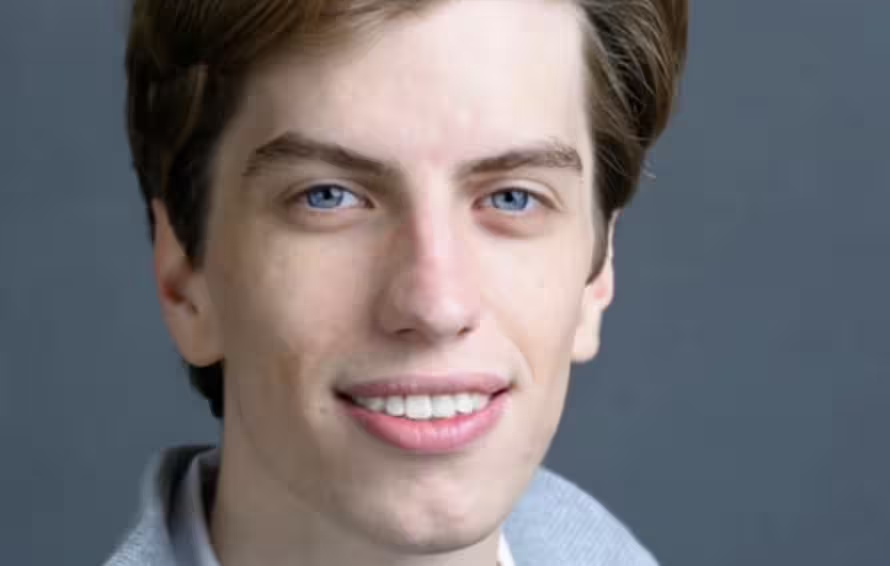
Situational Awareness, the hedge fund built around an aggressive belief in the AI trade, has sold most of its public-equity portfolio to Citadel after pressure from lenders and sharp declines in key holdings, the Financial Times reported. The fund, founded by former OpenAI employee Leopold Aschenbrenner, returned 439% in the first half of the year and 1,551% since inception. But those debt-backed bets did not withstand the latest technology sell-off. The deal, negotiated with Citadel founder Ken Griffin’s involvement, left Situational Awareness with a small amount of unlevered public stock and its private investments.
Details
- Portfolio sale: Citadel bought the bulk of the fund’s public-stock holdings, once estimated at $16 billion, ahead of rivals including Millennium and Jane Street.
- Rapid growth: Situational Awareness’s assets grew to roughly $24 billion in little more than two years, propelled by interest in its founder and the AI investment theme.
- Founder’s background: Aschenbrenner graduated from Columbia University at 19, worked briefly for a philanthropic arm linked to FTX, then joined OpenAI’s Superalignment team before leaving the company.
- Founding thesis: His 2024 essay on the expected impact of artificial general intelligence, titled “Situational Awareness,” helped make him prominent among technology investors.
- Early backers: Initial investors included Silicon Valley figures such as Nat Friedman and Stripe founders Patrick and John Collison.
- Falling holdings: The fund held large positions in companies including Bloom Energy and Sandisk, whose shares fell about 40% between the end of June and the start of this week, according to the report.
- Recovery attempt: People familiar with the situation said the fund sold Intel shares aggressively after its earnings report as it sought to recover losses during the market retreat.
- Bank pressure: A prime broker put the fund on a watch list because of its concentrated and volatile portfolio and sought additional margin several times, including this week.
- Investor message: On July 24, Aschenbrenner encouraged investors to add capital despite market volatility, before later seeking new liquidity and asset sales.
Between the lines
The problem was not one mistaken call on AI. It was the structure of the wager. When a portfolio is concentrated in one theme and debt is used to amplify returns, a sector-wide sell-off quickly becomes a test of liquidity and confidence. Situational Awareness did not lack access to capital or prominent investors. What it lacked was a long investment record and the institutional infrastructure needed to absorb sharp volatility before lenders began setting the terms.
What’s next
The immediate question is the future of the fund and its private assets, including a possible Anthropic stake. On Wall Street, attention will turn to losses among backers and lenders, and to whether banks reassess how they finance hedge funds whose exposure is concentrated in AI-linked equities.