The latest
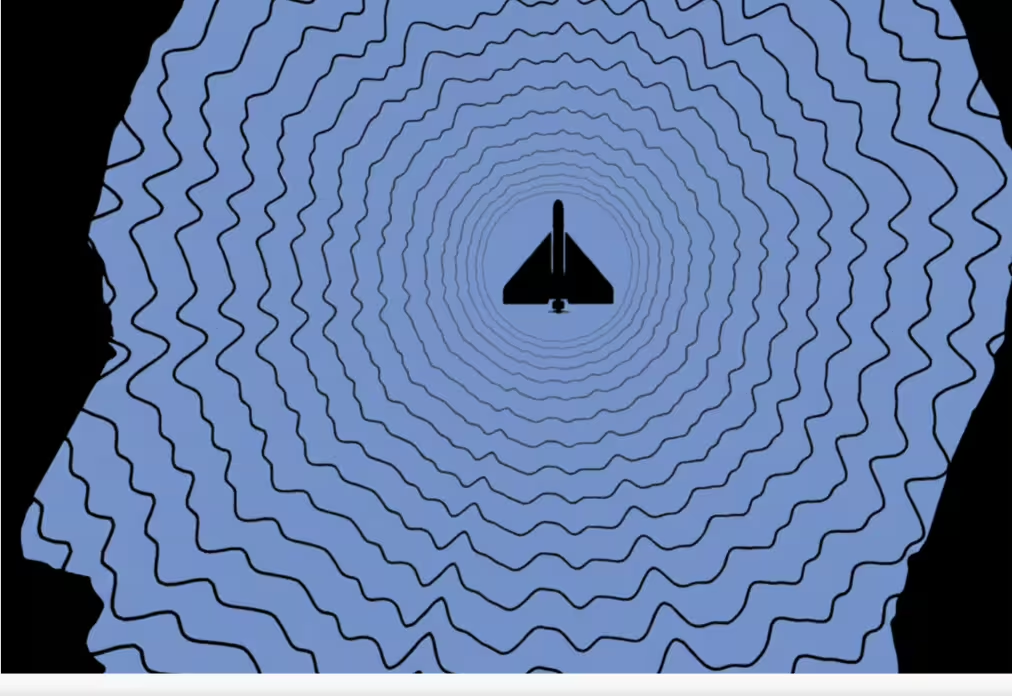
War is no longer heard only as explosions or air-raid sirens. In Gaza, Kyiv, Beirut and Sudan, the sound of drones has become a persistent layer of conflict — one that can precede violence without revealing where it is headed. Civilian accounts collected by Bloomberg show that drones are changing daily life as much as they are changing the battlefield. They turn sleep into a calculation, quiet into a temporary condition and every noise overhead into an unresolved question about surveillance, a strike or survival. As their range expands and their cost falls, the feeling of war has moved beyond the front line into city apartments, shelters and phones that never stop sending alerts.
Details
- A language of sound: Drones have acquired local names based on their noise, including in Afghanistan and Gaza, where the sound has become part of how civilians describe them.
- Sudanese image: Some civilians in Sudan compare drones to ghosts because they appear above communities and can strike with little warning.
- New fear: Psychiatrists in Ukraine have spoken of “droneophobia” as a psychological effect that adds to the trauma of conventional bombardment.
- Scale of use: Drones are cheaper than conventional missiles, allowing militaries to launch them in larger numbers and over longer periods.
- Wider battlefield: Their spread pushes conflict beyond traditional lines of contact and into cities that would not previously have considered themselves war zones.
- Kyiv’s sirens: Ukrainian actor Max Tkachenko said sleep deprivation has become part of life after years of repeated air-raid warnings, day and night.
- Harsh adaptation: Tkachenko does not always go to a shelter; he follows reports about drone numbers and flight paths before deciding whether to sleep or stay awake.
- Prelude to violence: The report describes the low sound of some Russian drones as resembling a distant moped, making the buzz a warning before a possible explosion.
- Beirut under watch: Israeli drones can be heard over Beirut for hours, but people on the ground cannot know whether they are gathering intelligence, intercepting signals or preparing a strike.
Between the lines
Drones do not merely add another noise to war. They create a state of prolonged anticipation. With conventional shelling, civilians can often connect danger to an explosion or a specific warning. A drone lengthens the period before the strike: a present sound, an unknown purpose and a personal decision repeated each night between taking shelter and trying to continue life. That is why adaptation — ignoring a siren or studying alert channels — can become both a psychological survival mechanism and a risk.
What to watch
As drones become more capable and appear in more conflicts, the challenge will extend beyond air defence to mental health and civilian resilience. The question is not only how to bring a drone down, but how cities recover their rhythm once its sound has become part of their residents’ daily memory.