The latest
President Donald Trump and Israeli Prime Minister Benjamin Netanyahu discussed the possibility of imposing a land blockade on Iran during their White House meeting, according to The Telegraph. The proposal is reportedly one of several options under consideration to increase economic pressure on Tehran as Washington reassesses its strategy after months of military confrontation and sanctions.
Details
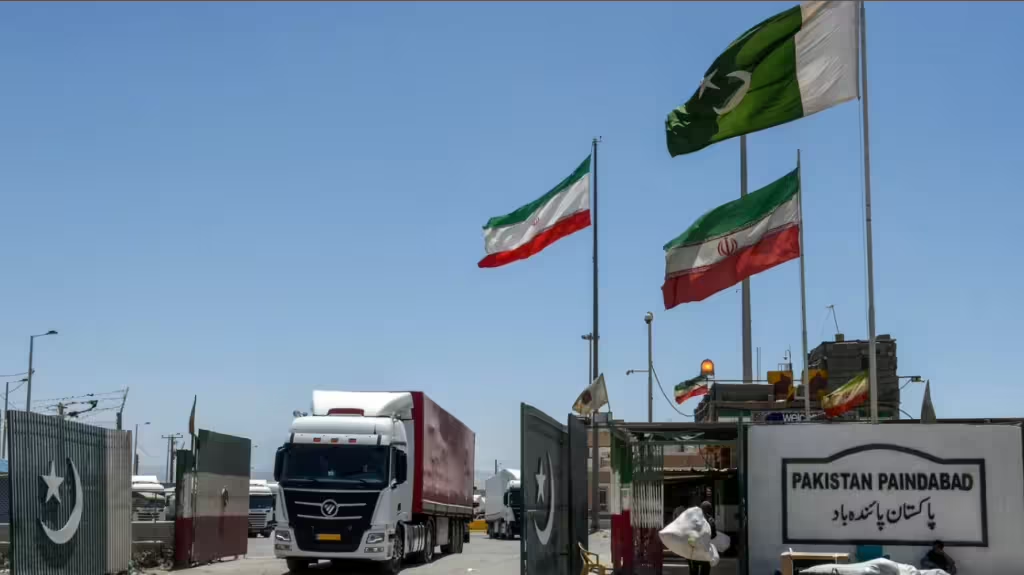
• The proposal: According to The Telegraph, the plan would encourage Iran’s neighboring countries to tighten controls or close border crossings, limiting the flow of imports and exports.
• Israeli view: The newspaper quoted a senior Israeli official as saying one option under discussion is preventing Iran from bringing “anything in or out,” adding that all possibilities remain on the table.
• U.S. assessment: Retired U.S. General Sean MacFarland described a land blockade as “almost impossible,” but argued that isolating Iran economically could be an effective way to increase pressure despite the country’s extensive borders and regional ties.
• Implementation challenges: Iran shares borders with seven countries, including Iraq, Turkey, Pakistan and Afghanistan, meaning any blockade would depend on cooperation from governments that could face economic costs or Iranian retaliation.
• Part of broader strategy: The Telegraph reported that the Trump administration is considering the proposal as part of its “maximum pressure” campaign, while a White House official said that “all options remain on the table.”
Background
The discussions come after months of military escalation and U.S. sanctions against Iran, amid continued uncertainty over the future of nuclear negotiations. Washington has also expanded maritime pressure on Iran in recent months as part of its broader strategy to weaken Tehran’s economy, according to media reports.
Between the lines
If the debate shifts from maritime restrictions to a land blockade, it would represent consideration of a broader economic pressure campaign that would require regional cooperation, making implementation significantly more complex politically and logistically. The proposal remains an option under discussion rather than an announced policy.
What to watch
Attention will focus on whether the United States or Israel officially confirms the discussions, and whether any signs emerge of diplomatic outreach to neighboring countries over tightening border controls or restricting trade with Iran.