The latest
The war with Iran is testing the security formula that has bound Kuwait and the United States since the emirate’s liberation in 1991. The Wall Street Journal reported that Washington is considering a possible reduction in its military presence after US installations made Kuwait a repeated target for Iranian missiles and drones, while Kuwaiti officials still see an American commitment as an essential guarantee. US air defences have intercepted most attacks, but strikes have hit power, desalination, airport and port facilities — exposing the limits of a security architecture built for conventional invasion, not a war that reaches into energy networks, sea lanes and civilian services.
Details
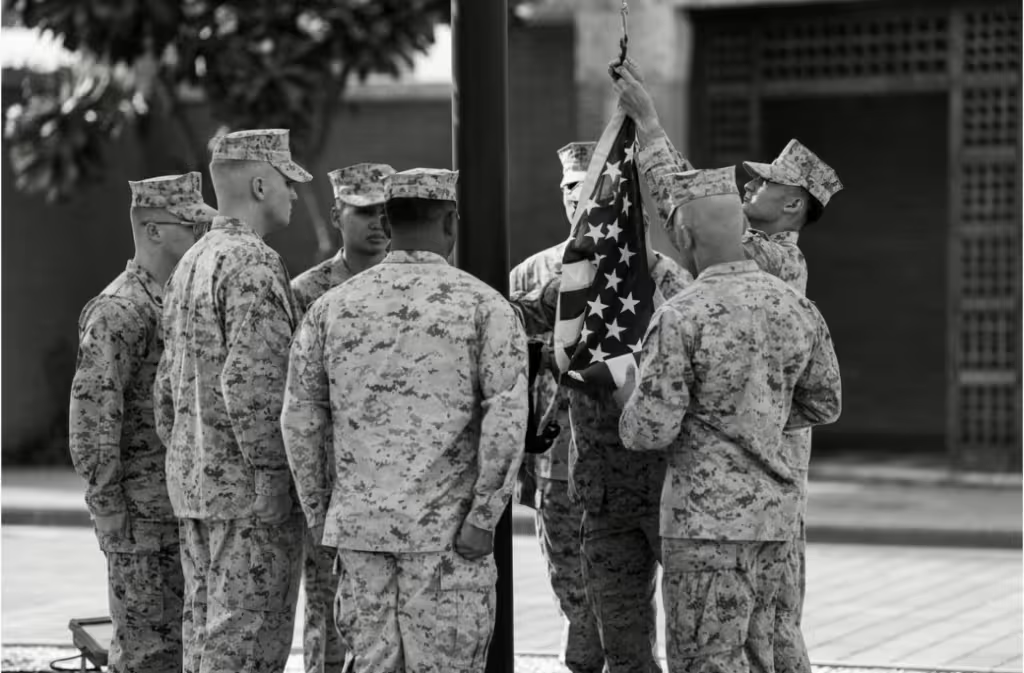
- US footprint: Kuwait has hosted as many as 13,500 US personnel in recent years at Camp Arifjan, Ali Al Salem Air Base and other facilities, serving as a major logistics hub for the US military.
- Risk reduction: US officials told the Journal that the Pentagon has cut its presence in Kuwait to reduce exposure after Iranian attacks on American bases.
- Deadly strike: An attack in March killed six US service members, one of the war’s deadliest strikes on American forces, according to the report.
- Civilian targets: Iranian attacks have targeted power and desalination plants, Kuwait International Airport, a Gulf port and energy-related facilities.
- Water vulnerability: More than 90% of Kuwait’s drinking water comes from desalination, much of it integrated with power generation; a new strike this month seriously damaged one such facility, the report said.
- Export disruption: The closure of Hormuz halted Kuwaiti exports of almost 2 million barrels a day for months, cutting off the country’s main source of income and removing about 2% of global daily supply.
- Kuwait’s response: There is no indication Kuwait plans to abandon the US security partnership, but it may seek more air-defence systems and weapons from Washington and other suppliers.
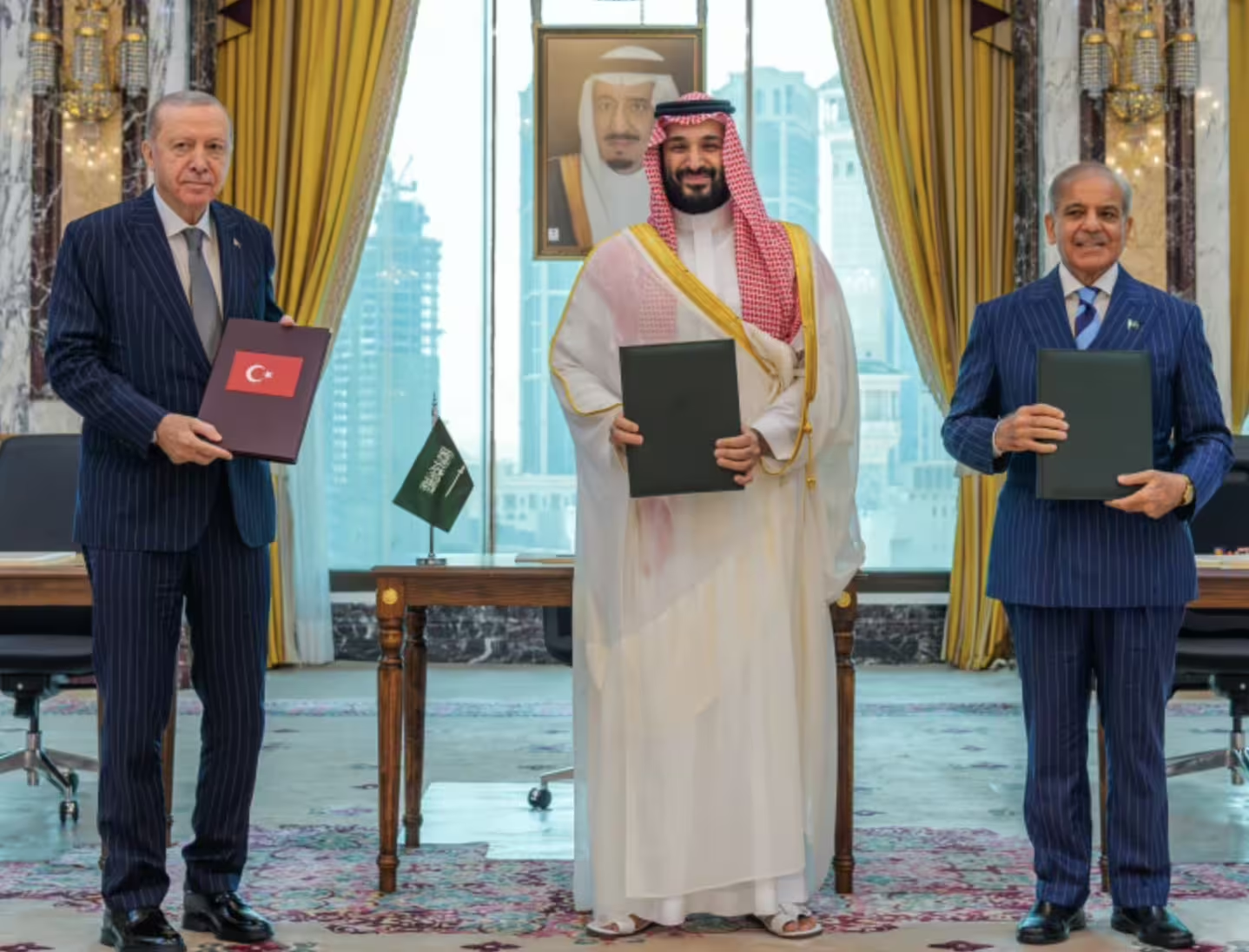
- Broader ties: Kuwait recently signed a new defence pact with Pakistan, pointing to an effort to broaden its security network without replacing the United States.
- Unclear role: Kuwait denied that its territory had been used for attacks on Iran after Tehran accused the airport of serving as a US staging site; it remains unclear whether US forces were using it in that way.
Between the lines
The paradox is that the US presence is neither a luxury Kuwait can easily dispense with nor a complete shield it can rely on. The partnership was designed primarily to deter a ground invasion like Iraq’s in 1990. The present threat is different: precision missiles, drones and exposed civilian systems. A smaller US footprint could reduce Kuwait’s value as a military target in Tehran’s calculations, but it could also raise a more difficult question in Kuwait City: how durable is the American guarantee when the country needs it most?
What to watch
The relationship’s direction will depend on what the Pentagon decides about its permanent presence and on Kuwait’s ability to protect power, water and port infrastructure from sustained attacks. Any new interceptor systems will also test whether the partnership can shift from defending large bases to building a distributed shield that protects the state itself, not American forces alone.