The latest
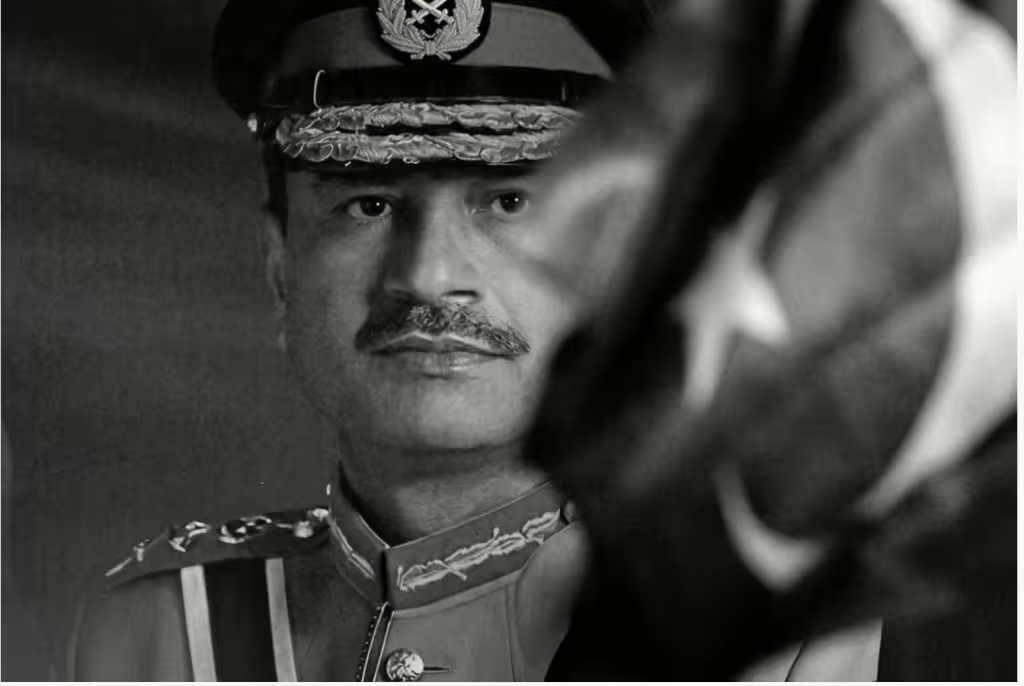
Field Marshal Asim Munir wants to transform Pakistan from a South Asian power overshadowed by India into an influential security partner in the Middle East. During Saudi Arabia’s war with Iran, he deployed fighter jets, military personnel and a Chinese-made air-defense system to the kingdom. Islamabad subsequently received a $3 billion Saudi loan.
Munir has also expanded coordination with Saudi Arabia, Turkey and Egypt, capitalizing on Pakistan’s military, nuclear arsenal and relationships with Beijing and Washington. The emerging bloc hopes to shape the region’s postwar security order and potentially counter growing cooperation among the UAE, Israel and India.
Pakistan’s rising international profile, however, contrasts sharply with its domestic decline. The country is deeply indebted and dependent on IMF programs, while poverty is increasing and attacks by the Pakistani Taliban and Baloch separatists are intensifying. Parliament has also granted Munir unprecedented powers that could keep him in office for a decade.
Details
- Saudi support: Pakistan deployed fighter jets, personnel and an HQ-9 air-defense system to a Saudi base during Iranian attacks.
- Military authority: Munir has gained greater control over the air force and navy, while his term has been extended and civilian institutions weakened.
- Financial dependence: Pakistan owes Saudi Arabia about $8 billion, equal to 46% of its central bank reserves.
- UAE tensions: The UAE demanded repayment of a $3.5 billion loan amid disagreements over Islamabad’s pro-Saudi alignment and mediation with Tehran.
- Security crisis: More than 1,270 civilians and security personnel have been killed since the start of the year as militant activity expands in western Pakistan.
- Fragile economy: Debt-interest payments are expected to consume about 40% of government revenue, while annual net foreign investment reached just $1.6 billion.
Between the lines
Munir is using Pakistan’s military strength, diplomacy and nuclear status to compensate for its weak economy. But this influence depends on support from foreign patrons, while domestic repression and the exclusion of political opposition could deepen the insurgency instead of delivering the stability promised by his “hard state” project.
What to watch
Munir’s biggest test will be preventing Pakistan from being drawn into a wider conflict in defense of Saudi Arabia while preserving relations with Iran and managing domestic sympathy for Tehran. It also remains unclear whether his foreign partnerships will produce meaningful investment or merely postpone Pakistan’s economic reckoning.