The latest
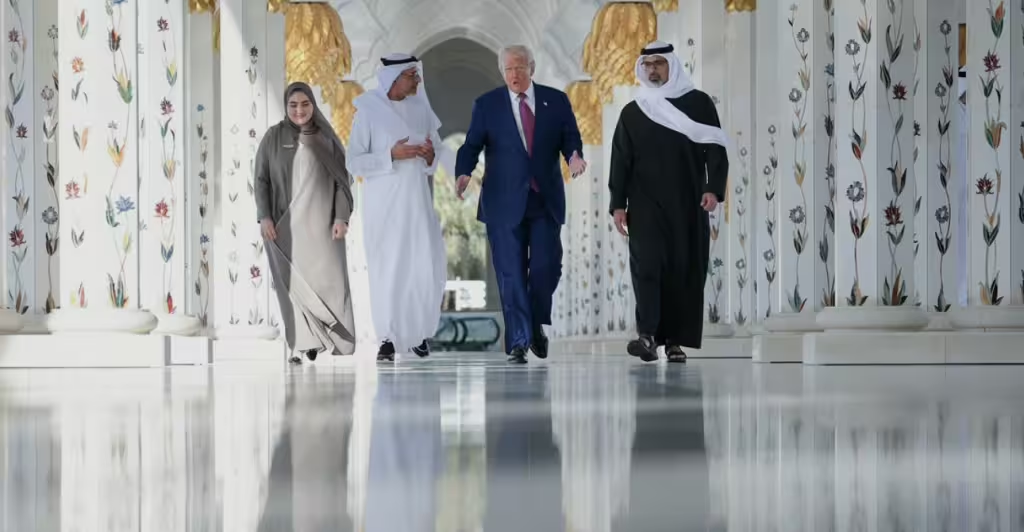
UAE Minister of Foreign Trade Thani Al Zeyoudi said the country’s $1.4 trillion U.S. investment plan was progressing faster than expected and could be completed before its original 10-year deadline.
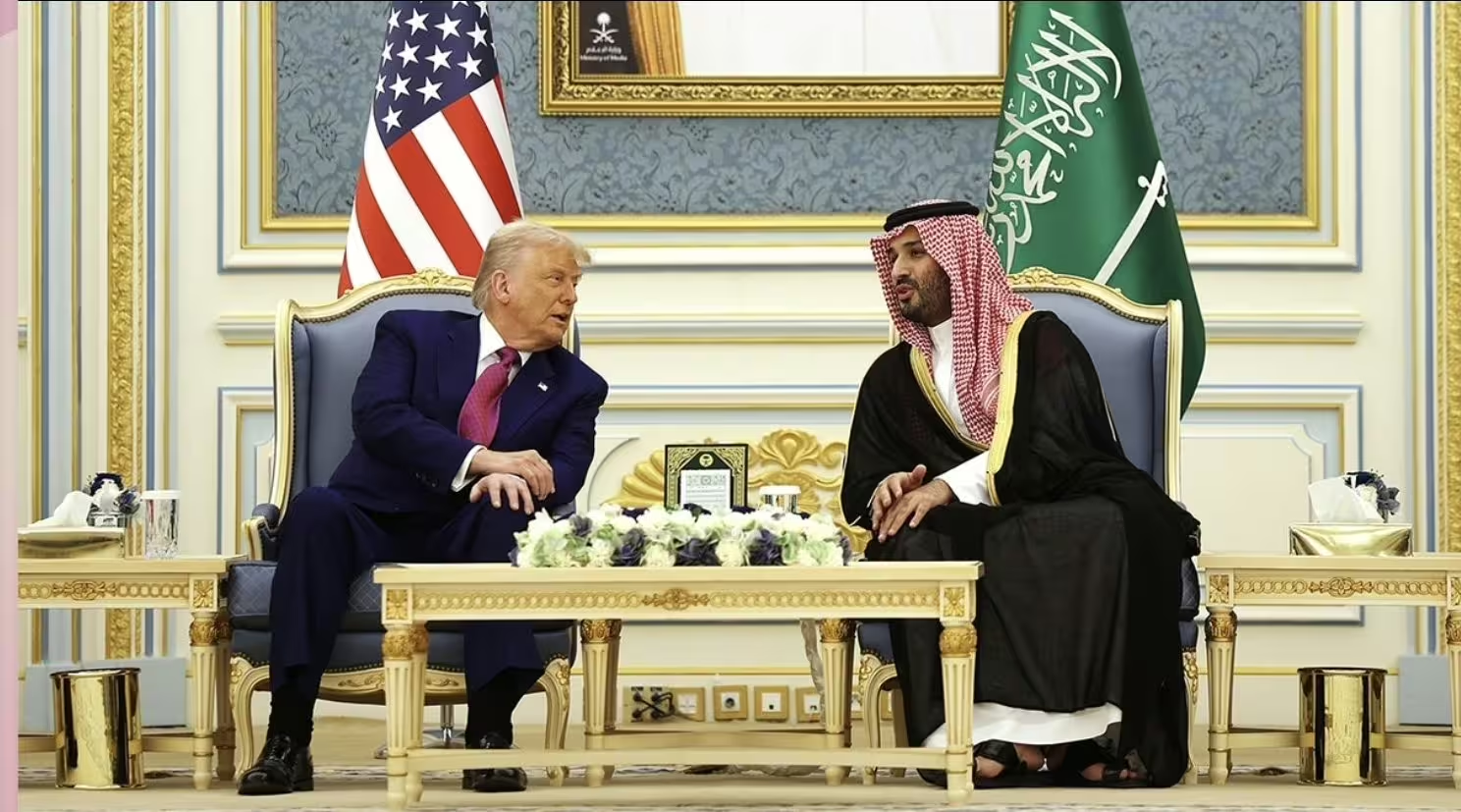
The partnership is supported by the Trump administration’s decision to ease restrictions on exports of advanced artificial intelligence chips to the UAE. Emirati companies are expected to begin importing Nvidia and AMD processors soon for Stargate, Abu Dhabi’s data-center cluster designed to host companies including OpenAI.
Al Zeyoudi contrasted Washington’s openness with Brussels’ slower approach after roughly seven rounds of negotiations on a Comprehensive Economic Partnership Agreement failed to produce a deal. He said the EU’s insistence on introducing non-trade issues, including environmental and labor standards, was obstructing an agreement.
Details
- U.S. partnership: The UAE says eased chip restrictions reflect mutual trust, transparency and its compliance with safeguards for sensitive supply chains.
- China concerns: Al Zeyoudi dismissed warnings that advanced semiconductors could reach China, saying the UAE was meeting every U.S. requirement.
- Trade agreements: The UAE has signed nearly 40 comprehensive economic partnership agreements and is approaching further deals with Canada, Rwanda and other countries.
- Canada track: An agreement could be concluded in less than 90 days, following a UAE pledge to invest $50 billion in Canada.
- Trade resilience: Emirati trade continued growing despite the war, Iran’s effective closure of Hormuz and disruption to imports and exports.
- Zero Hormuz: The UAE is expanding air cargo, eastern ports, new terminals in Fujairah and Dibba, and a second oil pipeline to Fujairah.
Between the lines
The UAE is linking capital allocation to the speed of political decision-making. Partners that provide faster access to technology and markets attract investment, while Europe risks losing opportunities if its negotiations remain slower and tied to non-trade conditions.
What to watch
The first arrival of advanced chips will be a practical test of the U.S. partnership. Attention will also focus on the Canadian agreement, the future of EU negotiations and completion of the new Fujairah pipeline, which could raise oil-transfer capacity outside Hormuz to nearly 4 million barrels a day.