The latest
The Kavomaleas and Acheloos tested Washington’s ability to secure the Strait of Hormuz by force. The tankers approached the Omani coast at night under reinforced U.S. air cover, but Iranian missiles struck and damaged both vessels despite days of intensive attacks on coastal military positions.
The strikes exposed the limits of the American strategy. Reopening the strait does not require destroying every Iranian capability; it requires convincing shipping companies that the risk of being hit has become acceptable. The campaign has yet to achieve that goal. Weekly tanker crossings have fallen from more than 90 to about 30, nearly half involving Iranian vessels linked to sanctioned oil trade.
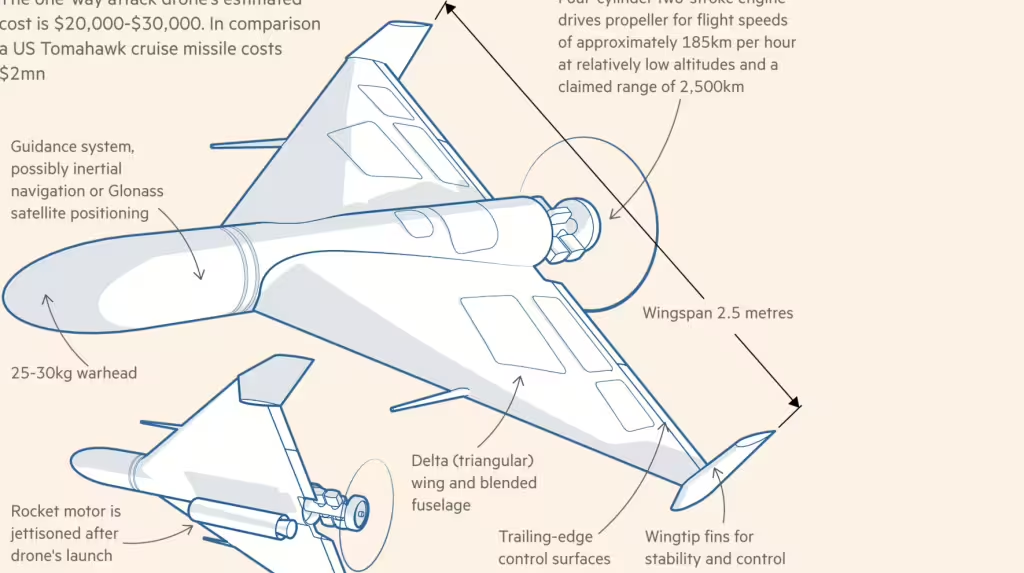
Tehran requires ships to coordinate passage through the route near its coast and targets vessels using the Omani route, which it considers unauthorized. Since U.S. strikes resumed on July 8, Iran has hit at least seven ships using drones, cruise missiles, anti-ship missiles and fast boats.
Details
- Required intensity: A former U.S. commander estimates that degrading Iran’s capabilities could require several weeks of 150 to 200 strikes every night.
- Mobile launchers: The campaign’s success depends on destroying a limited number of mobile missile launchers and pushing drone-launching sites farther inland.
- Basic surveillance: Iran can track vessels using small maritime radars and conceal missiles and drones across islands and coastal areas.
- Convoy option: Two or three U.S. Navy vessels could escort a similar number of commercial ships if the threat is reduced sufficiently.
- A second front: Houthi threats against Saudi ports have forced tankers to divert away from the Red Sea and the Bab el-Mandeb Strait.
- Oil markets: Brent crude has risen above $95 a barrel as export routes through both the Gulf and the Red Sea face mounting pressure.
Between the lines
Washington can destroy Iranian assets faster than Tehran can replace them, but the Pentagon does not ultimately define success—shipping companies do. As long as Iran retains the ability to hit even one tanker, insurance premiums will remain elevated and commercial traffic will stay limited.
What to watch
The next test is whether additional U.S. airpower can push Iranian launchers away from the coast and whether Washington begins organizing naval convoys. If the United States cannot offer credible security guarantees, an agreement with Iran or an international protection force may become the fastest route to restoring commercial traffic.
Source