The latest
China is reviving the mobilization model it used to build nuclear weapons and satellites, this time to catch the United States in AI chips. Vice Premier Ding Xuexiang, a close ally of Xi Jinping, leads a committee that brings together the country’s top companies and laboratories to master critical parts of the supply chain and allocate scarce resources.
Huawei’s progress has given the campaign new momentum. The company helped reduce China’s dependence on foreign AI chips from 90% in 2021 to less than 60% in 2025. That share could fall to 25% over the next five years. Huawei is also expected to ship about 1.5 million AI chips this year, nearly double its 2025 volume.
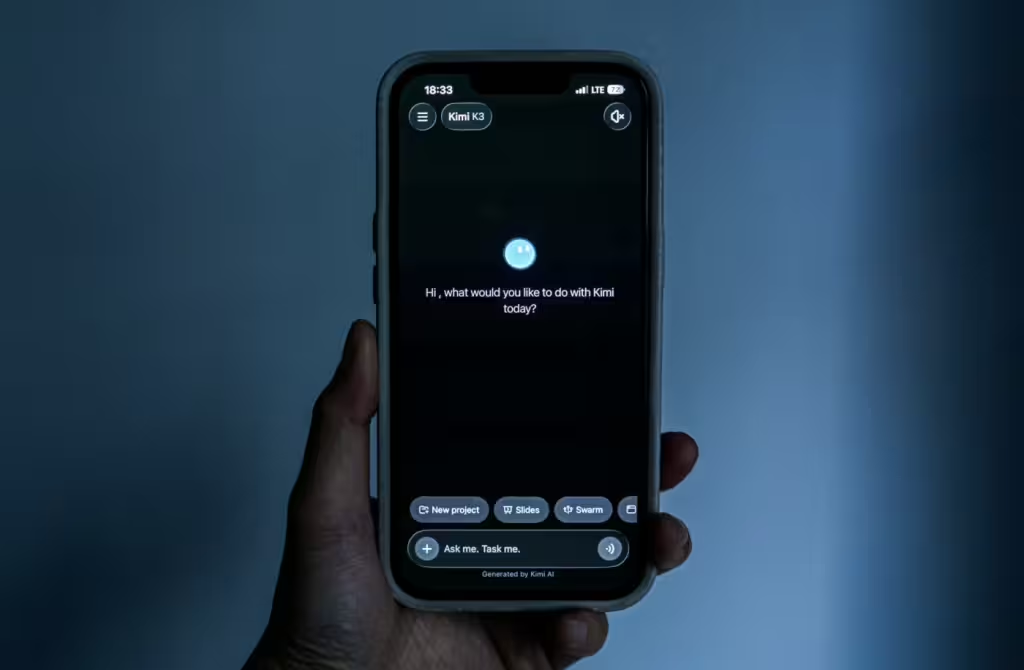
The gap nevertheless remains wide. Nvidia’s most advanced AI chip delivers roughly four times the computing power of Huawei’s best alternative, while Chinese companies face severe capacity shortages. Moonshot AI temporarily suspended premium registrations shortly after releasing Kimi K3 because it lacked sufficient computing power.
Details
- Political pressure: Authorities warned major AI companies against resisting domestic chips, portraying such opposition as a betrayal of the national effort.
- State investment: China raised about $48 billion in 2024 for a government-backed semiconductor fund.
- Production target: Chinese chipmakers aim to raise advanced wafer output from about 30,000 a month to more than 500,000 by 2030.
- Technical workarounds: Huawei is using multi-patterning, advanced packaging and massive chip clusters to compensate for its lack of cutting-edge manufacturing equipment.
- Immediate bottleneck: Huawei plans to produce about 750,000 Ascend 950 chips this year, far below expected demand.
- Gray market: Prices for smuggled Nvidia chips have more than doubled in six months as U.S. enforcement tightened and shipping disruptions increased.
Between the lines
U.S. restrictions have accelerated China’s push for an independent ecosystem, but they have not stopped it from using hundreds of thousands of Nvidia chips to remain competitive. Beijing is betting on a combination of state backing, market discipline and domestic competition rather than relying on a single national champion.
What to watch
The plan’s success will depend on China’s ability to expand production and develop its own extreme-ultraviolet lithography equipment. Huawei’s workarounds may prevent the gap from widening, but full independence from foreign technology could take at least a decade.