The latest
The Trump administration is trying to keep diplomacy with Iran alive after weeks of limited military exchanges, but Tehran appears to believe the conflict has strengthened rather than weakened its negotiating position.
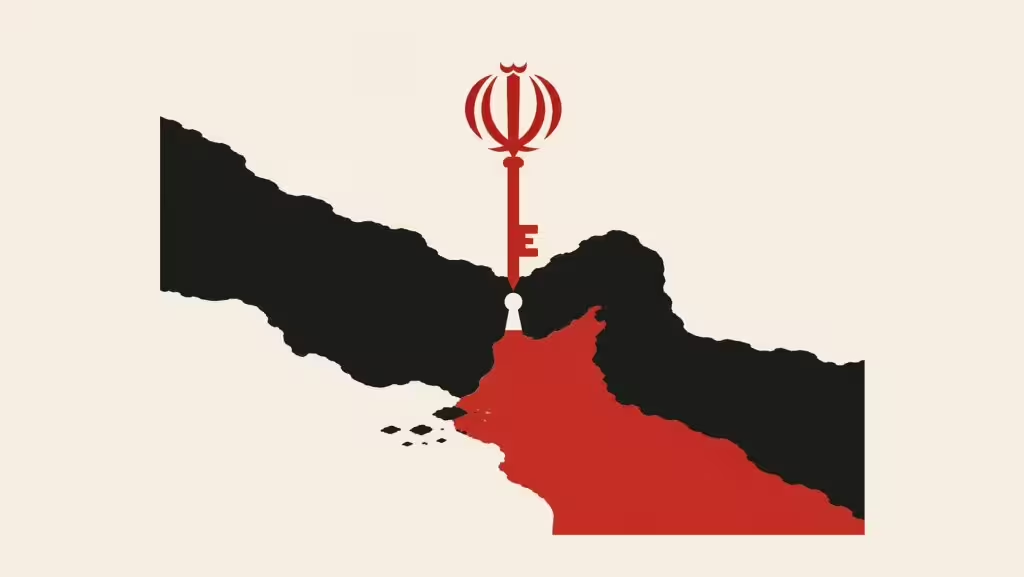
According to The Washington Post, Iran now sees its ability to disrupt shipping through the Strait of Hormuz as a strategic bargaining chip. That creates a difficult balancing act for Trump, who is seeking both lower fuel prices at home and a nuclear agreement that curbs Iran’s program.
Details
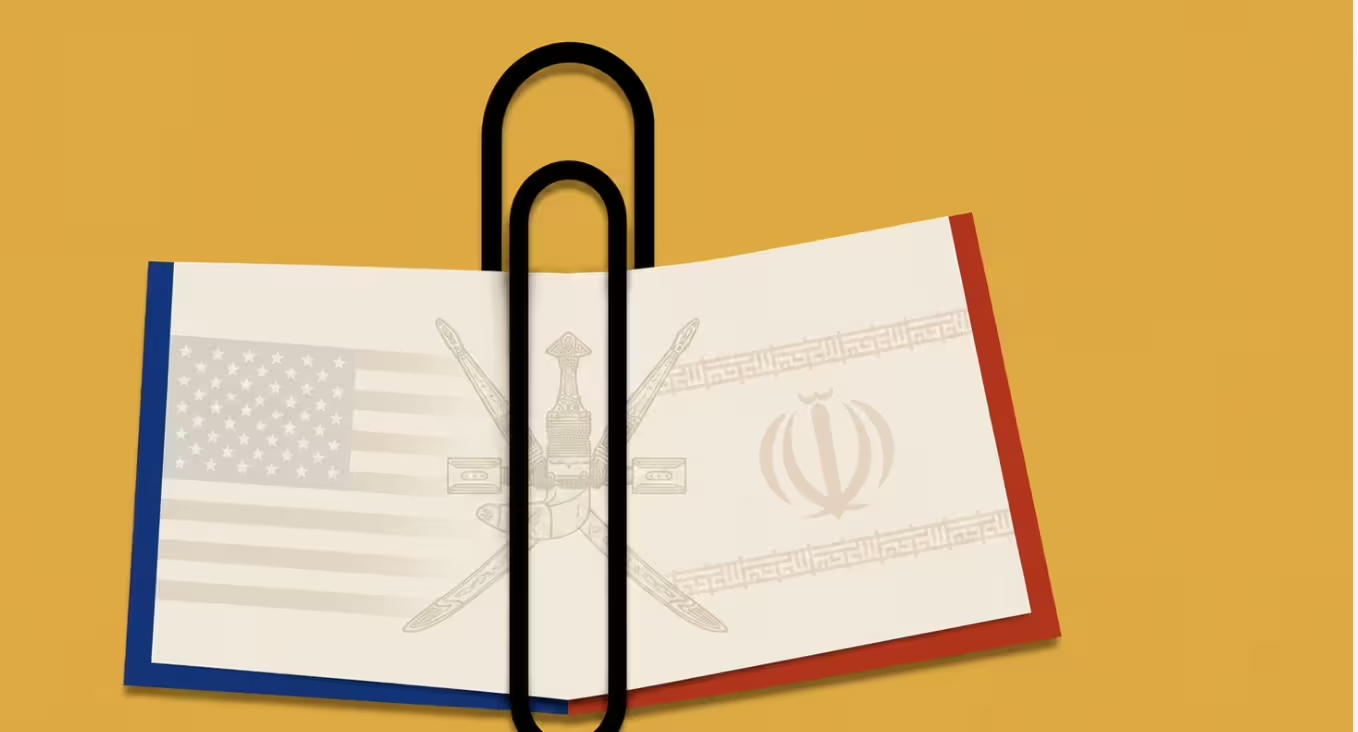
- Planned indirect talks in Doha were thrown into doubt after Iran’s Foreign Ministry denied any direct meeting with U.S. officials, despite Trump’s earlier remarks suggesting Tehran had requested one.
- Trump welcomed the recent decline in crude oil prices but complained that gasoline prices have remained stubbornly high, urging retailers to lower prices toward $2.50 per gallon.
- Energy analysts say cheaper crude has not translated into lower fuel prices because refinery capacity remains constrained after the conflict, while some facilities shifted production toward jet fuel to meet European demand.
- Tehran believes its ability to interfere with shipping through the Strait of Hormuz is no longer a theoretical threat. During the conflict, it demonstrated how relatively inexpensive drones and naval mines could disrupt one of the world’s most critical energy corridors.
- Diplomats and security analysts told the newspaper that Iran can impose significant costs on global shipping far more cheaply than the United States can guarantee freedom of navigation.
- Even so, oil tankers continue to pass through the strait, and shipping companies are gradually clearing vessels stranded during the fighting. That has helped prevent crude prices from returning to the peaks seen at the start of the war.
Background
Roughly one-fifth of the world’s oil supply passes through the Strait of Hormuz, along with a significant share of global liquefied natural gas exports from Qatar and the UAE, making it the world’s most important energy chokepoint.
For decades, Iran threatened to close the waterway without carrying out a prolonged shutdown. The recent conflict, however, convinced many military and energy analysts that Tehran has demonstrated a credible ability to disrupt maritime traffic, even if only temporarily.
At the same time, strategic petroleum reserves, increased U.S. exports, and alternative supply routes have softened the impact on global crude prices. Those measures, however, have done far less to ease pressure on refined fuel markets.
Why negotiations remain difficult
According to analysts at the Brookings Institution and diplomats following the talks, Tehran sees little incentive to make major concessions while its leverage has expanded.
Alongside its stockpile of highly enriched uranium, Iran now holds another powerful negotiating asset: the ability to threaten one of the world’s most vital shipping lanes.
For Washington, the challenge is equally difficult. A broader military confrontation could quickly push energy prices higher and undermine Trump’s domestic economic priorities.
What to watch
The next phase of diplomacy may depend on whether the nuclear negotiations can be separated from maritime security in the Gulf—a distinction that is becoming increasingly difficult to maintain.
If Iran continues using the Strait of Hormuz as strategic leverage, Washington will face mounting pressure to protect global shipping without triggering another regional war. Any renewed disruption could send energy markets sharply higher within days.