Details:
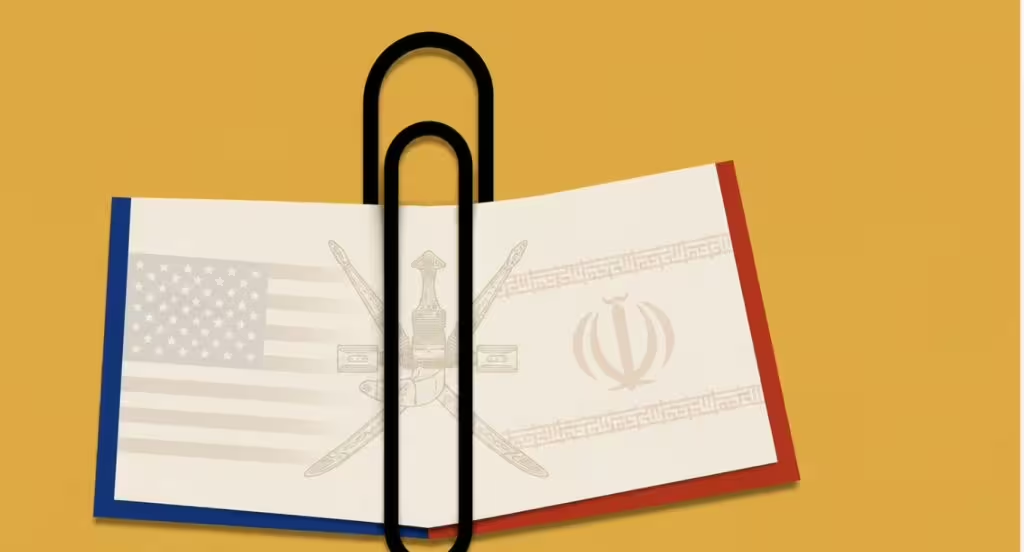
The New York Times said Iran and Oman are moving ahead with plans to collect payments from ships passing through the Strait of Hormuz, despite public U.S. objections.
The paper cited an Iranian official and four diplomats familiar with the matter as saying Muscat has submitted a formal proposal to Washington and Western allies. The plan would require shipping companies to pay for “services” linked to use of the strait.
The sensitive point is not just the fee. It is the language.
- Oman is talking about “service fees,” not transit tolls.
- Washington sees any monetization of the strait as a threat to freedom of navigation.
- Diplomats say the Omani proposal refers to voluntary contributions.
- An Iranian official says the payments should be mandatory.
That gap is the crisis.
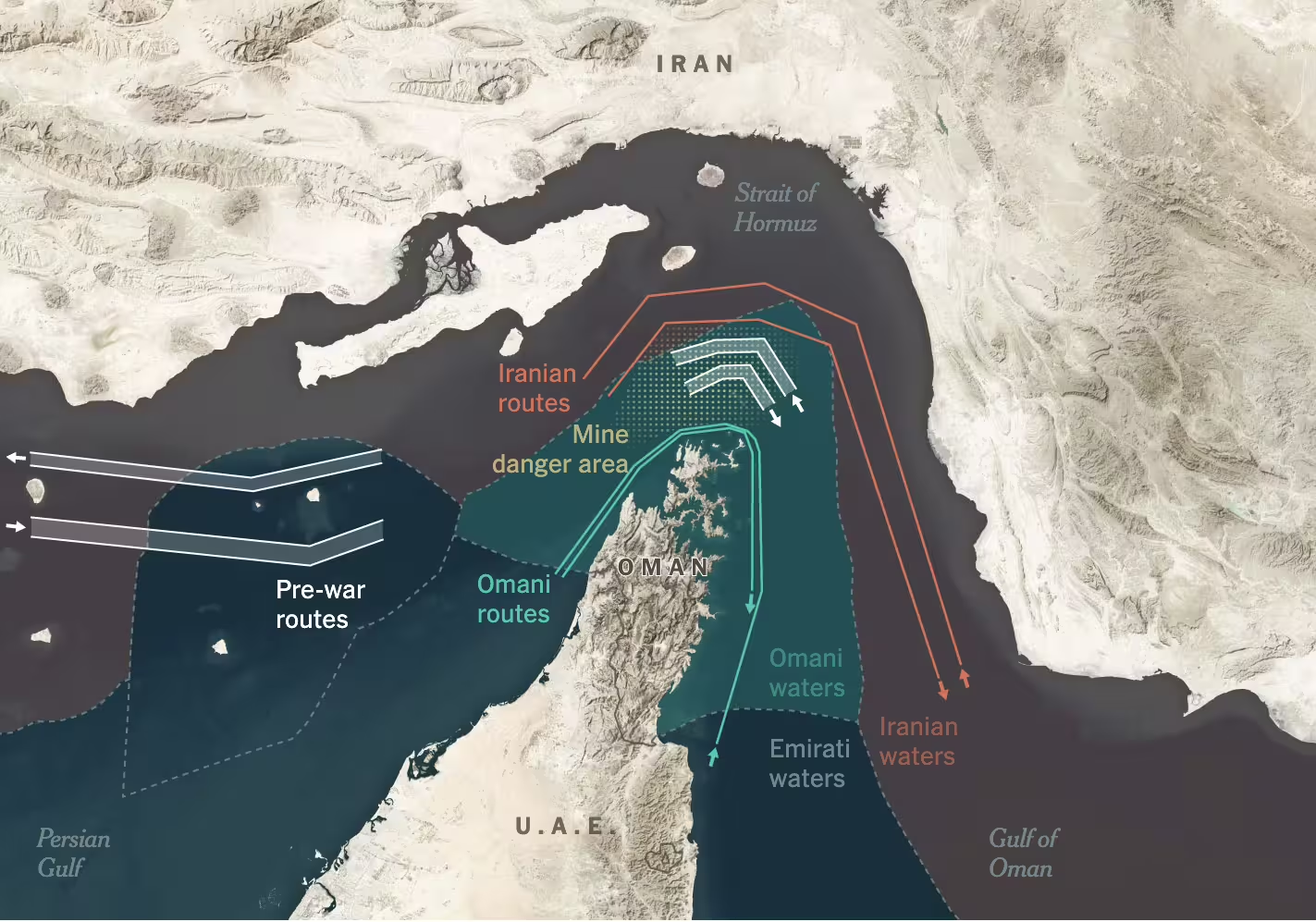
Before the war, Hormuz was an open and free international passage. During the war, Iran effectively blockaded it, sending energy prices higher and discovering a direct pressure point against Washington and global markets.
Since then, Tehran has been clear about its goal: no free return to the prewar order.
- Iranian Deputy Foreign Minister Kazem Gharibabadi said Tehran’s priority is an agreement with Oman.
- He also warned that Iran could move alone if Muscat refuses a joint framework.
- Foreign Minister Abbas Araghchi said the strait would not return to its prewar status.
- A senior Iranian adviser said the label does not matter: tolls, security fees, or naval passage payments.
Oman is trying to craft a legal exit ramp.
The proposal is partly modeled on the Straits of Malacca and Singapore, where voluntary contributions help support safe navigation. Muscat wants to separate what would be illegal — charging vessels simply to pass — from what can be framed as safety, navigation and environmental services.
Omani Foreign Minister Badr al-Busaidi has publicly rejected the idea of transit tolls. But he said keeping the waters safe, preventing pollution and responding to maritime emergencies all cost money.
Washington is not buying the wording easily.
U.S. Secretary of State Marco Rubio said the United States rejects any scenario in which use of the strait is monetized, whether it is called a fee, a toll or a donation. The U.S. position is blunt: Hormuz should return to how it looked before the war.
But the U.S.-Iran framework does not guarantee that for long.
The agreement that stopped the war ensured free passage for commercial vessels for only 60 days. It also asked Iran and Oman to start talks on what comes next.
In other words: Washington wants the old order back, but the text opened the door to a new one.
The crisis deepened after Oman and the International Maritime Organization designated a safe route running only through Omani waters. Iran responded by attacking a cargo ship, forcing a halt to an effort to evacuate hundreds of stranded vessels.
That is what Gulf states fear.
- Saudi Arabia wants the strait restored to its prewar status.
- Energy exporters worry Hormuz could become a permanent pressure file.
- Any fee, however softly framed, could give Iran practical recognition as a gatekeeper.
- Any Western acceptance of the formula could turn an exception into a new rule.
The problem is not the word “voluntary.”
The problem is that Hormuz was open before the war, and it is not fully open now. Iran came out of the conflict knowing that disrupting the strait hurts the world. Oman is trying to prevent a new explosion through legally careful language. Washington wants to erase the effects of the war without admitting that the war changed the rules of the waterway.
What to watch
The real test begins after the 60-day window expires. If a “service fee” formula is accepted, a new Hormuz order could emerge under soft legal cover. If Iran insists on mandatory payments, the strait will move back to the center of escalation — this time over who has the right to price passage through one of the world’s most important energy arteries.