
The latest
Israel began pushing back almost as soon as Trump announced his deal with Iran.
Prime Minister Benjamin Netanyahu has not issued a formal response. But his silence was quickly filled by Israeli ministers and officials who called the agreement a bad deal and a lifeline for Tehran.
Netanyahu is now caught between two pressures.
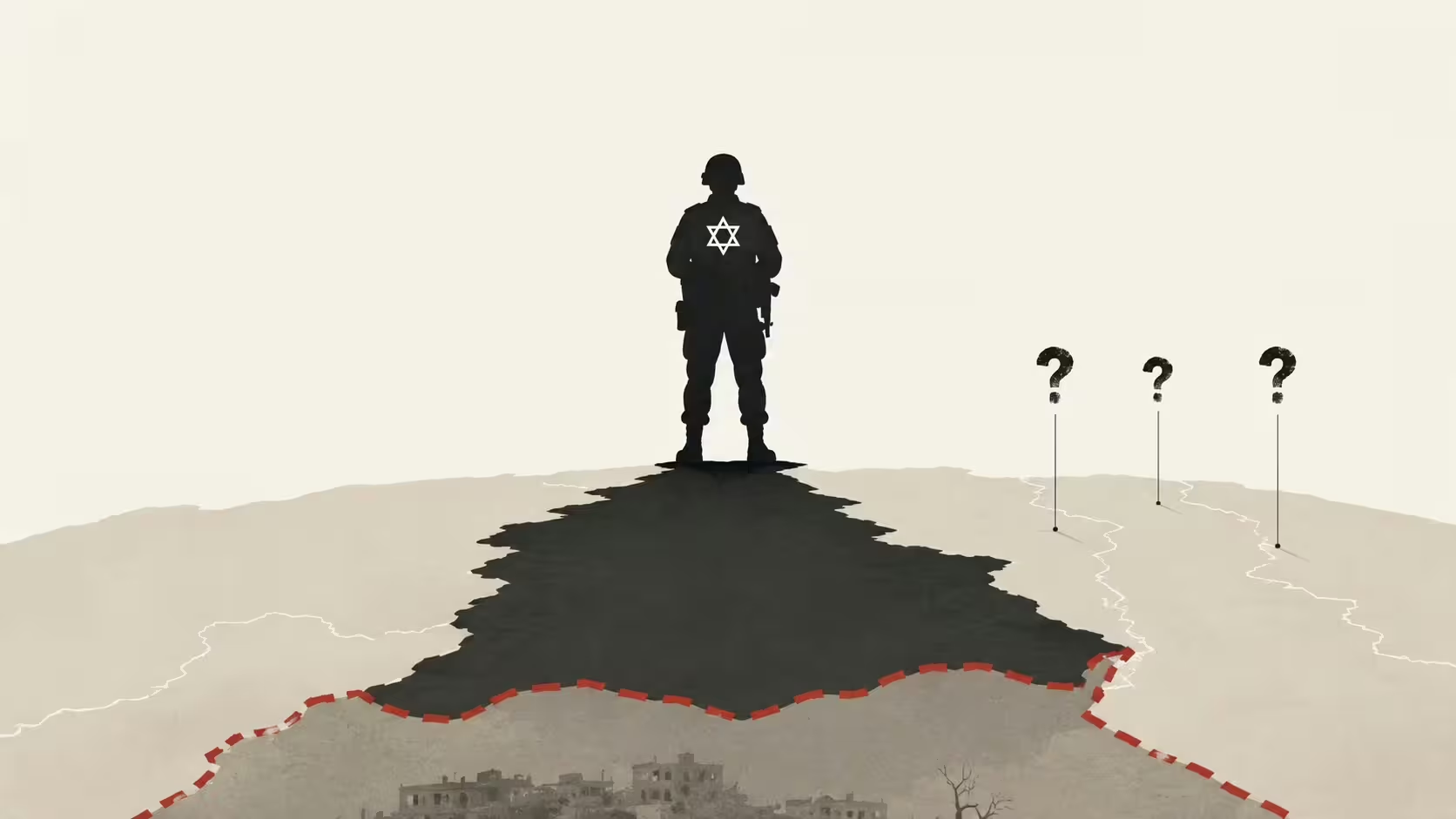
Trump wants to end the war, reopen the Strait of Hormuz and move quickly toward a broader settlement. Israel’s right wing wants to keep military pressure on Iran and Hezbollah, and rejects any limit on Israel’s freedom to operate in Lebanon.
Under the U.S. and Pakistani account, the deal ends military operations on all fronts, including Lebanon. That clause may become its first real stress test.
Details
• Netanyahu did not immediately comment on the agreement, a sign that he has little to say publicly in support of it.
• National Security Minister Itamar Ben Gvir said “Trump’s agreement does not bind Israel,” adding that Israel is an independent state and not subject to the United States.
• Finance Minister Bezalel Smotrich called the deal bad for Israel and the “free world,” and said the Israeli military must retain full freedom to keep pushing Hezbollah back.
• Defense Minister Israel Katz said Israel rejects any withdrawal from Lebanon “despite all current and future pressure,” and said that position had been made clear to Trump and U.S. Defense Secretary Pete Hegseth.
• Israeli officials fear that including Lebanon in the end of hostilities could restrict Israel’s ability to strike Hezbollah, or require it to consult Washington before future operations.
• Before the deal was announced, Israel struck Beirut’s southern suburbs in response to Hezbollah fire. The strike triggered threats of an Iranian missile response and drew a public rebuke from Trump.
• Trump said he angrily asked Netanyahu what he was doing and demanded that Israel stop hitting Hezbollah.
• Vice President JD Vance said Washington was deeply worried that the Beirut strike could trigger a broader Iranian attack on Israel, and that Tehran was talked down at the last minute.
• Iranian media claimed Tehran agreed to sign only after receiving assurances from Trump, through Qatari mediators, that last-minute changes could be made to the deal after the Israeli strike.
• Iran’s Supreme National Security Council said, according to Fars, that the naval blockade on Iran would end “immediately and completely.”
• Israeli reports, meanwhile, said Iran is demanding the release of frozen assets, the lifting of the naval blockade and a ceasefire on all fronts before nuclear talks begin.
• Vance told CNBC that the agreement includes a two-step verification process, with U.S. enforcement over Iran’s nuclear program. He said Washington hopes to release the text of the memorandum of understanding this week.
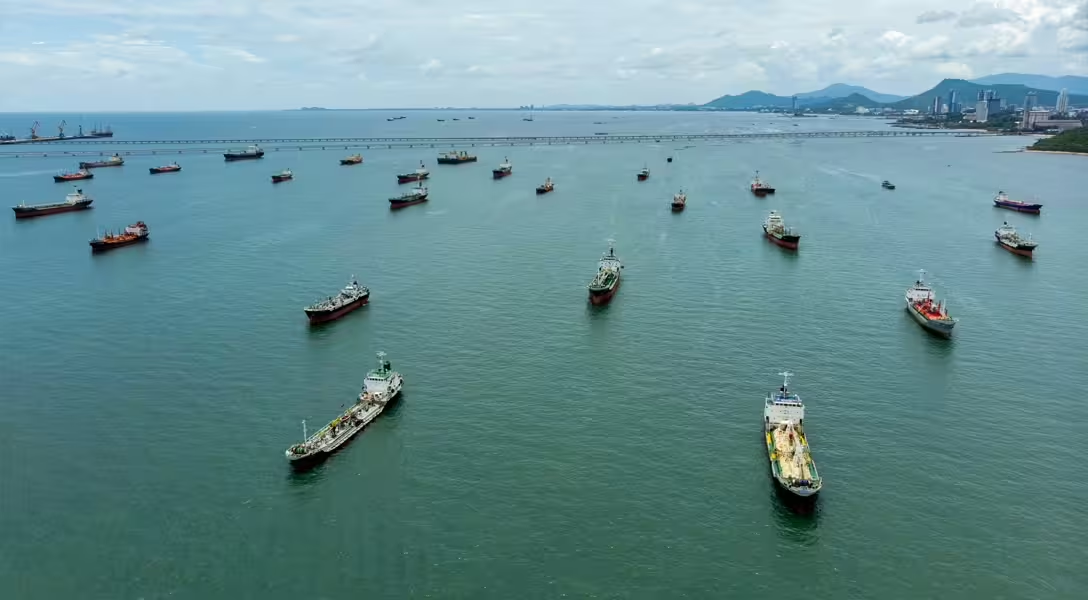
• Vance also said traffic through the Strait of Hormuz is already increasing, and that Washington expects the waterway to remain open and toll-free over the long term.
• The new element in the deal is that it shifts part of the crisis into the U.S.-Israel relationship.
• Trump wants a fast agreement that lowers oil prices, reopens Hormuz and ends a war that has become politically costly at home.
• Netanyahu, facing elections, is under pressure from a right-wing base that sees any de-escalation with Iran before dismantling its regional influence as a strategic failure.
That makes Lebanon the first flashpoint.
If Washington sees the ceasefire as covering Hezbollah, while Israel insists it can strike the group whenever its security requires, the deal could face a major test before it is even formally signed.
What to watch
First, Netanyahu’s official position. His silence does not mean approval. It suggests he is trying to avoid a direct clash with Trump.
Second, the text of the memorandum of understanding. If it is released this week, it will show whether the Lebanon ceasefire is binding on Israel or simply part of a broader U.S.-Iran framework.
Third, Hezbollah. One rocket from Lebanon, or one new Israeli strike in Beirut’s southern suburbs, could turn the deal from a peace track into an implementation crisis.