The latest
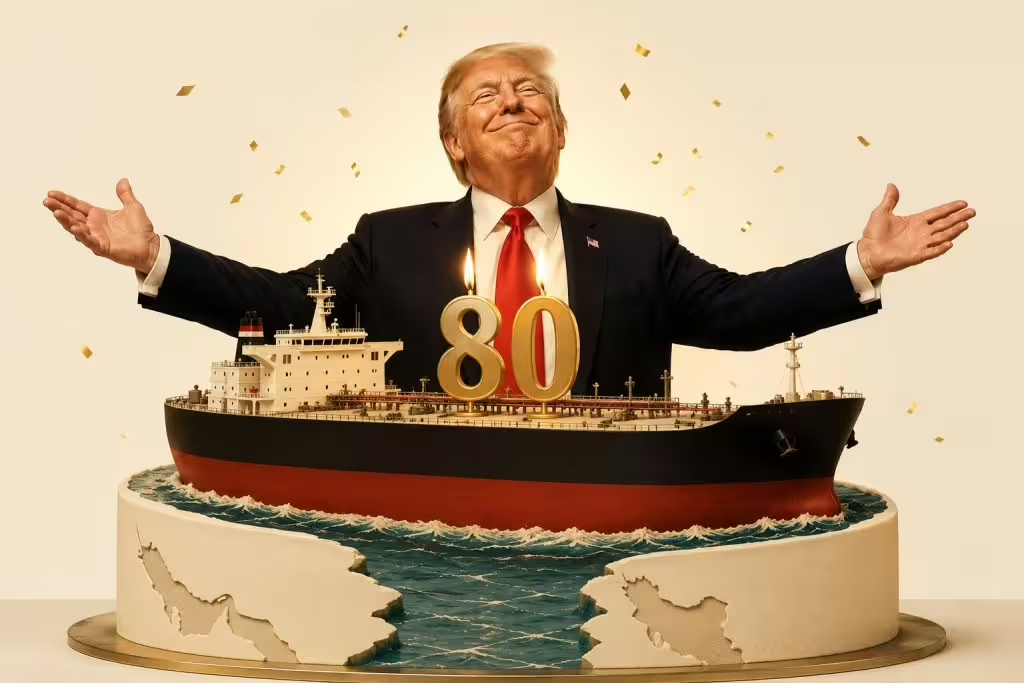
President Donald Trump early Monday declared that an agreement with Iran had been finalized, in what could become the biggest diplomatic breakthrough between the two countries after months of confrontation.
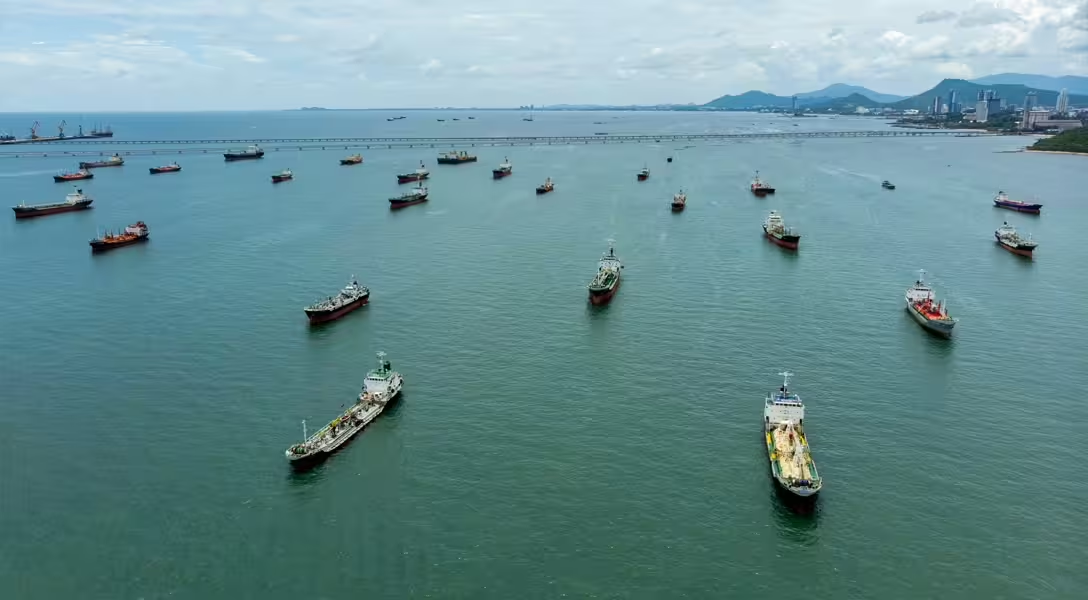
Posting on Truth Social, Trump wrote: “The agreement with the Islamic Republic of Iran is now complete. Congratulations to everyone. I hereby authorize the opening of the Strait of Hormuz and the immediate removal of the U.S. maritime blockade. Ships of the world, start your engines. Let the oil flow.”
Trump’s announcement came shortly after Pakistani Prime Minister Shehbaz Sharif said the United States and Iran had reached a peace agreement, including an immediate and permanent ceasefire across all fronts, including Lebanon.
Sharif said the deal is expected to be formally signed in Switzerland on June 19. Preparatory meetings and technical negotiations on the nuclear file are set to take place beforehand.
Details
• The agreement reportedly gives both sides 60 days to negotiate the most sensitive outstanding issues.
• Those talks are expected to cover the future of uranium enrichment in Iran and the handling of Tehran’s stockpile of highly enriched uranium.
• Negotiators will also discuss sanctions relief and the release of frozen Iranian assets.
• The framework includes reopening the Strait of Hormuz and restoring normal maritime traffic.
• Officials and intermediaries describe the arrangement as a preliminary political framework rather than a final settlement, with the most difficult nuclear questions deferred to later negotiations.
Iran’s hesitation
Despite the celebrations in Washington and the announcement from Islamabad, Tehran has not formally declared that the agreement is in effect.
Over the past several hours, Iranian officials and state-linked media have continued to signal that a final decision has not yet been made and that the proposal remains under review.
The cautious response reflects ongoing debate inside Iran between those who see the deal as an urgent economic opportunity and others who argue that core issues remain unresolved.
Beirut strike failed to derail talks
The announcement followed a tense period after an Israeli strike on Beirut’s southern suburbs raised concerns that negotiations could collapse.
According to Axios, U.S. officials said Trump warned Iran that any retaliation jeopardizing the talks would leave Tehran responsible for the consequences.
Trump later said the Israeli strike “should not have happened” and urged all parties not to undermine the opportunity for peace.
What to watch
The political announcement is only the beginning.
Reopening the Strait of Hormuz will likely require complex security and operational arrangements, while the most sensitive nuclear issues remain unresolved and are expected to dominate the next 60 days of negotiations.
The key question is no longer whether an agreement will be announced, but whether Washington and Tehran can turn this preliminary framework into a lasting deal that addresses the nuclear dispute and prevents a return to escalation.