The latest
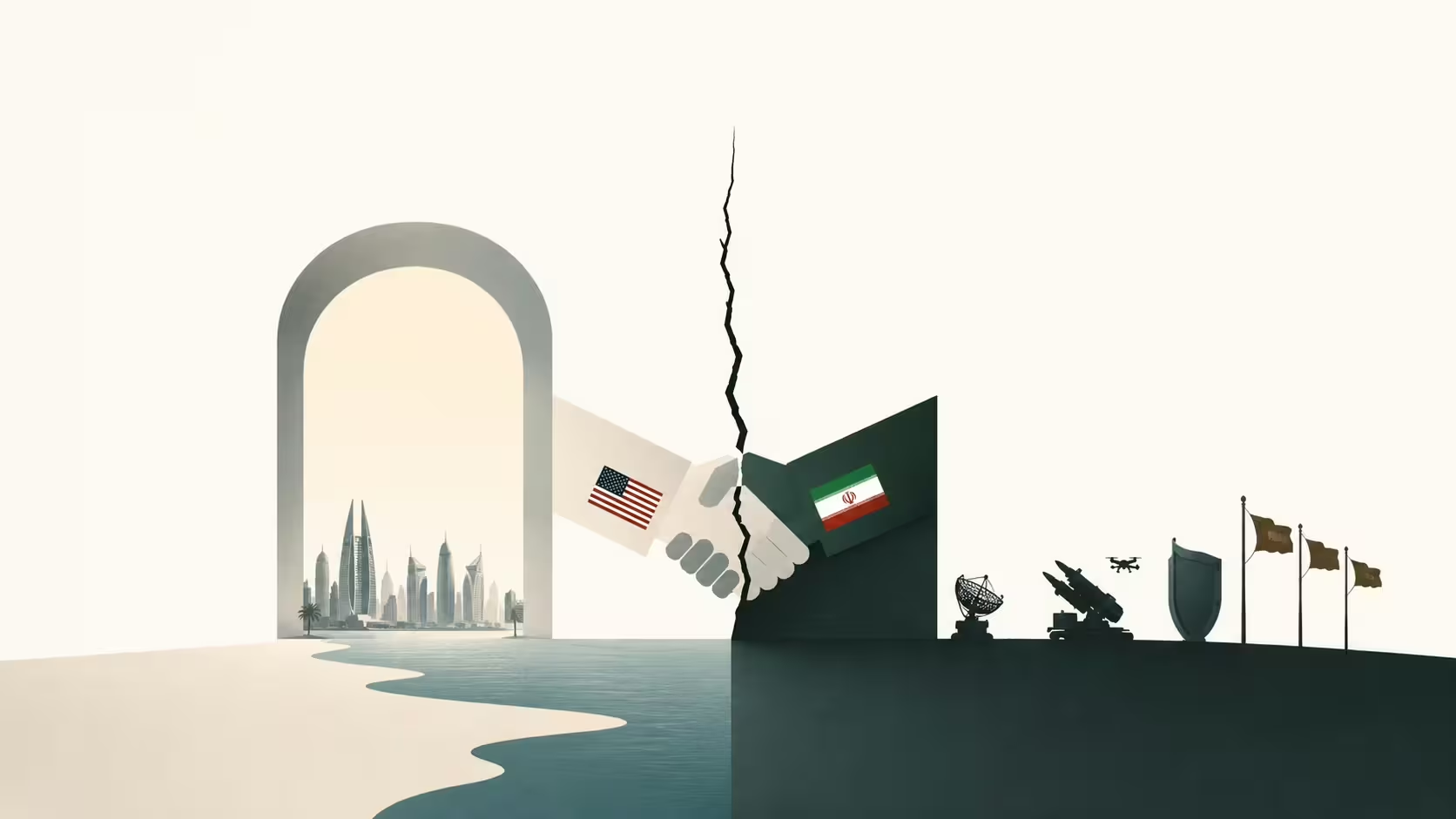
President Donald Trump raised expectations for a breakthrough with Iran on Saturday, announcing that a framework agreement would be signed Sunday and claiming the United States would later collect and destroy Iran’s enriched uranium after “things calm down.”
His comments came hours after Pakistan, which has been mediating between Washington and Tehran, said it expected a virtual signing ceremony to take place online.
Iran, however, has not confirmed that the agreement will be signed Sunday. Media outlets linked to the Islamic Revolutionary Guard Corps criticized what they described as Trump’s unusual insistence on finalizing the deal on the same day as his 80th birthday celebrations.
Details
• The expected agreement is not a final peace treaty or nuclear accord. It is a short memorandum of understanding reportedly limited to fewer than two pages.
• According to reports, the document would launch a 60-day negotiating period focused on the future of Iran’s nuclear program.
• Iran would suspend threats against shipping in the Strait of Hormuz, while the United States would lift restrictions imposed on Iranian ports.
• Trump portrayed the agreement as “a wall against nuclear weapons” and renewed his criticism of the 2015 nuclear deal reached under former President Barack Obama.
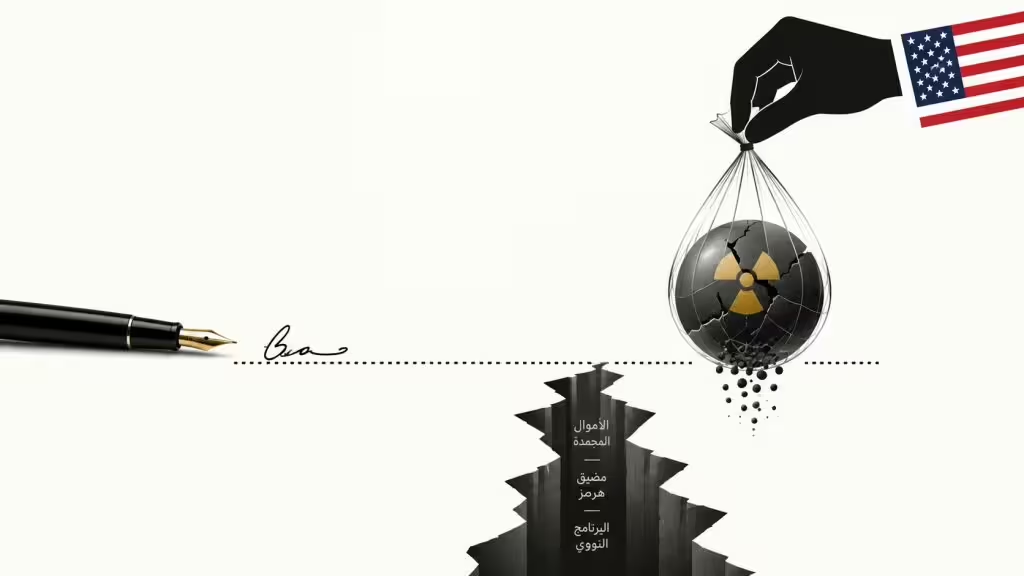
• The U.S. president insisted Iran would receive no money under the initial memorandum, rejecting reports that Tehran would gain immediate access to billions of dollars in frozen assets.
• Trump also said the United States would eventually recover what he described as nuclear material buried beneath damaged facilities and destroy it either in Iran or in the United States.
• He again hinted at military action if future negotiations fail, saying Washington still has a “final option” that he hopes will never be necessary.
Unresolved disputes
Despite the optimistic tone from both sides, several key issues remain unsettled.
Reports indicate that disagreements continue over:
• The release of frozen Iranian funds.
• The fate of Iran’s stockpile of highly enriched uranium.
• Future limits and oversight of the nuclear program.
• Control and management of navigation through the Strait of Hormuz.
Iran continues to advocate for a new framework governing the waterway, including fees for services provided to vessels in coordination with Oman. The United States, meanwhile, has maintained that the strait should be reopened to international shipping without additional restrictions or transit charges.
What to watch
Attention is now focused on Sunday to see whether the signing takes place as Trump predicts. Even if the memorandum is signed, the most sensitive issues — including enriched uranium, frozen assets, and the future status of the Strait of Hormuz — will remain at the center of negotiations in the weeks ahead.