The latest
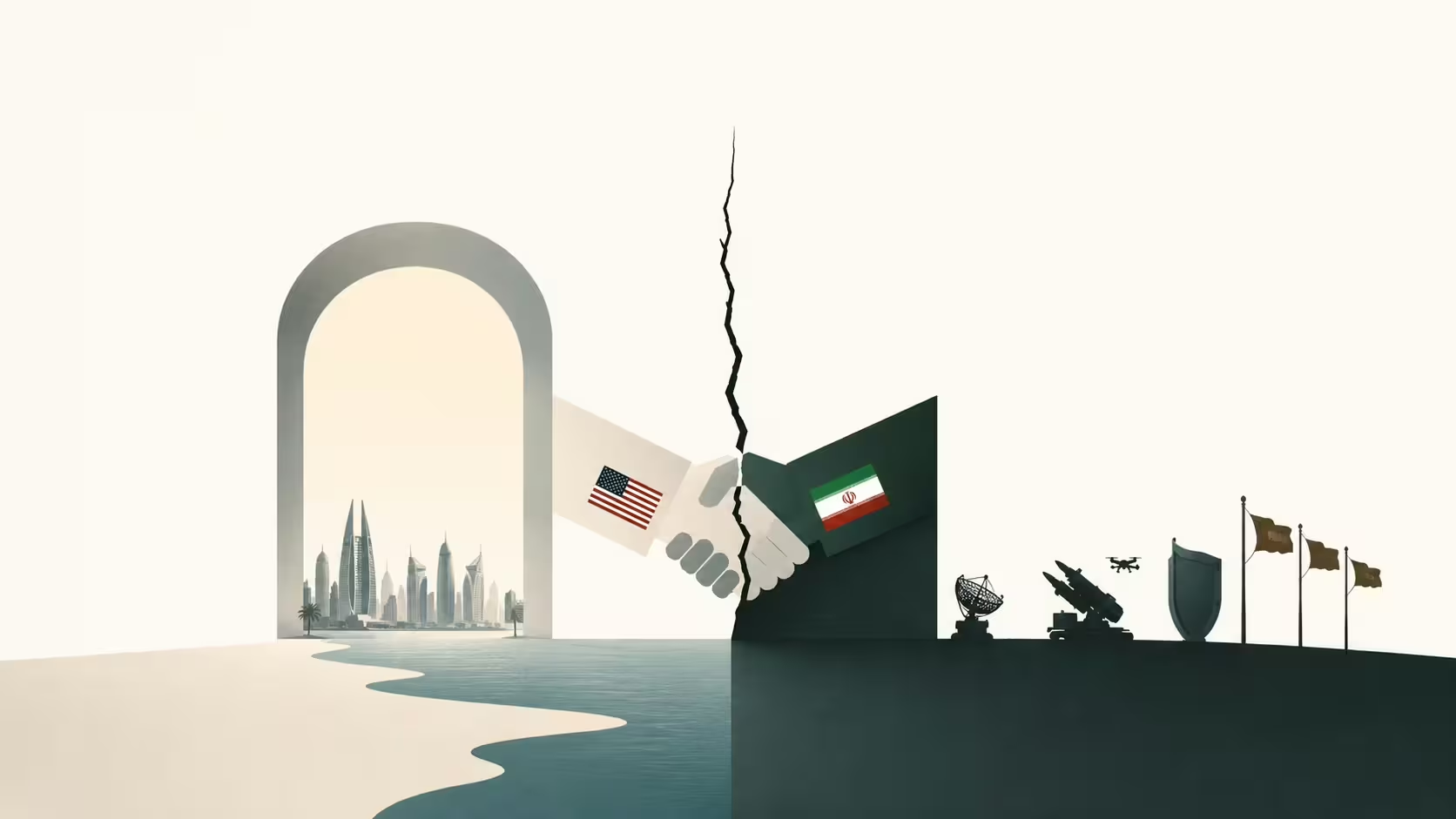
Gulf states welcomed the U.S.-Iran agreement with cautious relief after months of military escalation that threatened energy exports and shipping through the Strait of Hormuz. Regional governments hope the deal will restore economic and security stability and prevent a repeat of attacks on critical infrastructure and military facilities.
But the agreement has not erased deeper questions about long-standing reliance on the United States as the region’s primary security guarantor. Iranian attacks and the ability of some drones and missiles to penetrate defense systems during the conflict have fueled calls for stronger domestic defense capabilities, broader international security partnerships, and closer military cooperation among Gulf states.
Details
• Military bases, energy facilities, and civilian infrastructure across several Gulf countries were targeted by Iran or Iran-backed groups during the war.
• The closure of the Strait of Hormuz threatened global energy exports and exposed vulnerabilities in regional maritime security.
• Sanam Vakil, director of the Middle East and North Africa Programme at Chatham House, said confidence in U.S. security guarantees has declined compared with previous years.
• Diplomatic and Western assessments suggest the war accelerated Gulf efforts to diversify defense partnerships beyond Washington.
• Gulf officials told Western media that internal discussions are underway about reducing security dependence on the United States while preserving strategic ties.
• Bader Al-Saif, assistant professor of history at Kuwait University, argued that Gulf countries need more independent defense capabilities and stronger military coordination.
• Analysts say investment in local defense industries and deeper Gulf military integration have become more urgent after the conflict.
What to watch
The key question is whether Gulf states will translate these discussions into concrete policies through stronger regional defense cooperation, broader international security partnerships, and increased investment in domestic military capabilities. The durability of the U.S.-Iran agreement and the long-term security of the Strait of Hormuz will remain critical tests for the region.