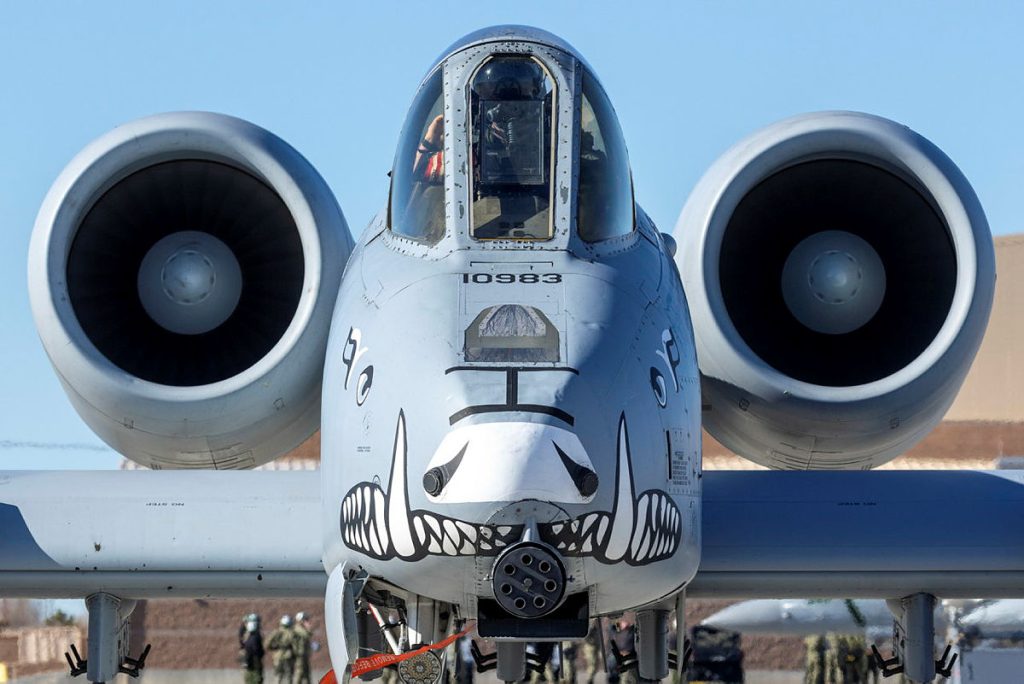
The battle to reopen the Strait of Hormuz has entered a new, more aggressive phase after U.S. forces began using low-flying attack aircraft and Apache helicopters over the sea lanes to strike Iranian fast boats and intercept attack drones. Chairman of the Joint Chiefs of Staff Dan Caine said A-10 aircraft are now operating on the southern flank of the theater, while Apaches have also joined the fight in the same sector.
The immediate goal is to reduce the level of threat enough to allow ships to resume passing through the strait.
The current U.S. assessment is that the operation will take time, because the danger is not limited to fast boats alone, but also includes naval mines, truck-mounted cruise missiles, and launch platforms hidden inside fortified facilities and coastal tunnels.
Experts said it could take weeks to reach an acceptable level of safety, and even then the risks will not disappear completely.
On the ground, Washington says the strikes have damaged or destroyed more than 120 Iranian naval assets. But that same assessment acknowledges that Iran still retains a large stockpile of mines and hundreds of undamaged boats in concealed locations, meaning that reducing the threat does not mean eliminating it. At its narrowest point, the strait is only 24 miles wide, which means any passing vessel remains exposed to missile fire, boats, or drones even after a gradual reopening begins.
Detail
The amphibious force sent to the region gives the Pentagon a wider margin if it decides to move from protecting the waterway to pressuring islands and sites near the Iranian coast. What is confirmed so far is the movement of the 31st Marine unit with the Tripoli amphibious group. This unit, which includes about 2,200 personnel, was designed primarily for rapid intervention, amphibious landing, evacuation, and securing sensitive facilities from the sea.
In the background, reports are growing about the accelerated deployment of the 11th Marine unit linked to the Boxer amphibious group.
Economically, time pressure is rising. The effective closure of the strait since early March pushed Brent crude above $100 a barrel after it touched $119 before closing near $108.65 on Thursday. At the same time, Iran has begun discussing a mechanism to allow selected ships to pass in exchange for fees, opening the door to the use of the strait not only as a weapon of disruption but also as a tool of geopolitical leverage and selective transit management.
What’s Next?
What now appears most likely, according to The Wall Street Journal, is not a rapid and complete reopening, but a gradual reopening under fire. The first step will be expanding strikes on boats, drones, and missile sites, then testing the passage of military vessels, and later moving to escort selected ships if the threat falls to a tolerable level.
The dilemma is that Hormuz may partially reopen before it becomes fully secure, meaning shipping could resume under deterrence and escort, not under full certainty that the threat is gone. Washington’s experience with the Houthis last year also suggests that heavy strikes alone do not always quickly extinguish a maritime threat.