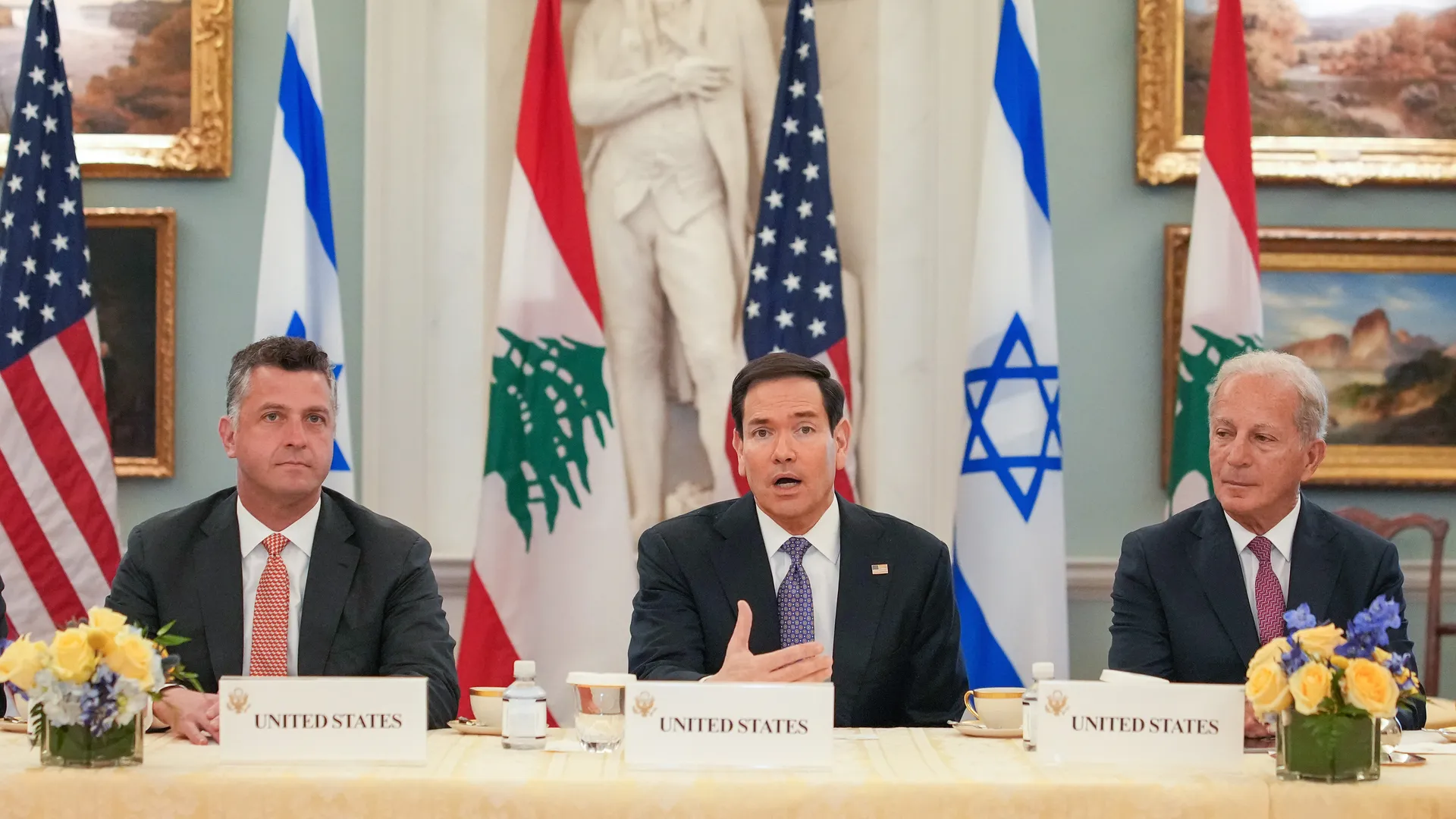
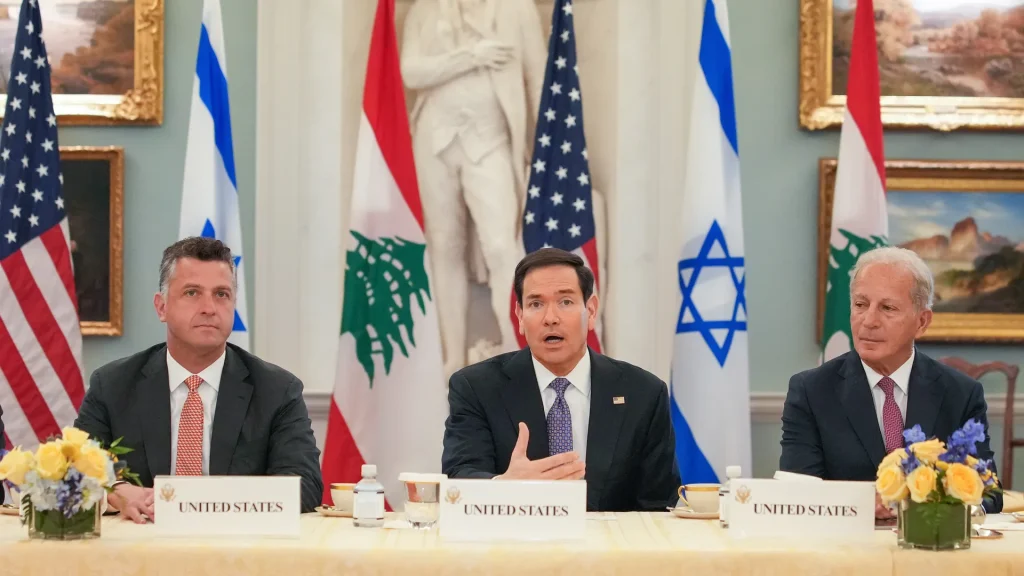
The Israel-Lebanon ceasefire suddenly moved to the forefront as part of a broader U.S. attempt to shape a regional settlement after the fragile de-escalation with Iran.
In two consecutive Truth Social posts, Trump first spoke about inviting Netanyahu and Aoun to the White House for the first talks since 1983, then announced an agreement on an official 10-day ceasefire.
At the same time, the U.S. press linked the truce directly to the wider effort to contain the war, placing it within the broader framework of American pressure on Iran.
But behind the image of a breakthrough, the ceasefire looks more like a temporary arrangement imposed by political and military pressure. In Israel, media reports said Netanyahu informed ministers in haste that the ceasefire would begin at Trump’s request, without a full formal vote, while Israeli forces remain in their positions in southern Lebanon.
In Beirut, sensitivity remained high over any impression of rapid political normalization. Reports said Aoun had rejected before the announcement the idea of direct contact with Netanyahu, while official Lebanese rhetoric focused first on stopping the fire before any leap toward a comprehensive peace.
Details:
• The ceasefire begins Thursday at 5 p.m. Eastern Time and may be extended by mutual agreement. Under the arrangement, the Lebanese state is expected to prevent any attacks by Hezbollah or others during the specified period.
• Axios reported that Trump’s announcement surprised some Lebanese circles, which had already cast doubt on the idea that there had been any real direct communication between Aoun and Netanyahu despite intense U.S. sponsorship.
• The Washington Post linked the Lebanon ceasefire to a broader U.S. push for regional de-escalation, alongside parallel efforts to extend the U.S.-Iran ceasefire and arrange a new round of talks.
• In the Israeli media, Yedioth Ahronoth said Israel would begin the ceasefire while keeping its forces in the south, and that major field questions remain unanswered, especially in active combat zones.
• The Jerusalem Post reported that Israel agreed under U.S. pressure and that the army would keep its positions in southern Lebanon during the ceasefire, while Tel Aviv continues to present it as a conditional political opportunity, not a full military concession.
• Netanyahu said there is a historic opportunity for peace with Lebanon, but stressed that he rejects Hezbollah’s conditions, including a full Israeli withdrawal and a ceasefire based on a quiet-for-quiet formula, while confirming that forces will remain inside Lebanon.
• Inside Israel, immediate opposition to the ceasefire emerged, with Yair Lapid attacking it as evidence of the government’s failure to permanently remove the threat from the north.
• In Lebanon, Nawaf Salam welcomed the ceasefire and described it as a goal the government had pursued since the start of the war, while Aoun’s office said efforts with Washington would continue to secure a ceasefire as a prelude to peace.
• Hezbollah said any ceasefire must not allow Israel freedom of movement inside Lebanon, and that it would comply cautiously if the halt is comprehensive and does not include assassinations or continuing operations.
• Nabih Berri called on displaced residents to delay returning to their villages until the terms of the agreement become clear on the ground, signalling that Beirut itself is not yet treating the truce as fully settled or stable.
What next?
The real test is not the announcement of the ceasefire, but how it is defined. If Israel insists on maintaining a military presence and Hezbollah treats that as a continuation of occupation, the 10 days could become little more than a pause for repositioning rather than the start of a peace track.
But if Washington succeeds in turning the de-escalation into a structured negotiation, this could become the first serious opening in decades to connect the Lebanese front to a wider regional settlement. Even then, the road remains full of political and military landmines.