Key Points
- Netanyahu publicly urged Eisenkot to open coalition talks without preconditions, proposing a national unity government.
- The appeal follows their two-hour security briefing Thursday and Eisenkot's cancelled negotiations with Likud this week.
- Eisenkot holds the mandate to form Israel's next government after the October 27 elections.
The latest:
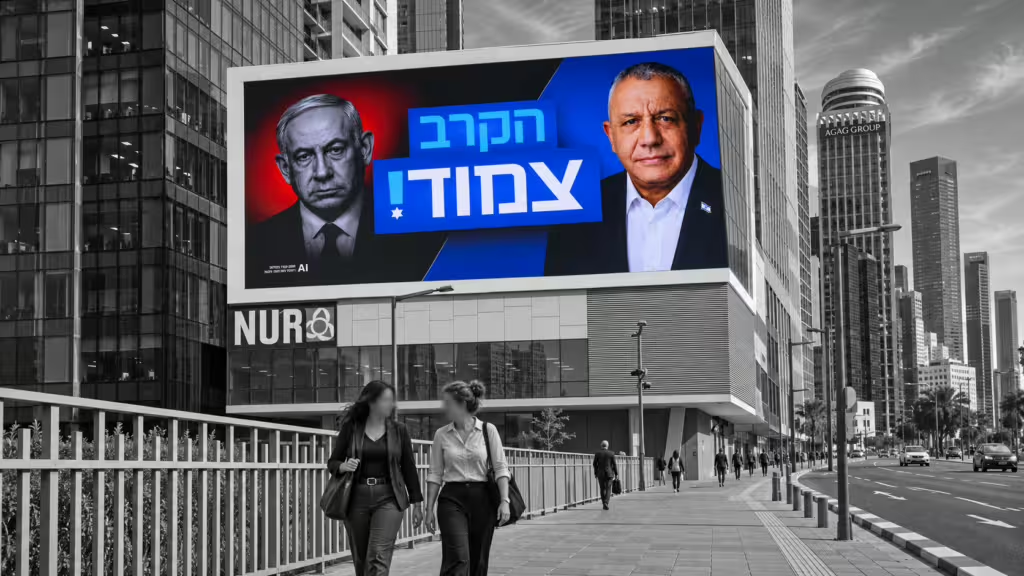
Benjamin Netanyahu called on Gadi Eisenkot Saturday to abandon efforts to build an alternative coalition and instead negotiate a national unity government with no preconditions. In a video posted on X, the prime minister tied the proposal to what he described as Iran’s renewed push to rebuild its nuclear program, and to lawmakers who walked out during Israel’s national anthem at the Knesset swearing-in.
Details:
- The appeal: Netanyahu asked Eisenkot to enter a room without preconditions, set aside disagreements and boycotts, and reach agreements on security. He said a shaky and dangerous government could not meet Israel’s national challenges, and listed military conscription as an issue solvable alongside representatives of the haredi public.
- The meeting: The two met Thursday for a security and diplomatic briefing lasting more than two hours, attended by Netanyahu’s military secretary. Netanyahu said the session strengthened his view that a unity government is essential, one including all parties that support Israel’s existence as the state of the Jewish people.
- The anthem walkout: At Tuesday’s swearing-in of the 26th Knesset, Joint List lawmakers walked out during the singing of Hatikvah. Ra’am chairman Mansour Abbas and his faction members remained standing. Netanyahu said the necessary response to those who walked out was to establish what he called the government of hope.
- The rift: Eisenkot’s Yashar party cancelled planned coalition negotiations with Likud after Netanyahu’s Knesset speech Tuesday, accusing the prime minister of divisive rhetoric. The two have clashed previously over Netanyahu’s unity appeals. Netanyahu did not indicate whether any new talks had been scheduled.
- The mandate: President Isaac Herzog tasked Eisenkot with forming the next government following the October 27 elections. Eisenkot, who chairs Yashar, has been working to assemble a coalition. Netanyahu’s statement did not address how a unity government would square with the mandate Eisenkot already holds.
- The Iran warning: Netanyahu said the Iranian regime is again working to renew its nuclear program, and claimed it would not hesitate to use nuclear weapons against Israel. He warned Tehran would do so once it resumed uranium enrichment and accelerated weapons development.
- The military record: Netanyahu cited Operation Rising Lion and Operation Roaring Lion as examples of Israeli efforts to eliminate the Iranian nuclear threat, and said Israel must remove what he called an existential threat once and for all. He gave no assessment of Iran’s current enrichment level.
- The political line: Netanyahu argued that a narrow government, or one relying on what he termed supporters of terrorism, could not meet the challenge, while a unity government could secure Israel for years. He closed by describing a public longing for national reconciliation.
Background:
Netanyahu made the same argument during his Knesset address Tuesday, saying a national unity government was necessary to confront Iran’s renewed nuclear ambitions. That speech triggered Yashar’s decision to cancel its scheduled coalition talks with Likud.
Between the lines:
The sequence matters: Netanyahu’s Tuesday speech ended Likud-Yashar talks, and Saturday’s appeal came after a two-hour briefing that included his military secretary. By bundling conscription, Iran and the anthem walkout into one offer, he frames unity as a security necessity rather than a coalition bid, while Eisenkot still holds the mandate.
What’s next
Watch whether Eisenkot responds publicly or restores the cancelled Likud talks, and whether he advances an alternative coalition under Herzog’s mandate before it expires.